
Indonesian Visual Culture: Cross Culture Exhibition

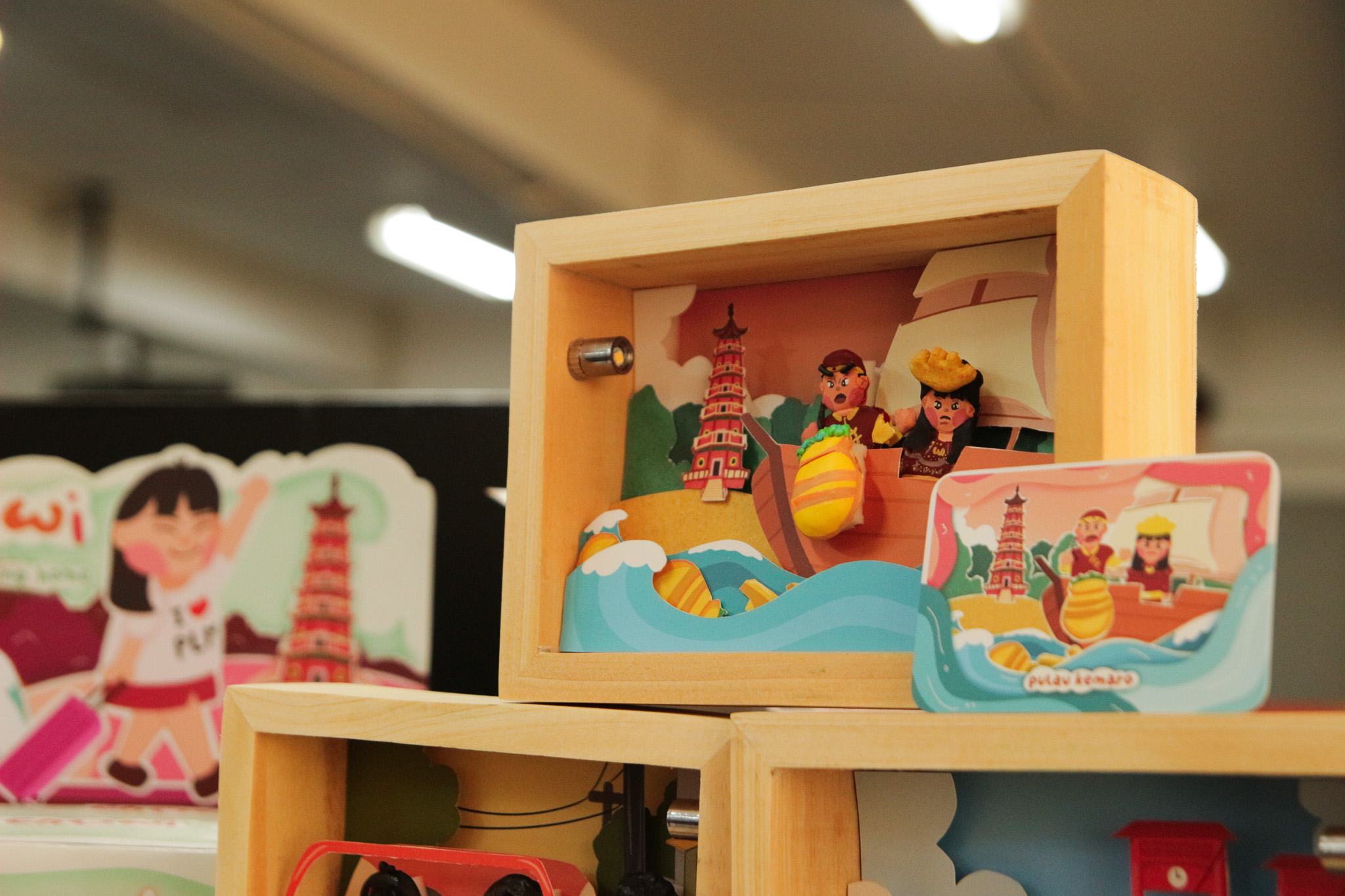
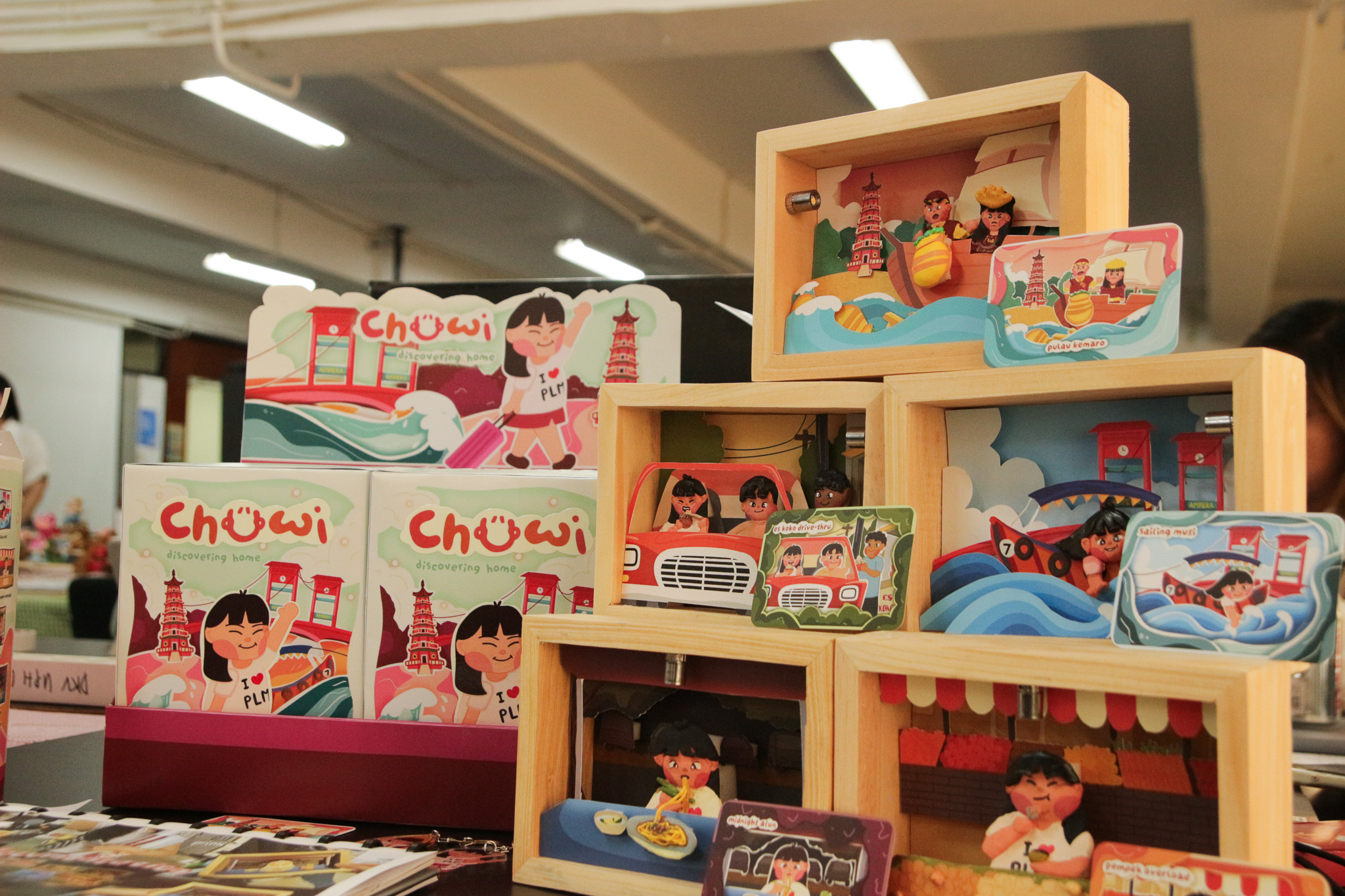
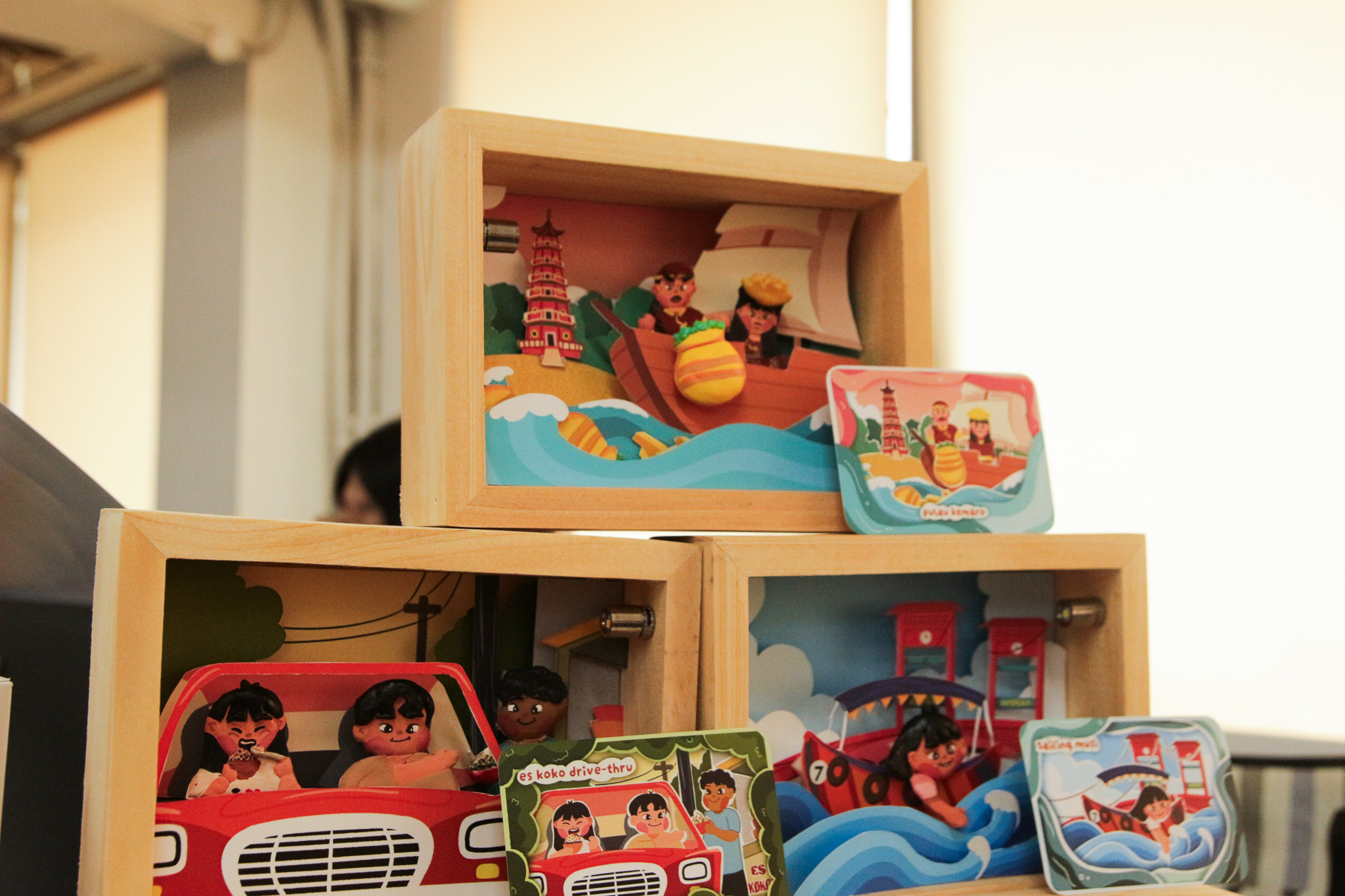
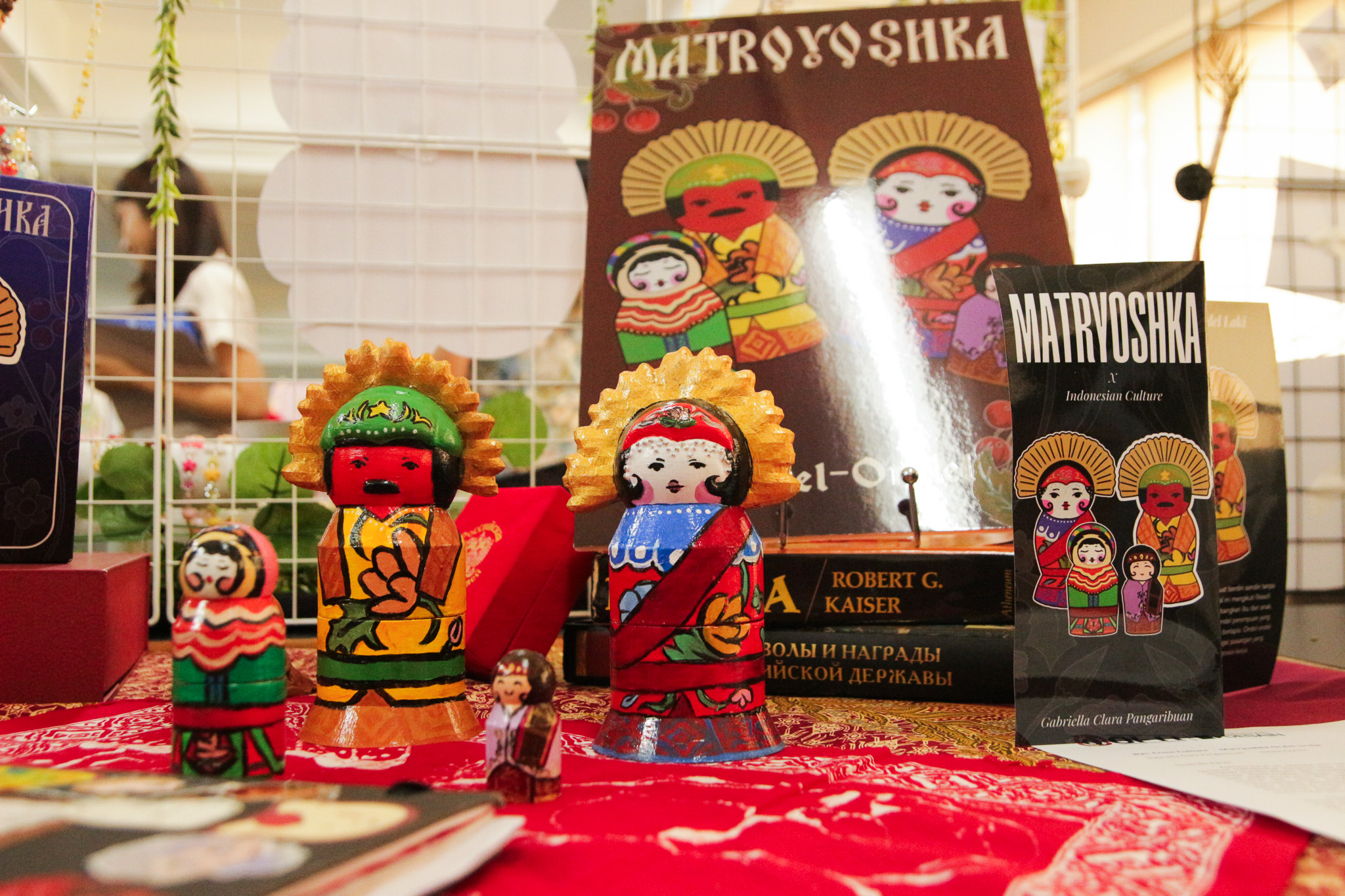
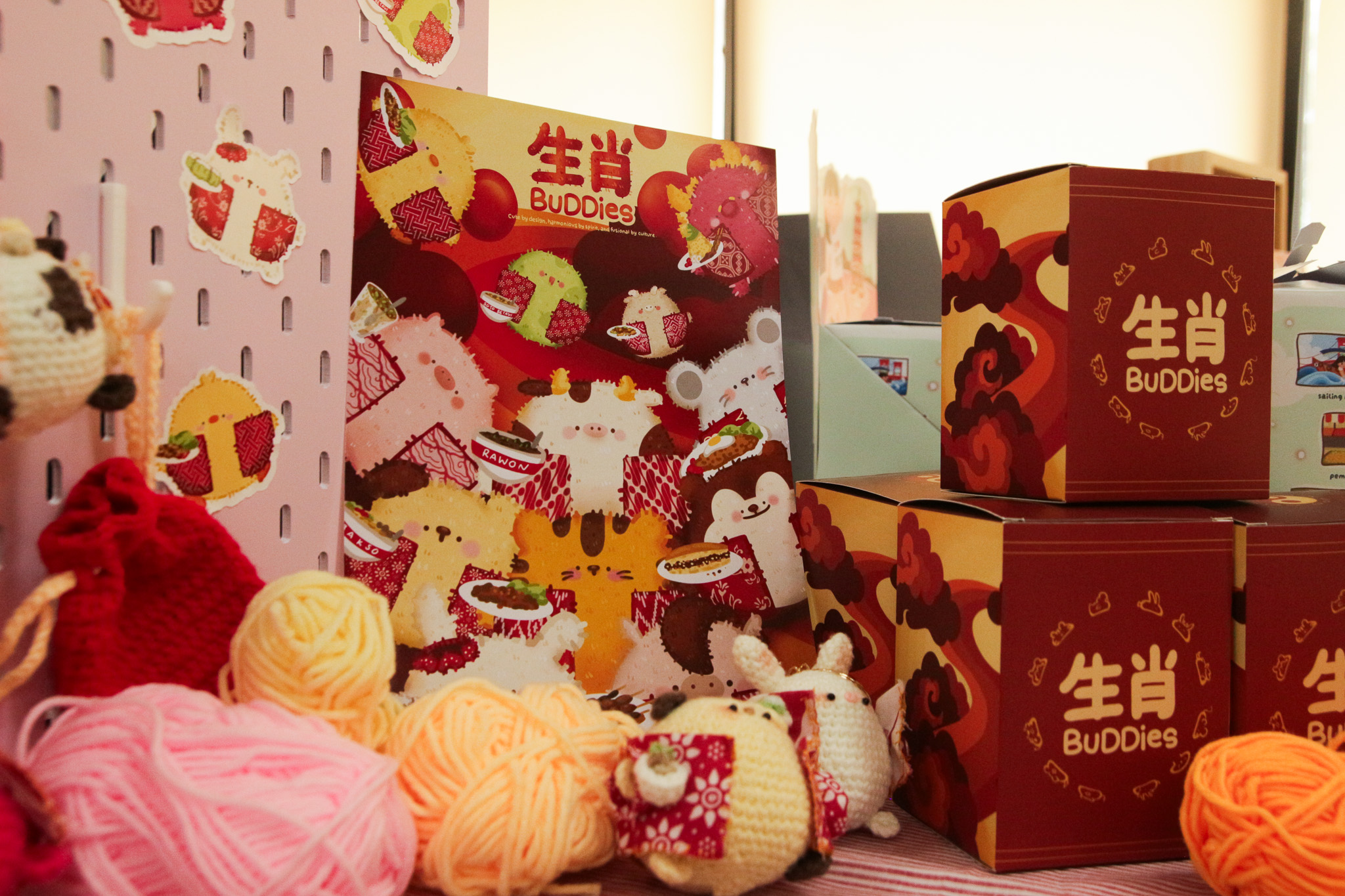
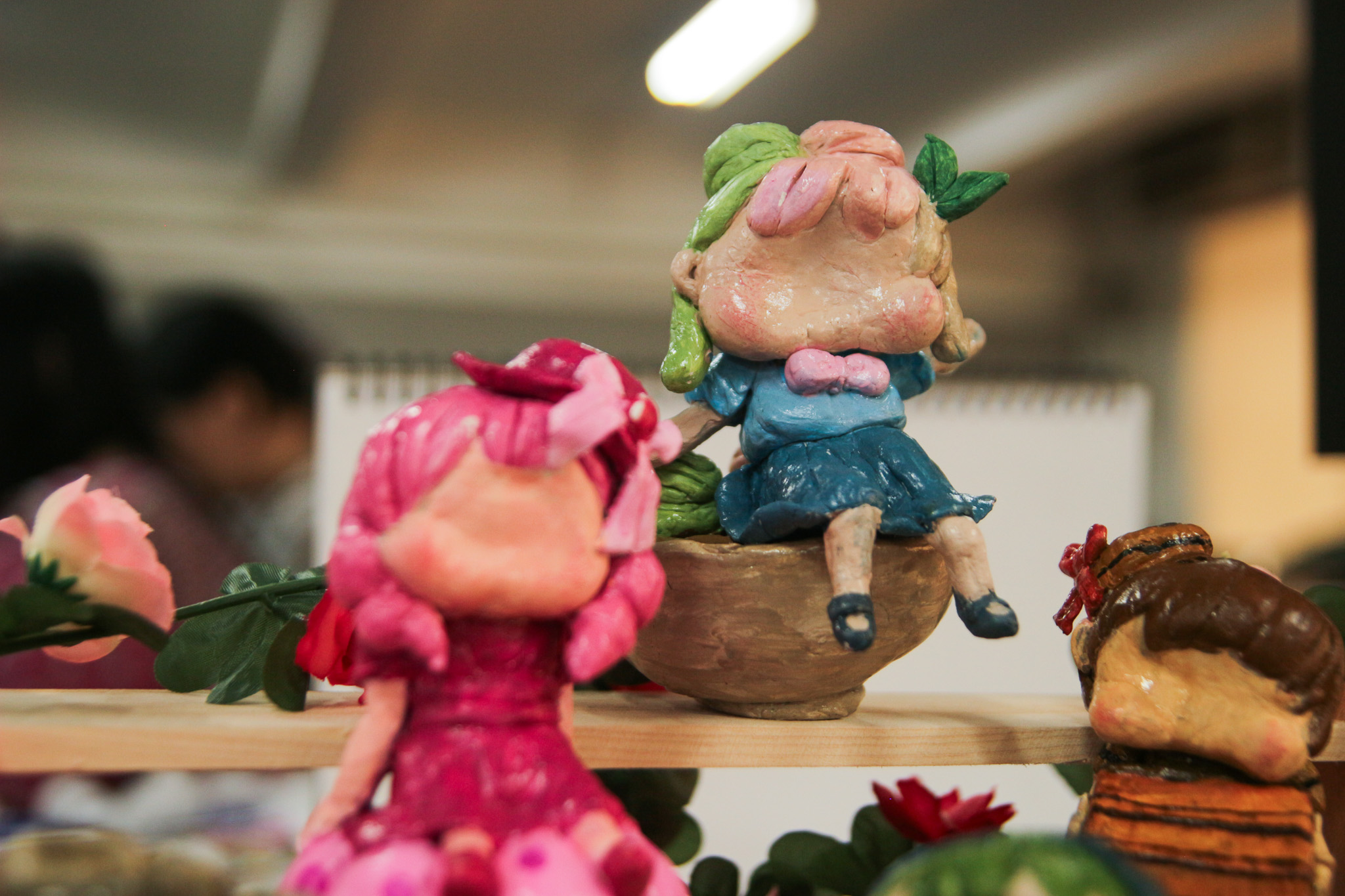
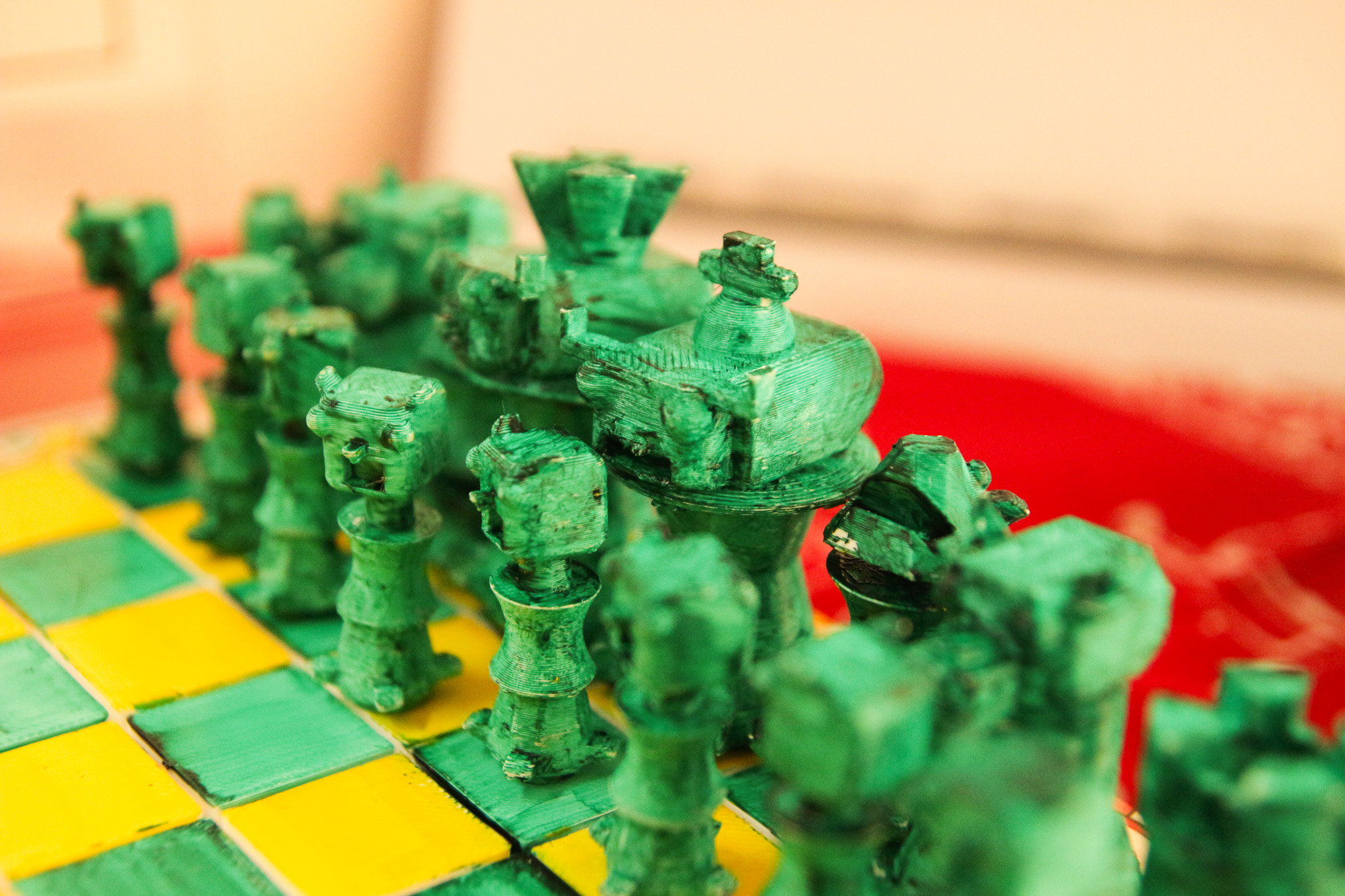
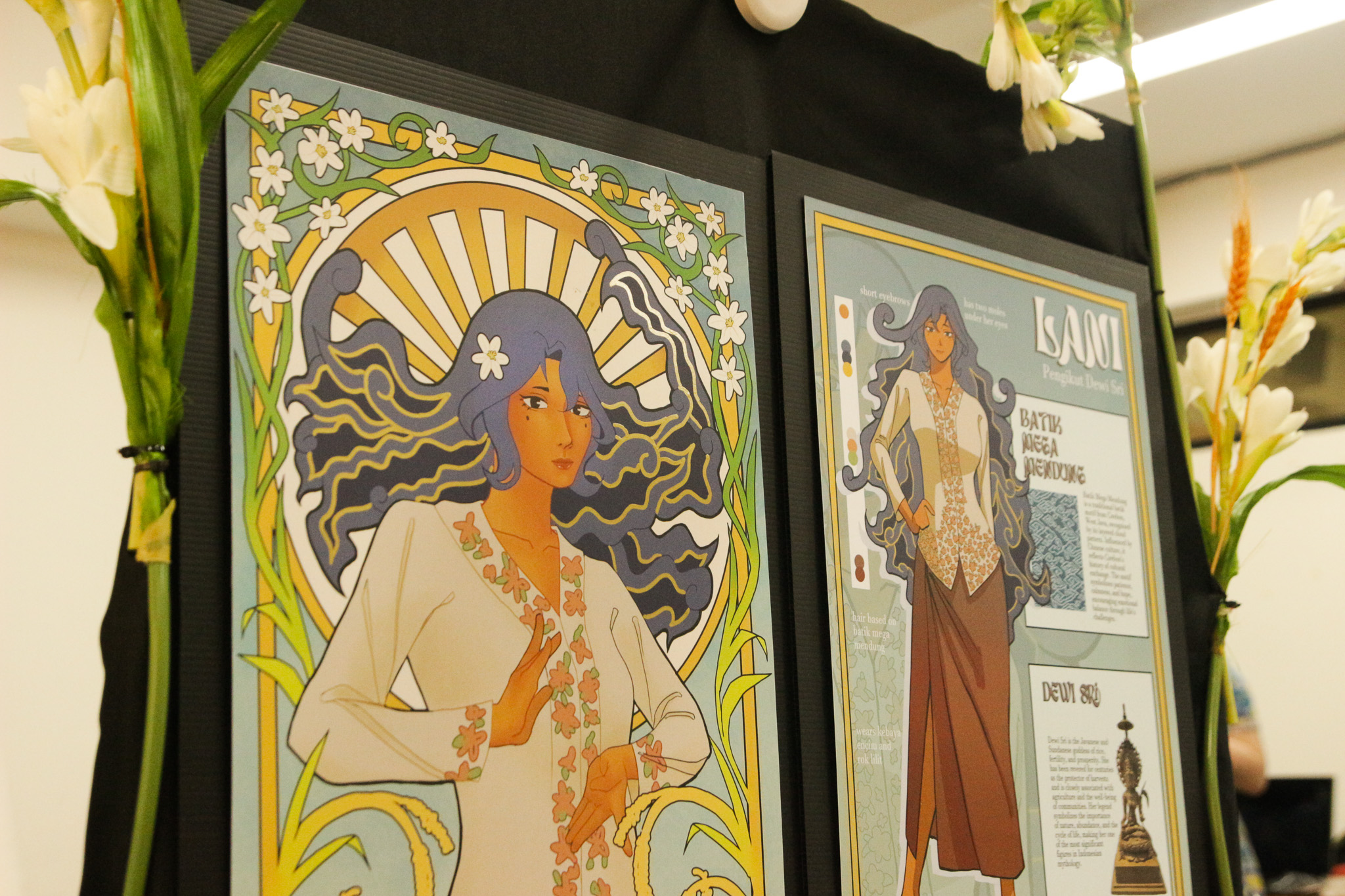
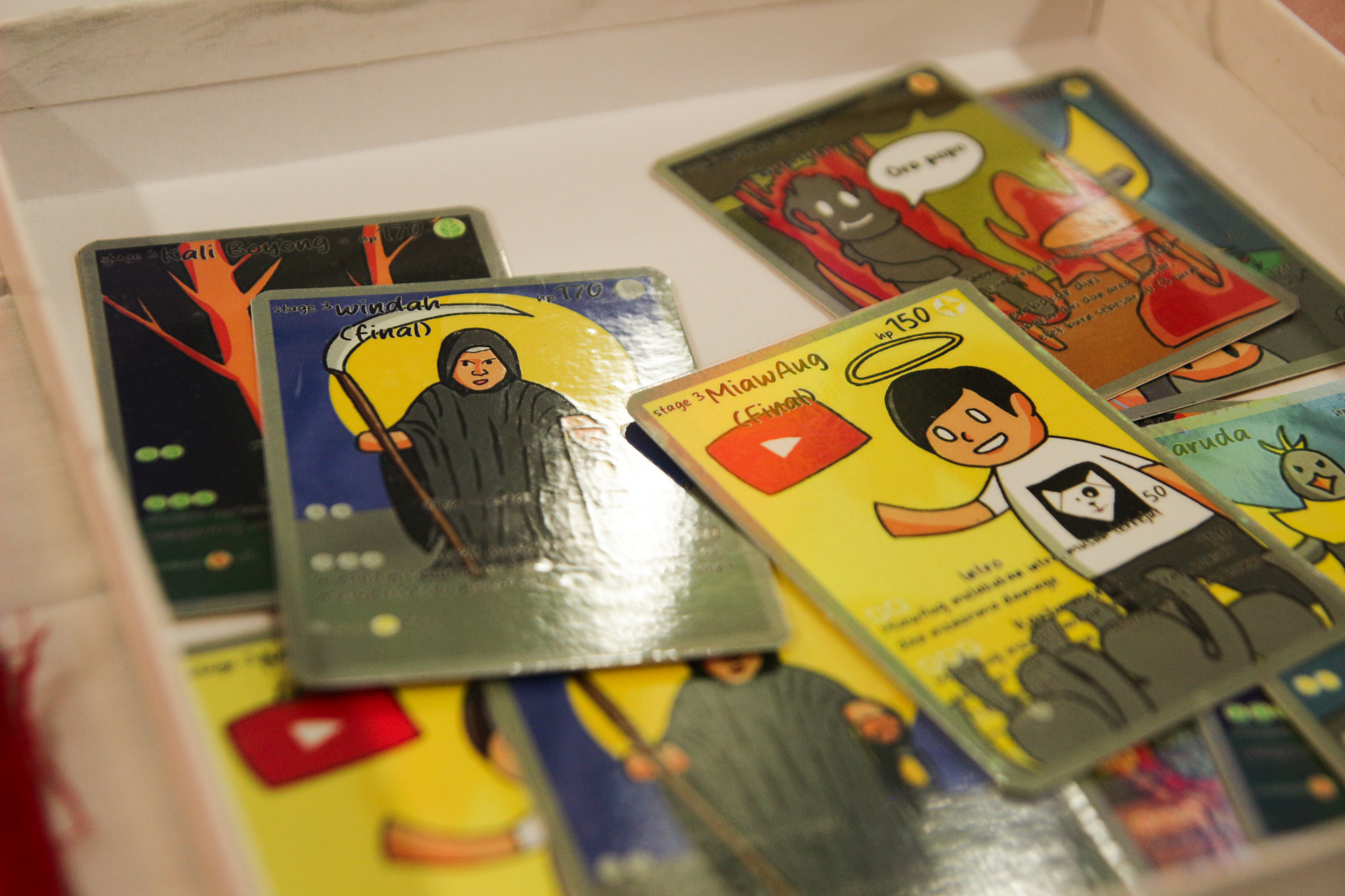
At the end of the semester, students from the Indonesian Visual Culture (Budaya Visual Indonesia) course concluded their learning journey with a final exhibition centered on the theme of Cross Culture. More than a showcase of finished works, the exhibition captured months of questioning, observing, and reinterpreting culture through each student’s own experiences.

Since the beginning of the course, students have explored culture beyond familiar symbols such as traditional textiles, historical artifacts, or regional customs. Instead, they examined culture as something living that grows through everyday rituals, personal histories, communities, media, and the many influences that quietly shape who we are.

Earlier in the semester, students looked inward by tracing their family histories, traditions, and personal artifacts. They mapped family trees and documented stories that revealed the cultural values passed down across generations. For the final project, they expanded that conversation. This time, they explored not only where they came from, but also what continues to shape them today.
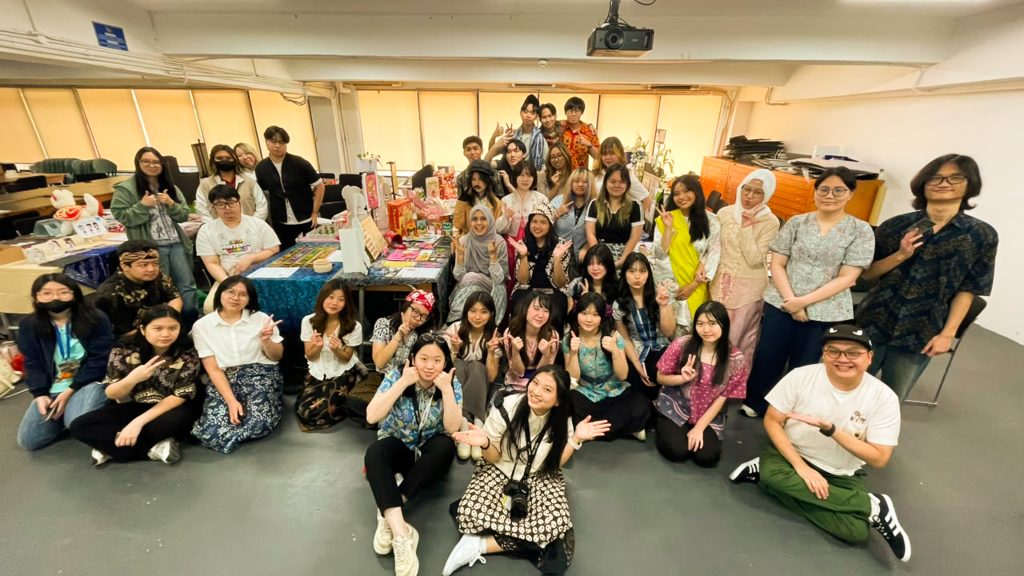
Indonesian Visual Culture Course with VCD UPH 2025 Cohort

Weaving Identity Through Cross Culture

The Cross Culture project invited students to connect the many cultural influences that coexist within their lives. Family traditions met contemporary interests. Regional identities intersected with hobbies, online communities, favorite films, music, games, fashion, and countless other forms of visual culture.

Instead of treating these influences as separate worlds, students explored how they naturally intertwine. The project became less about combining different cultures and more about understanding how identity grows through the cultures we inherit, encounter, and choose to embrace.

Student Aileen reflected on the experience by sharing,

“I felt like this project really gave us room to explore because we could genuinely create something we love. It wasn’t just about bringing different cultures together. It was also about exploring the different cultures within ourselves.”
Her reflection captures the spirit of the assignment. Every student began with a different background, and every project reached a different conclusion. Even students who shared similar hometowns, ethnic backgrounds, or family traditions interpreted the theme in their own way. Their interests, memories, and personal experiences shaped every creative decision.

Every Identity Tells a Different Story

The diversity of the students’ experiences became visible in the final outcomes.

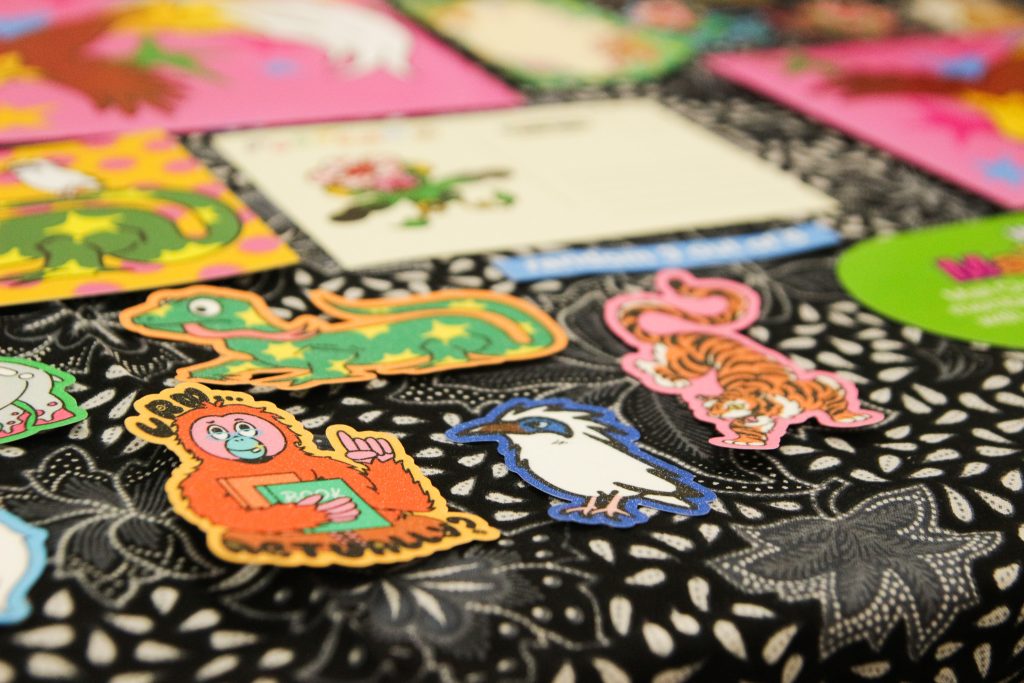
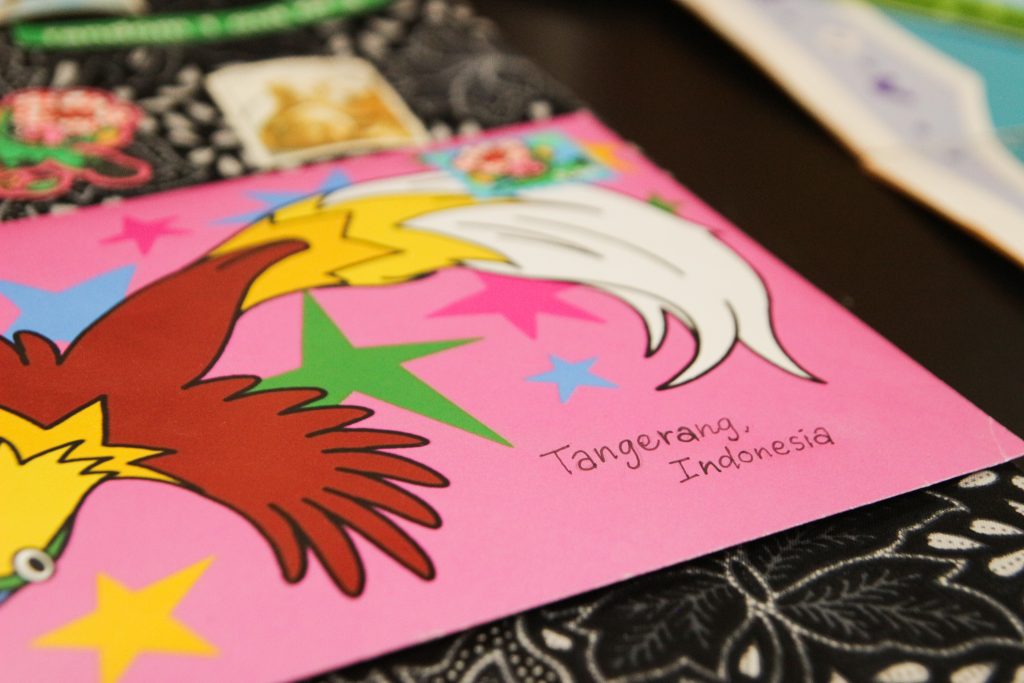
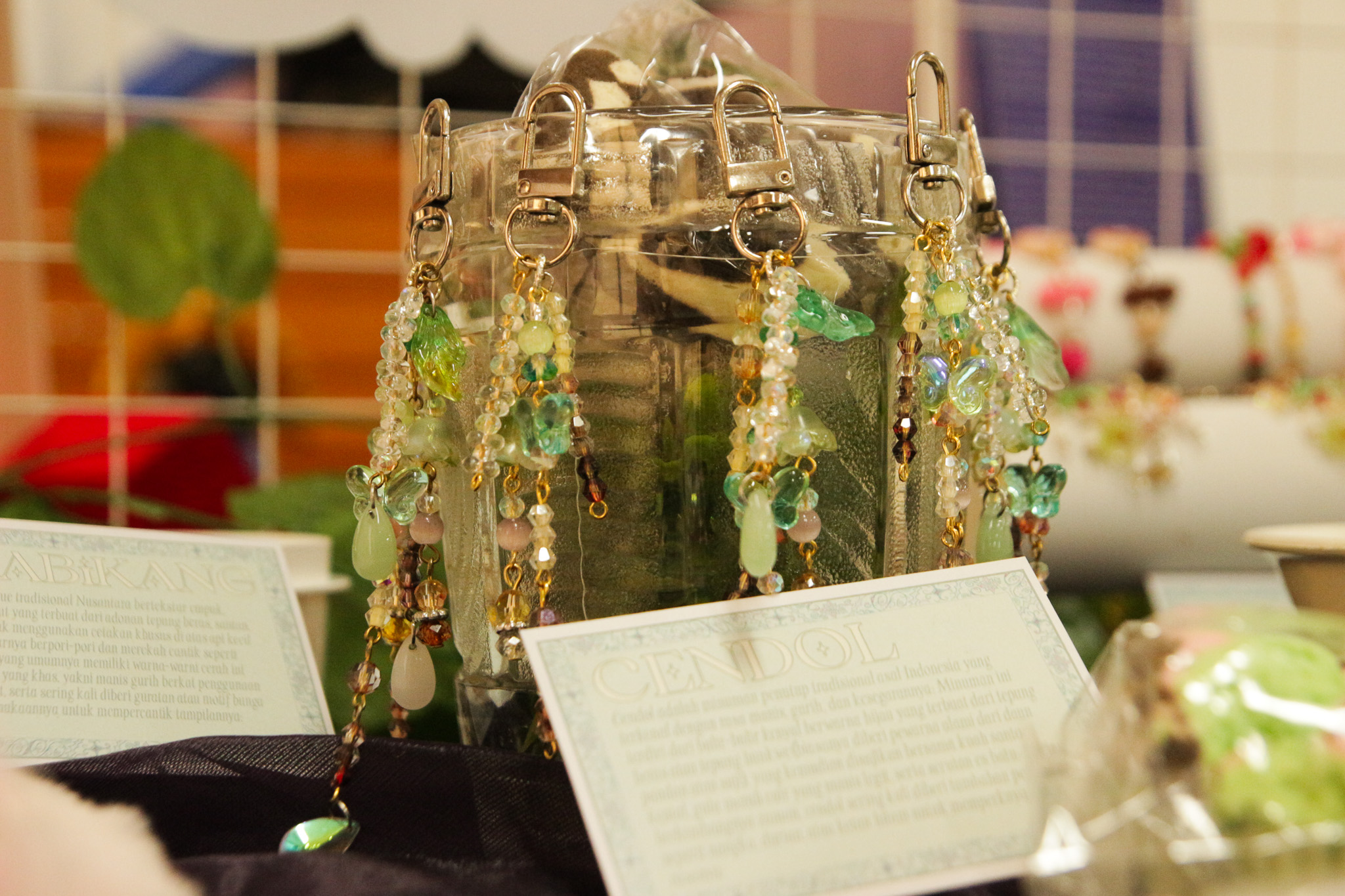
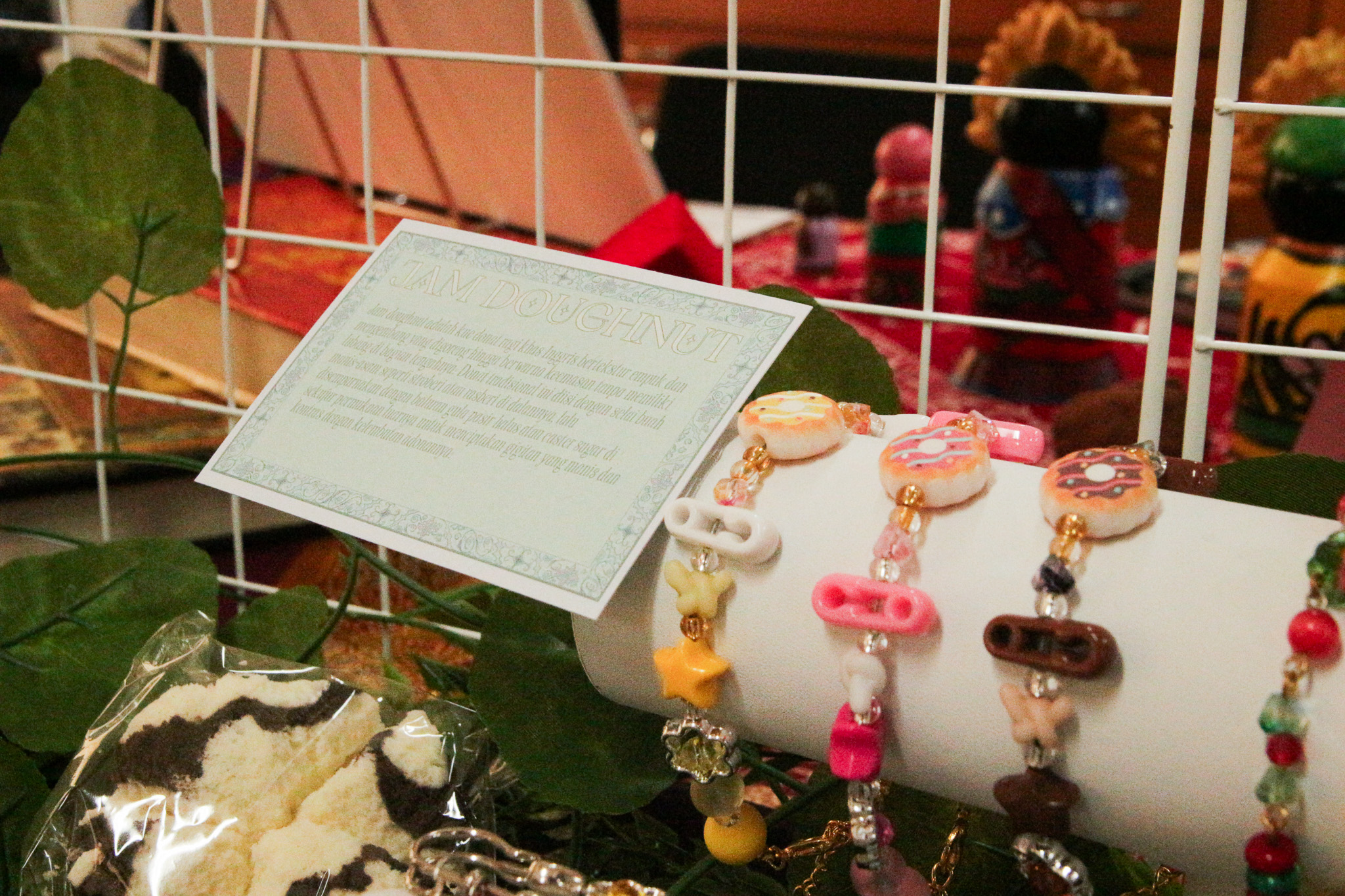
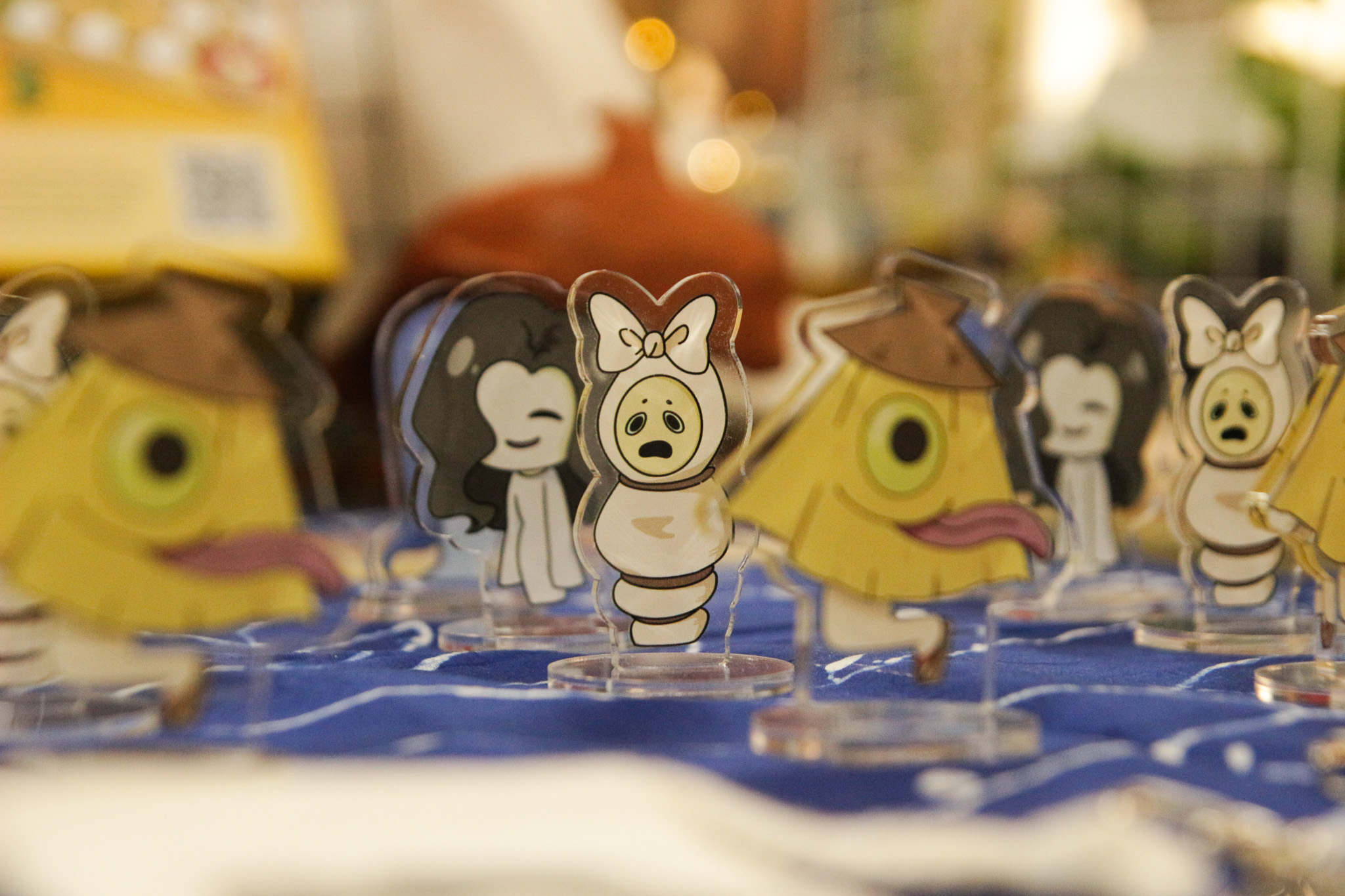
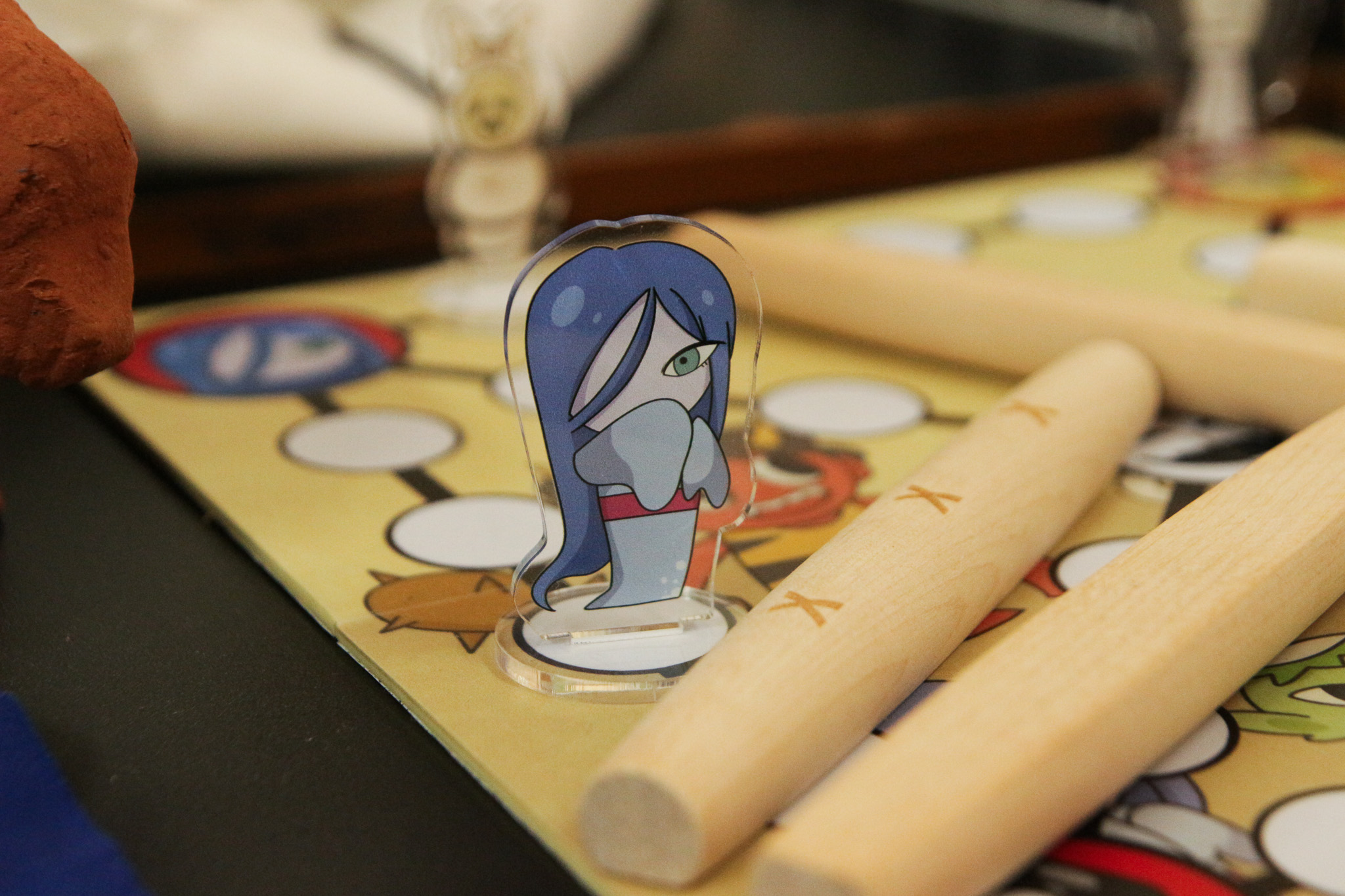
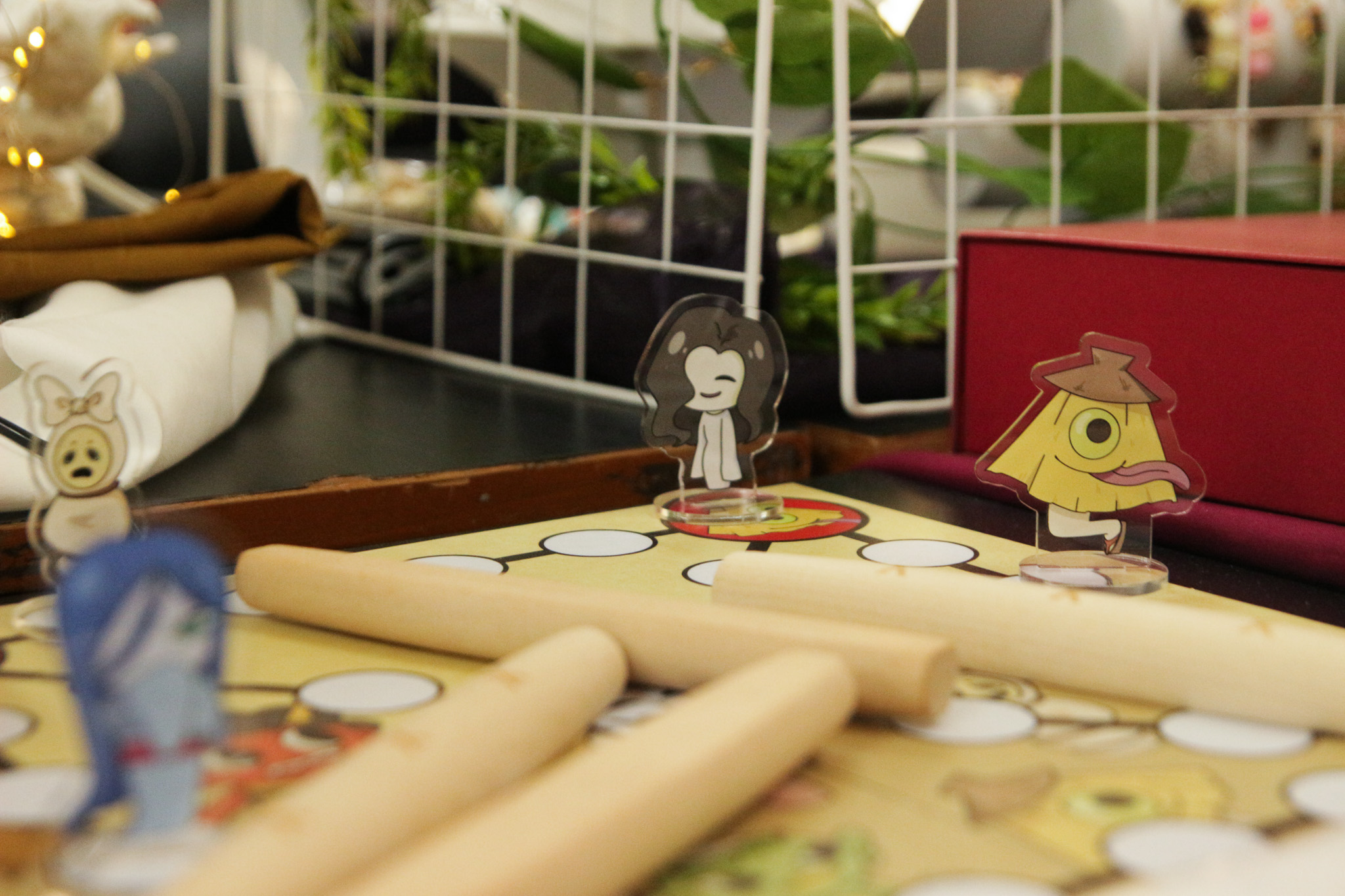
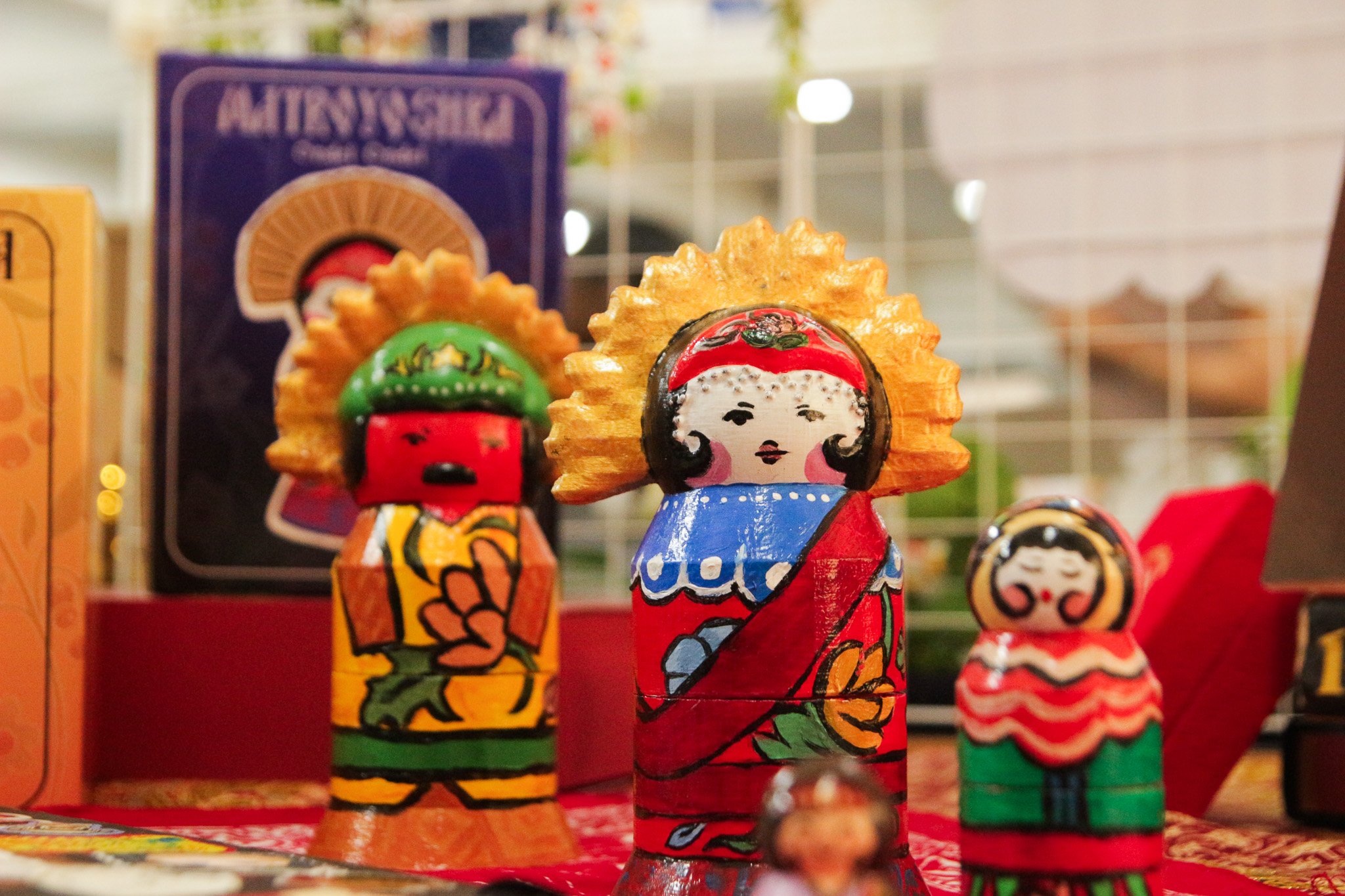
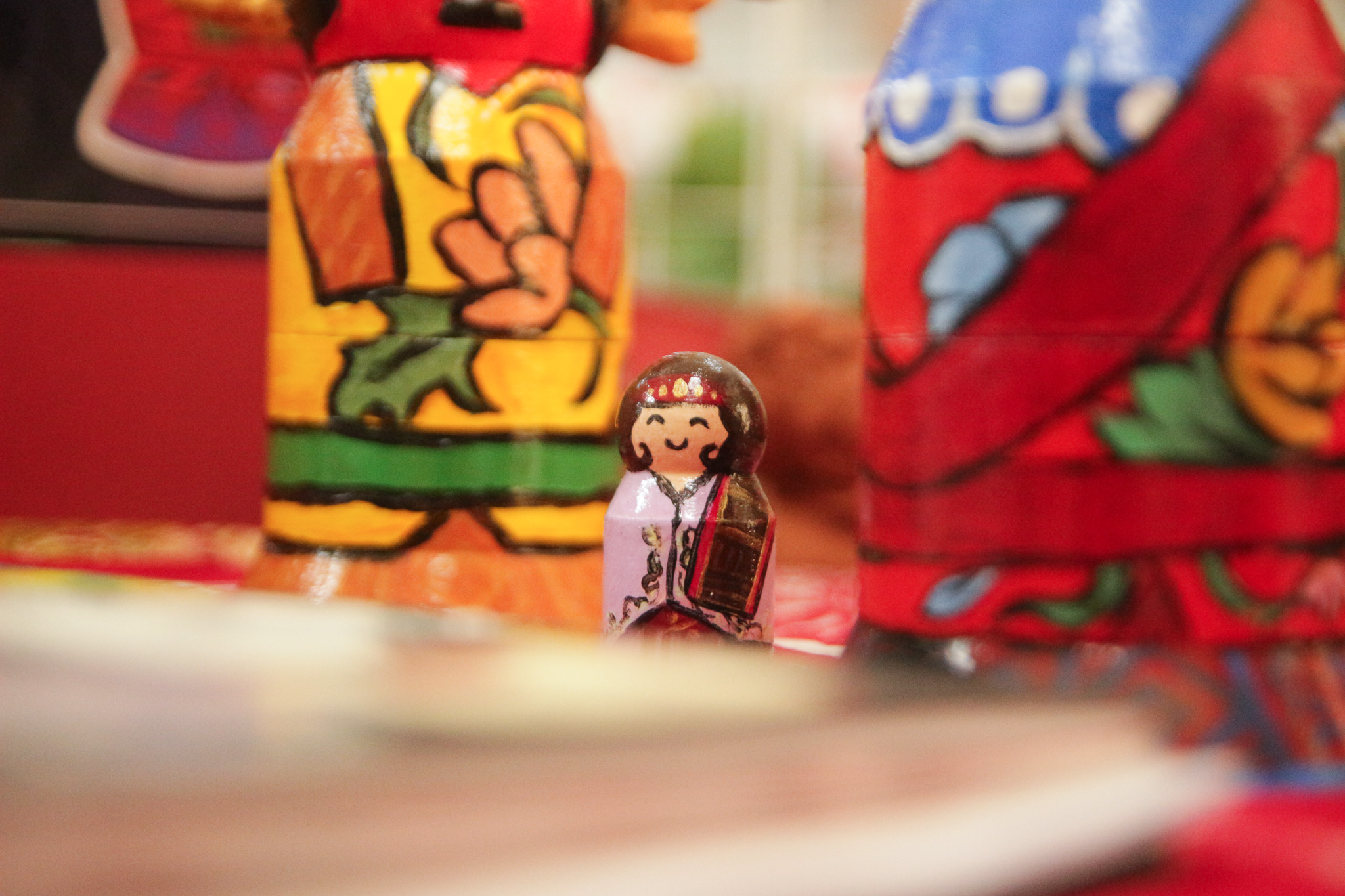
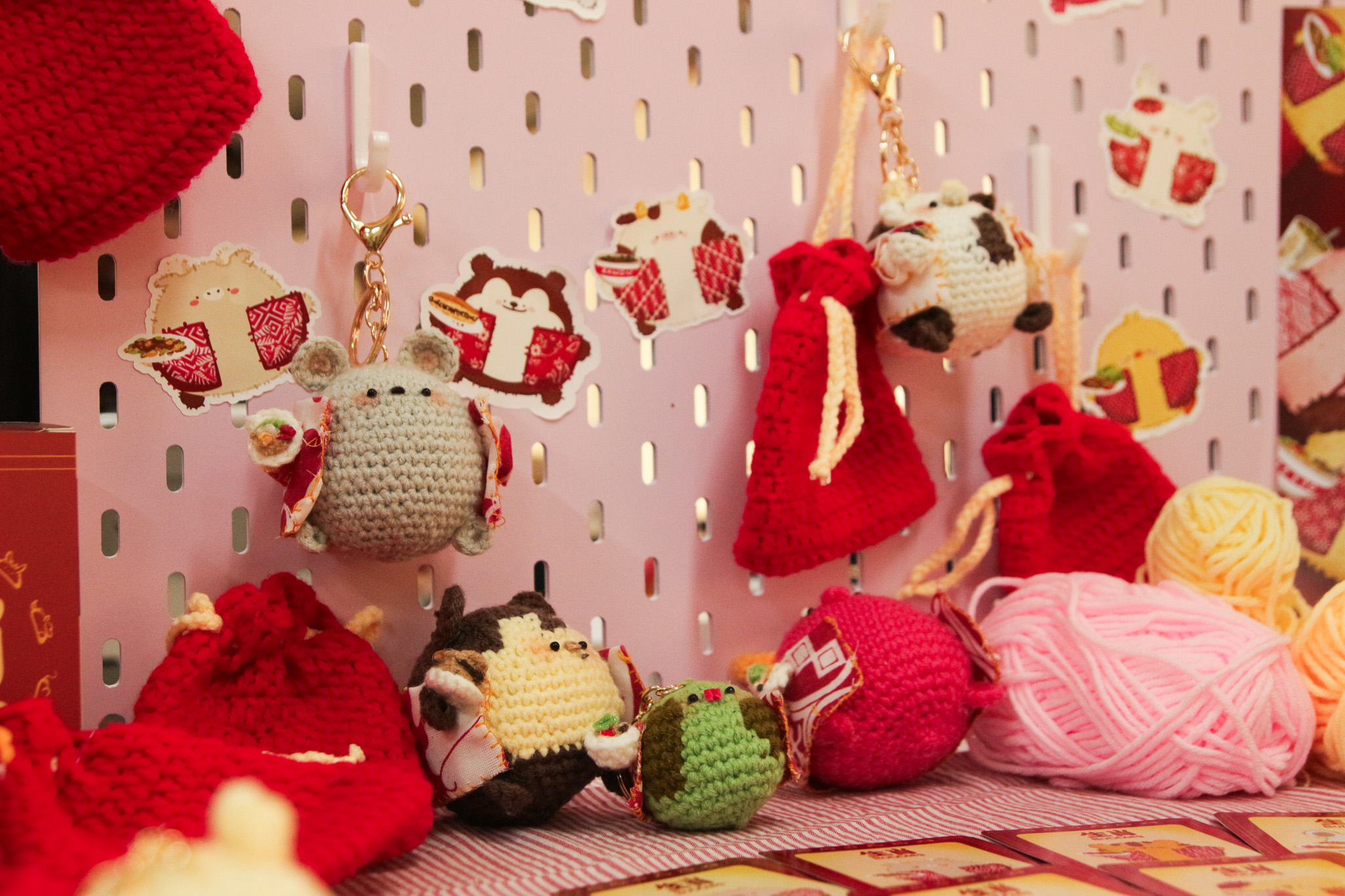
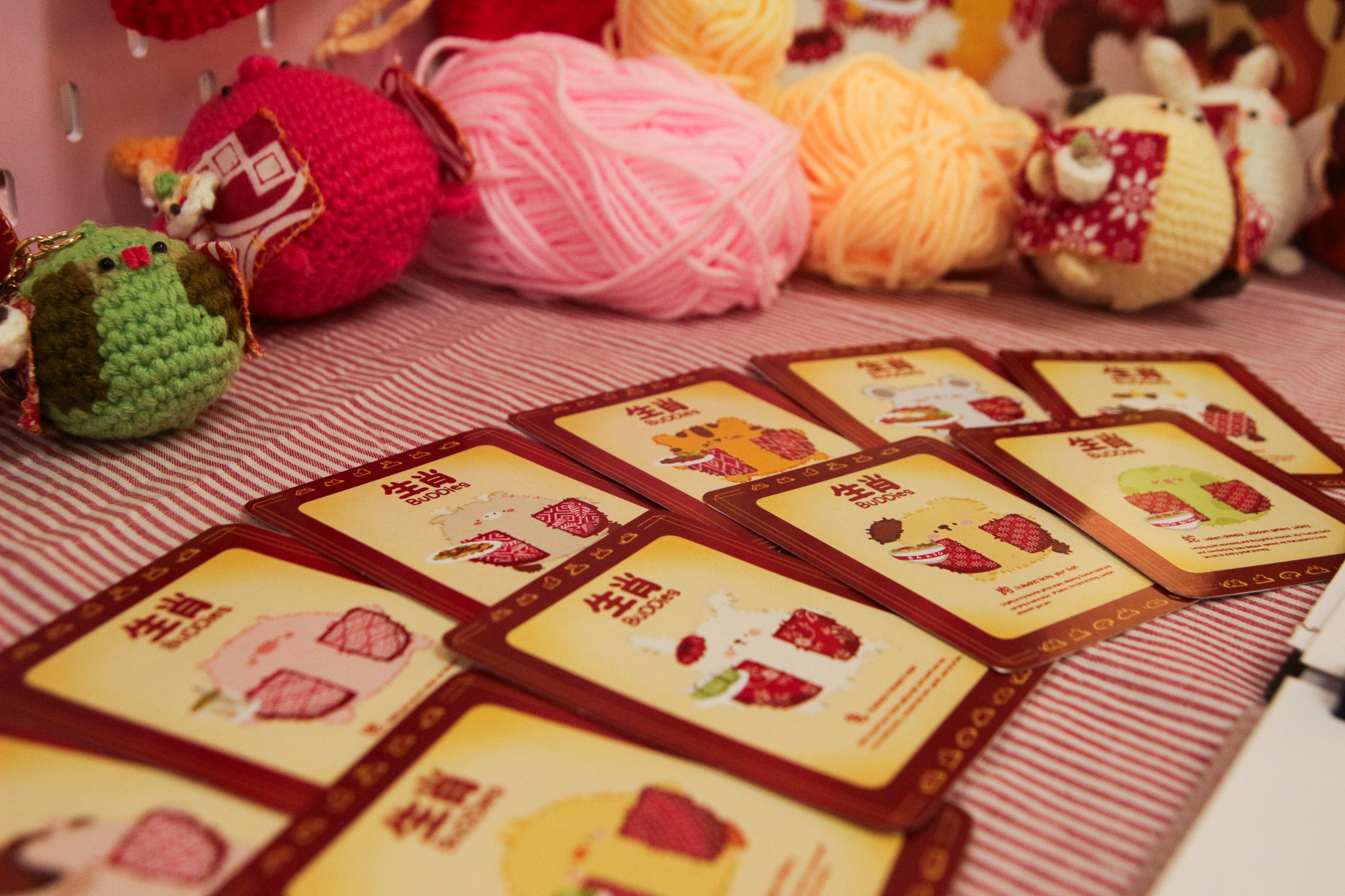
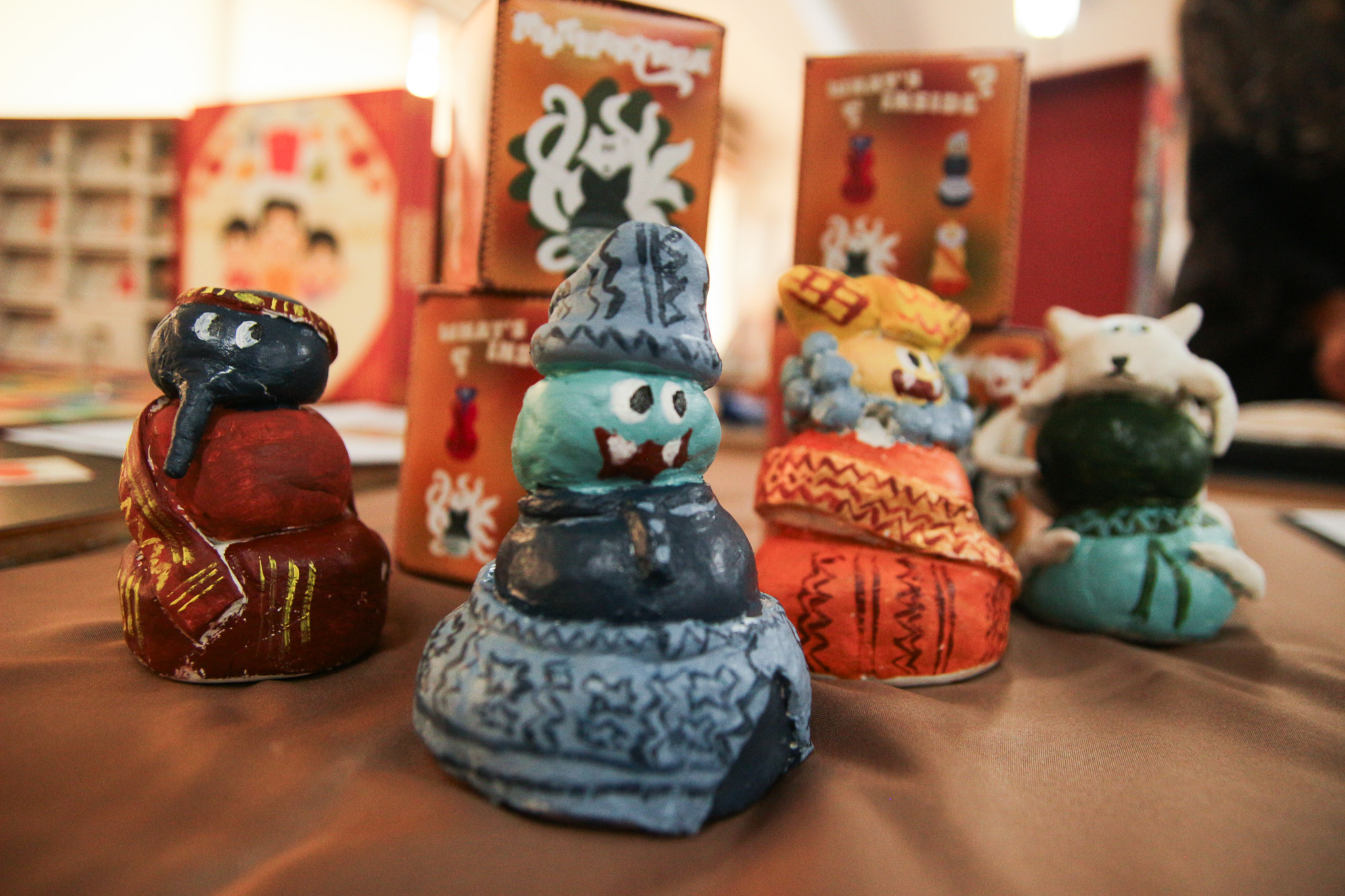
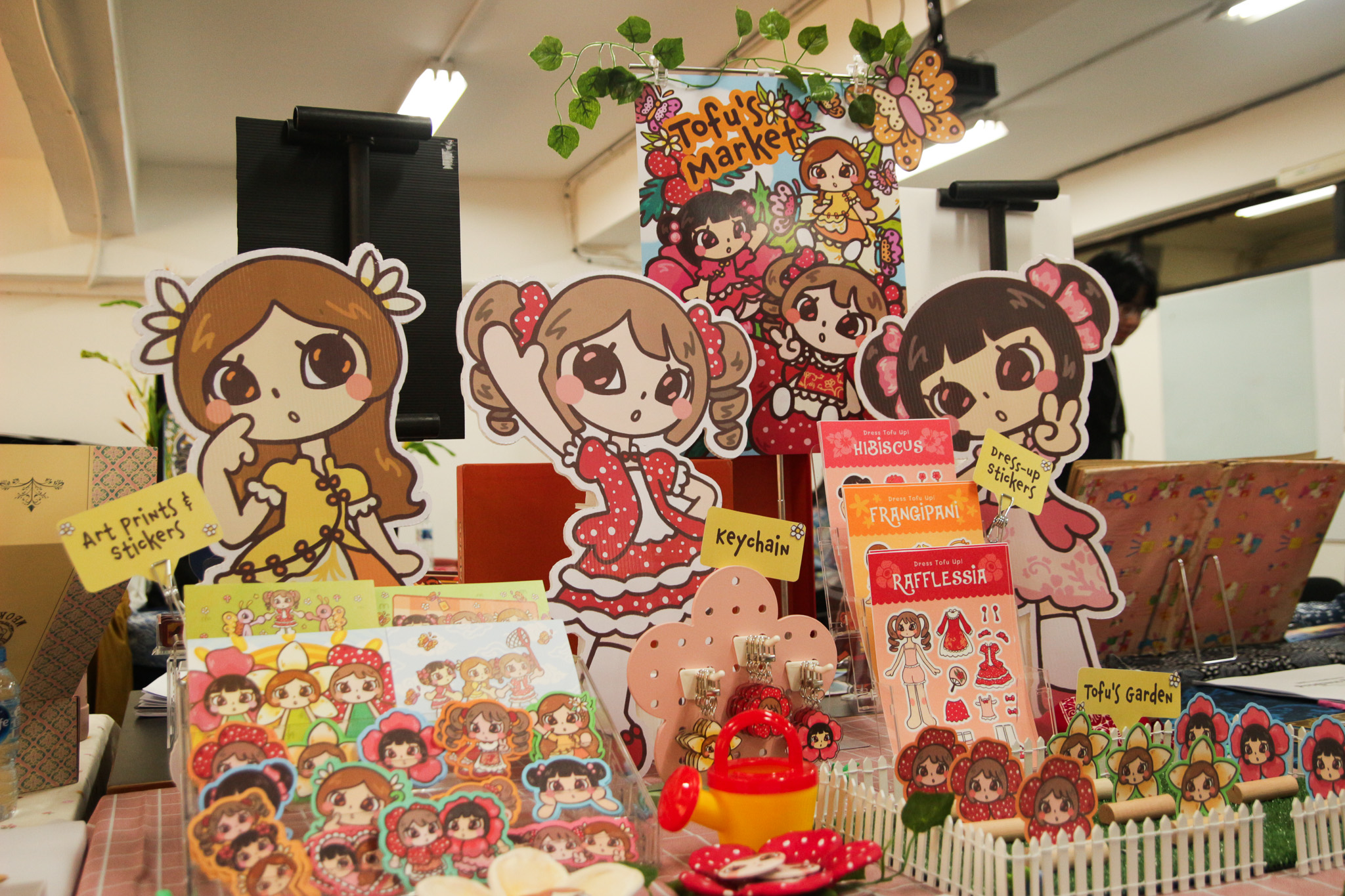
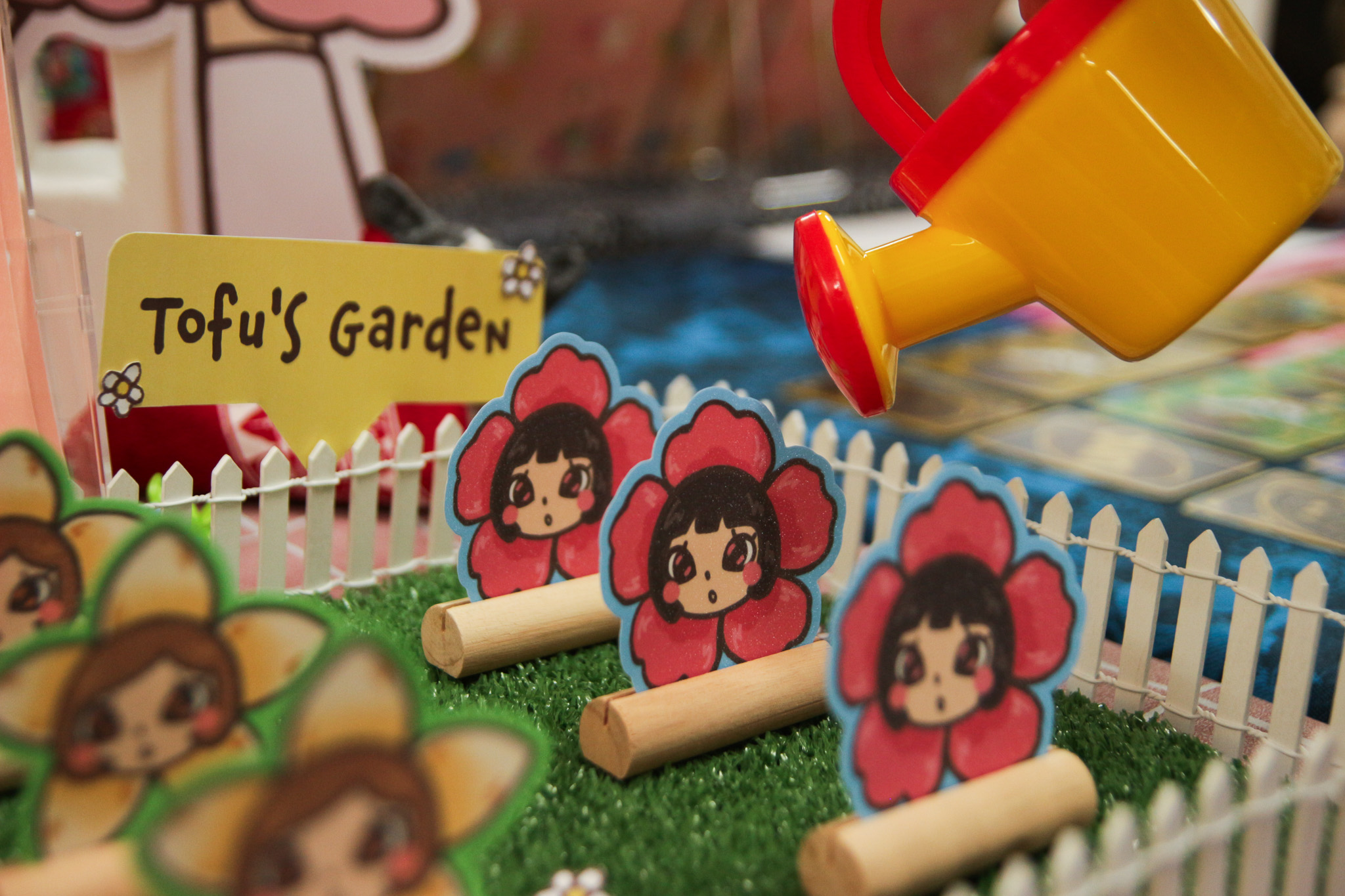
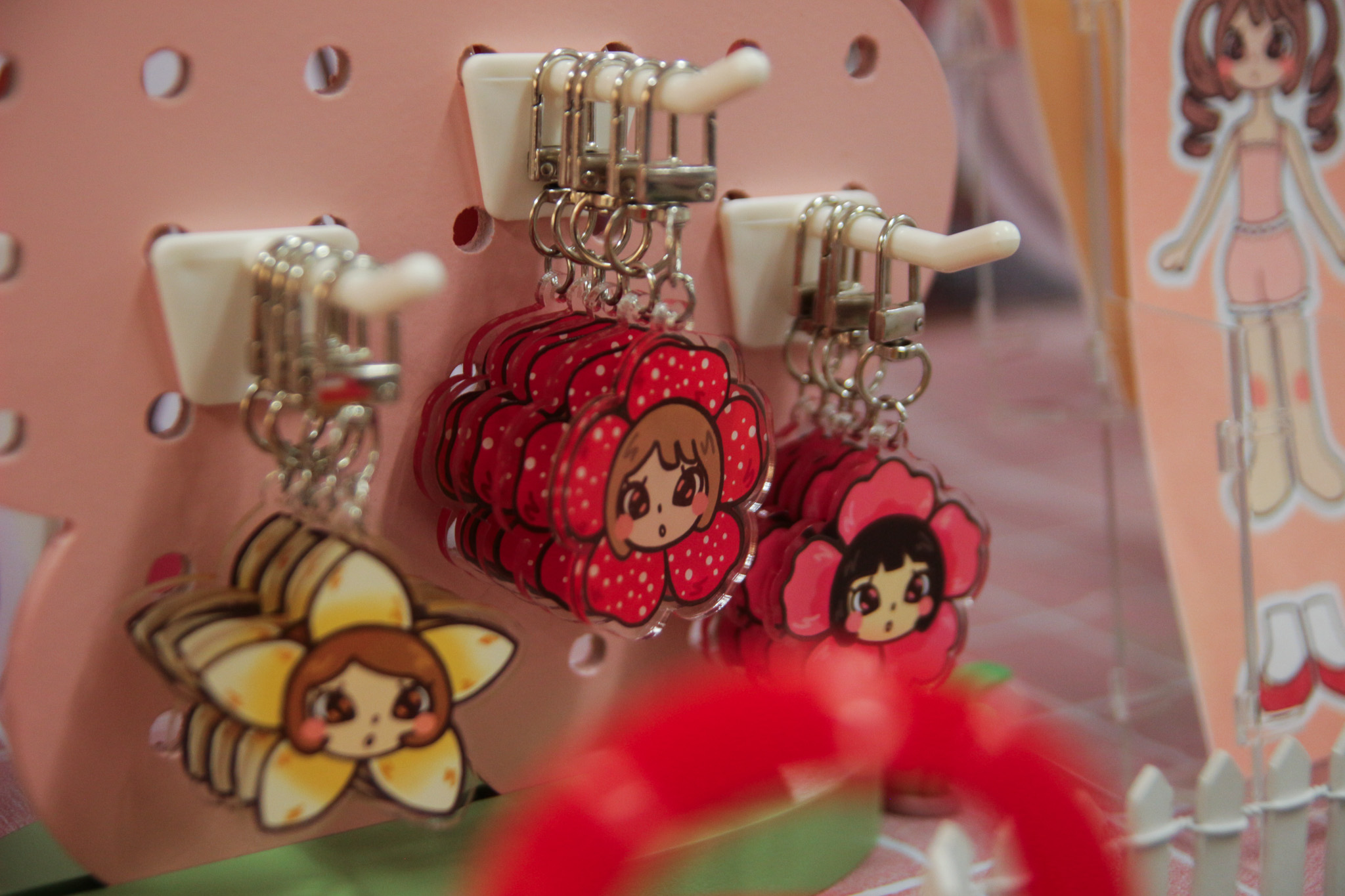
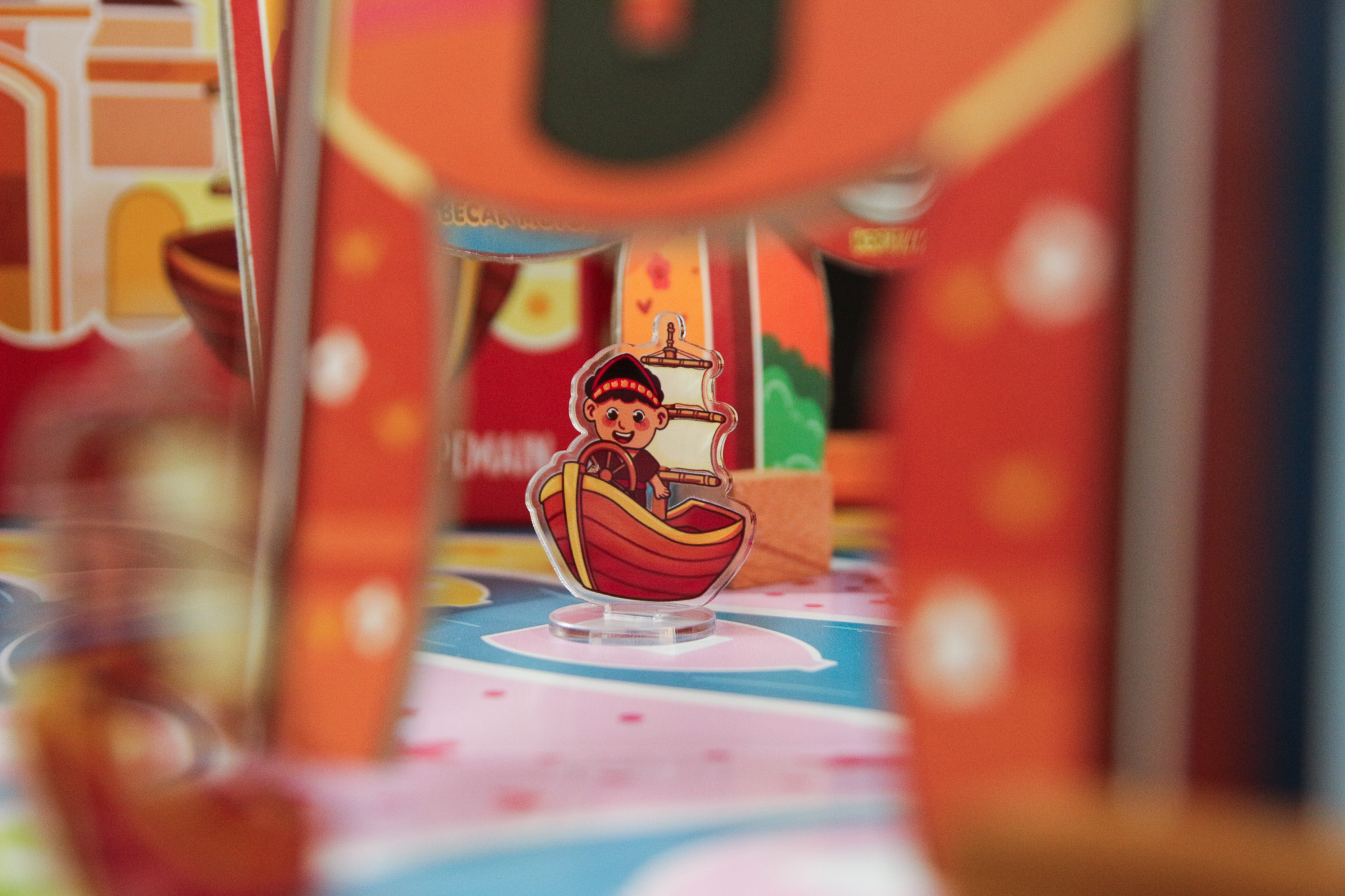
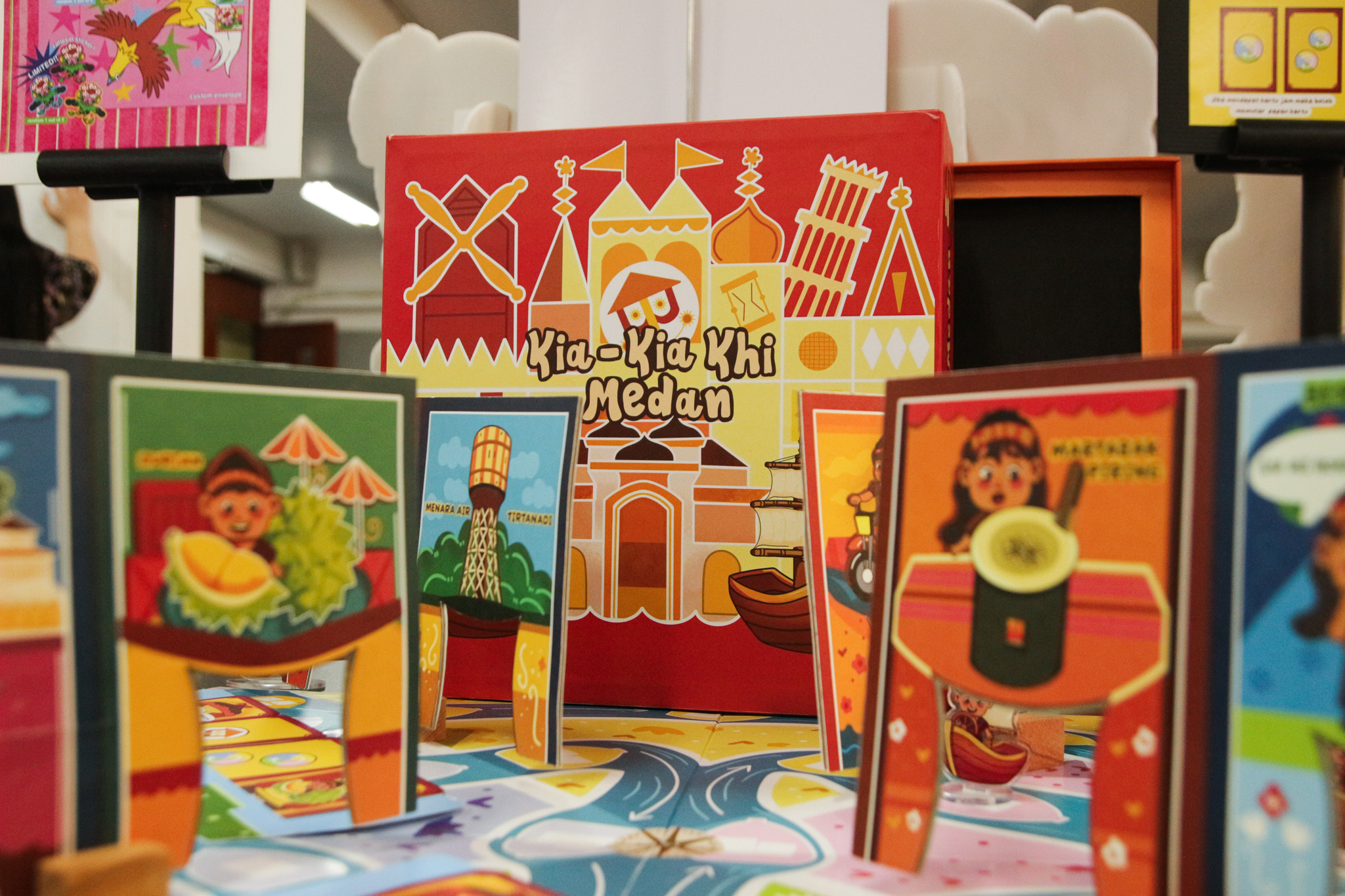
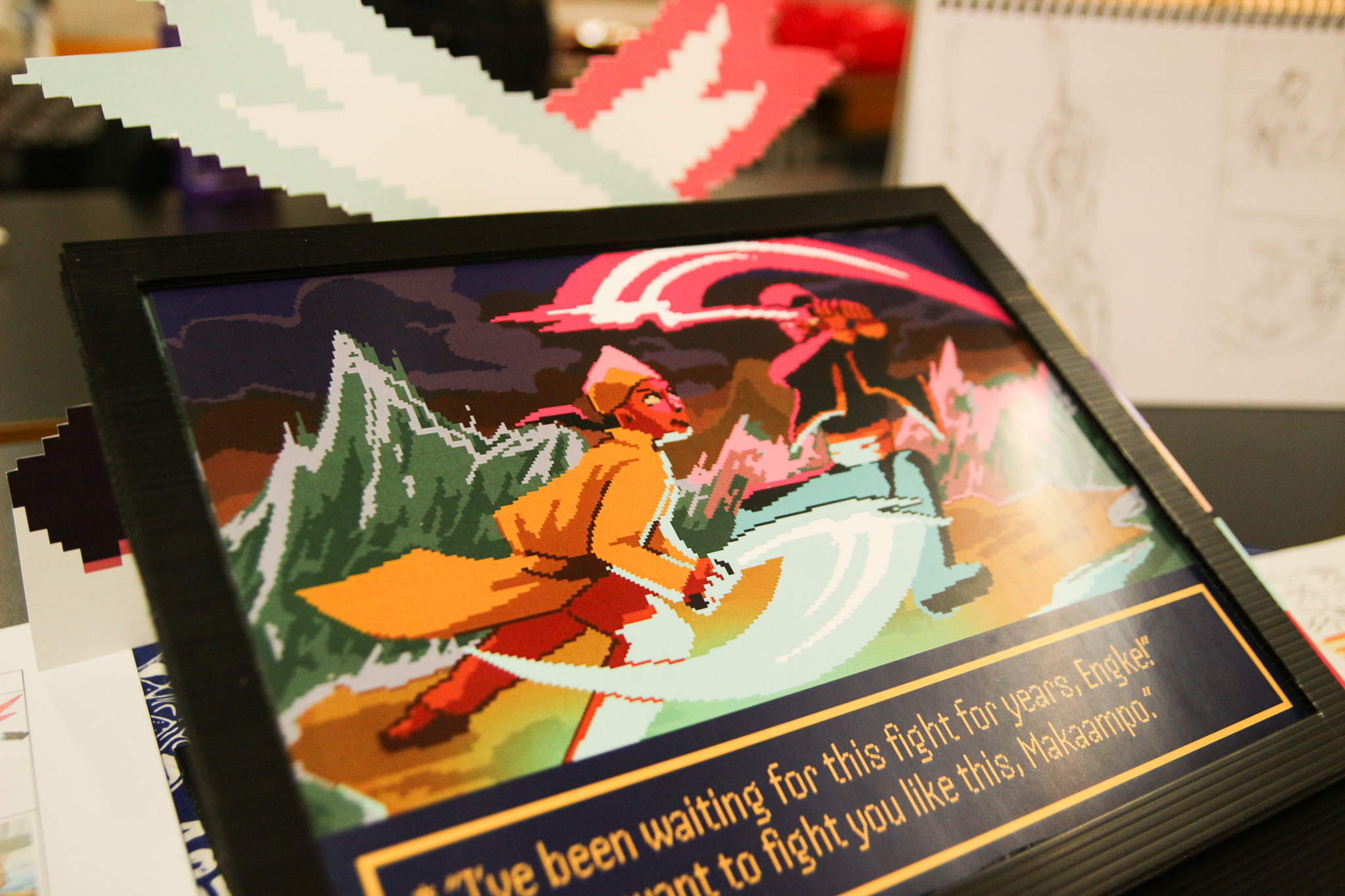
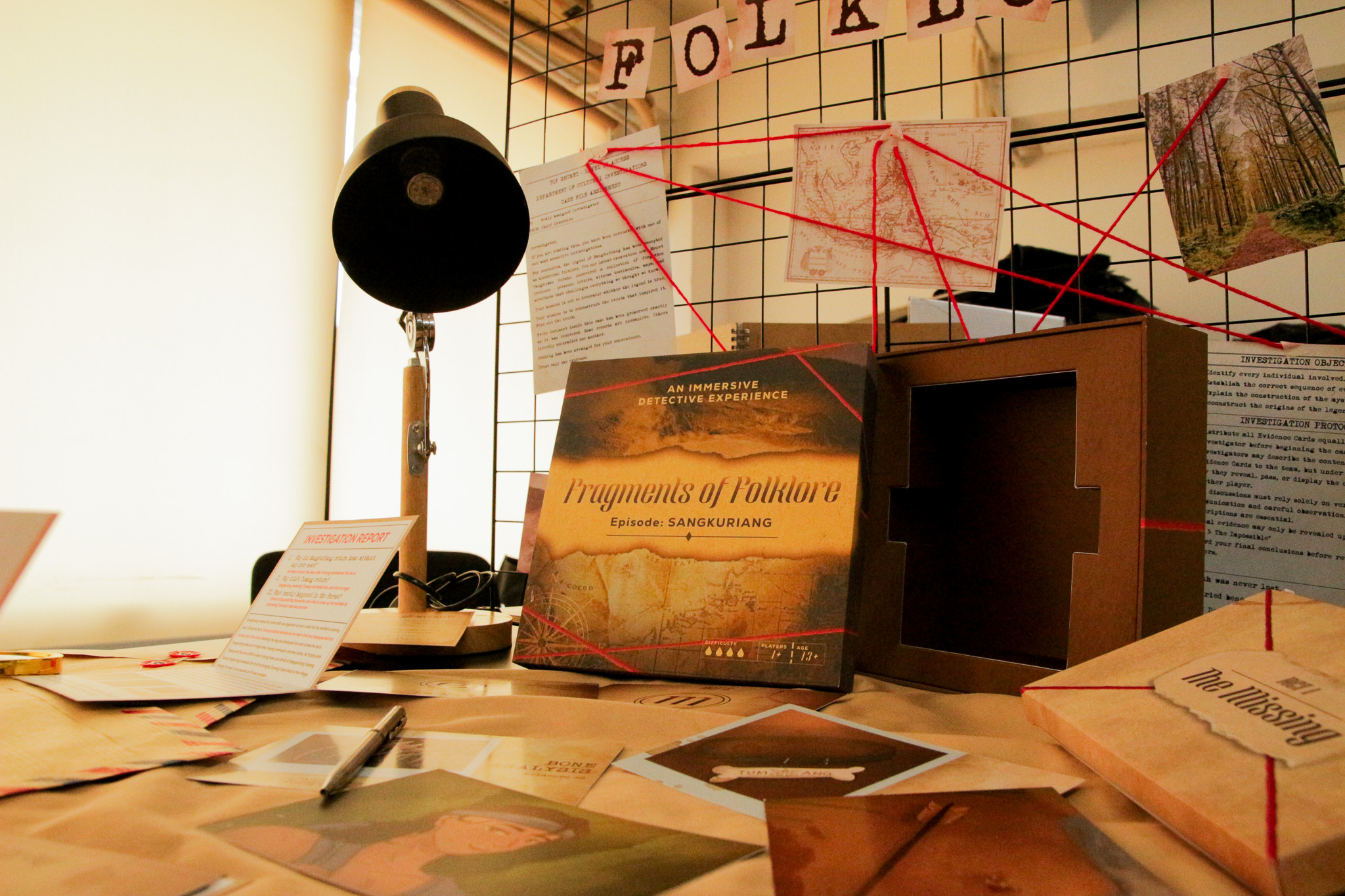
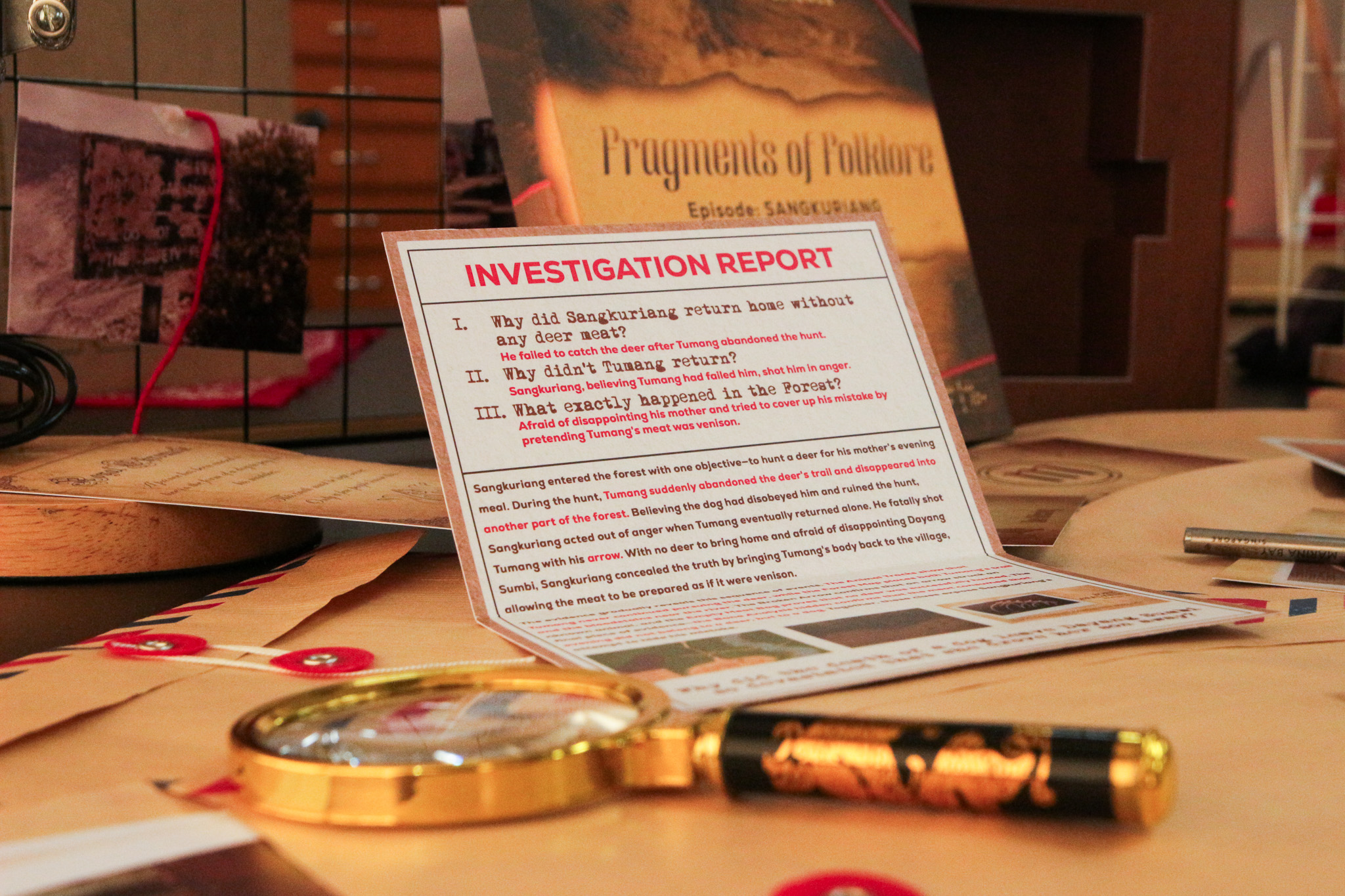
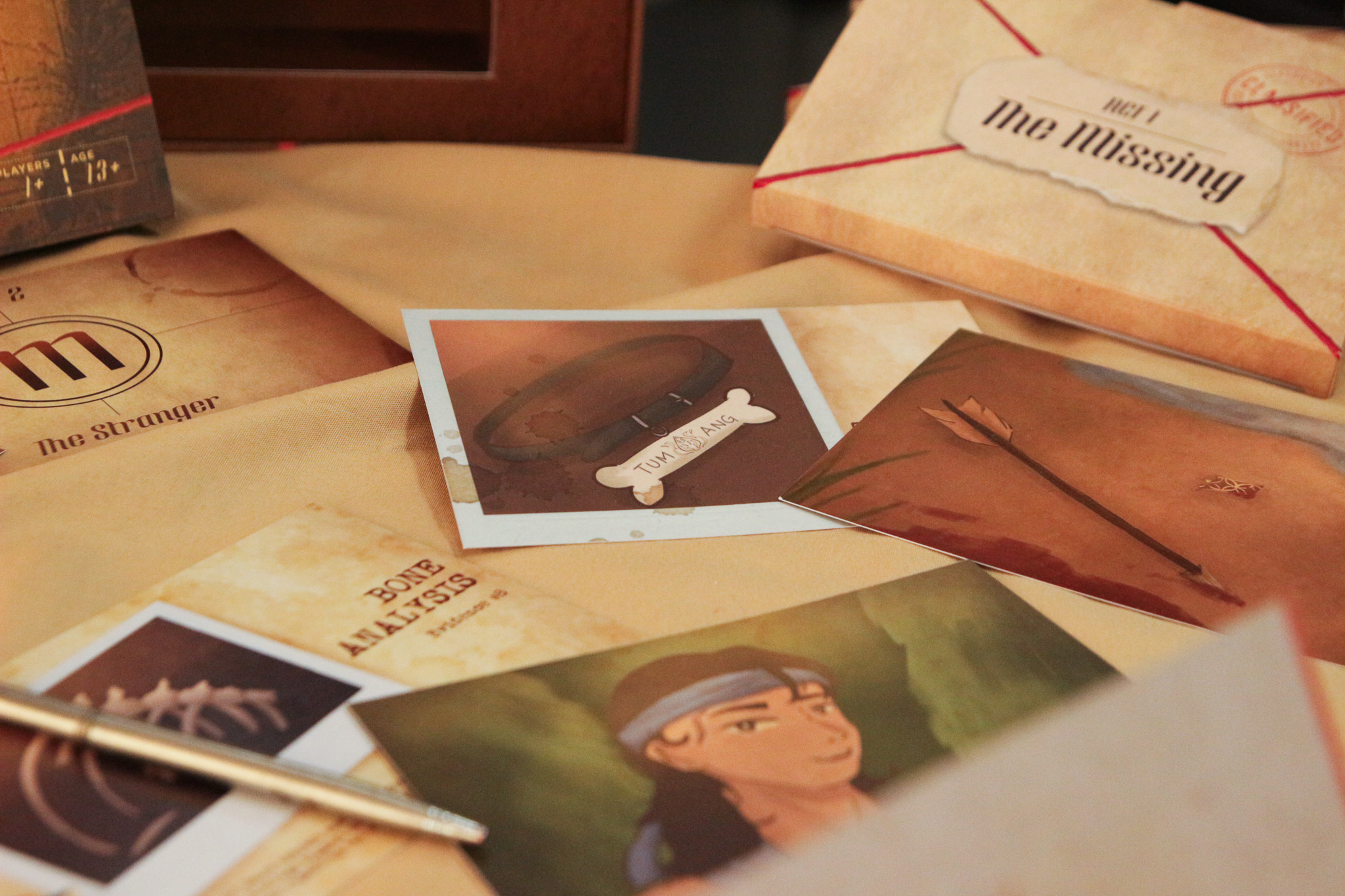
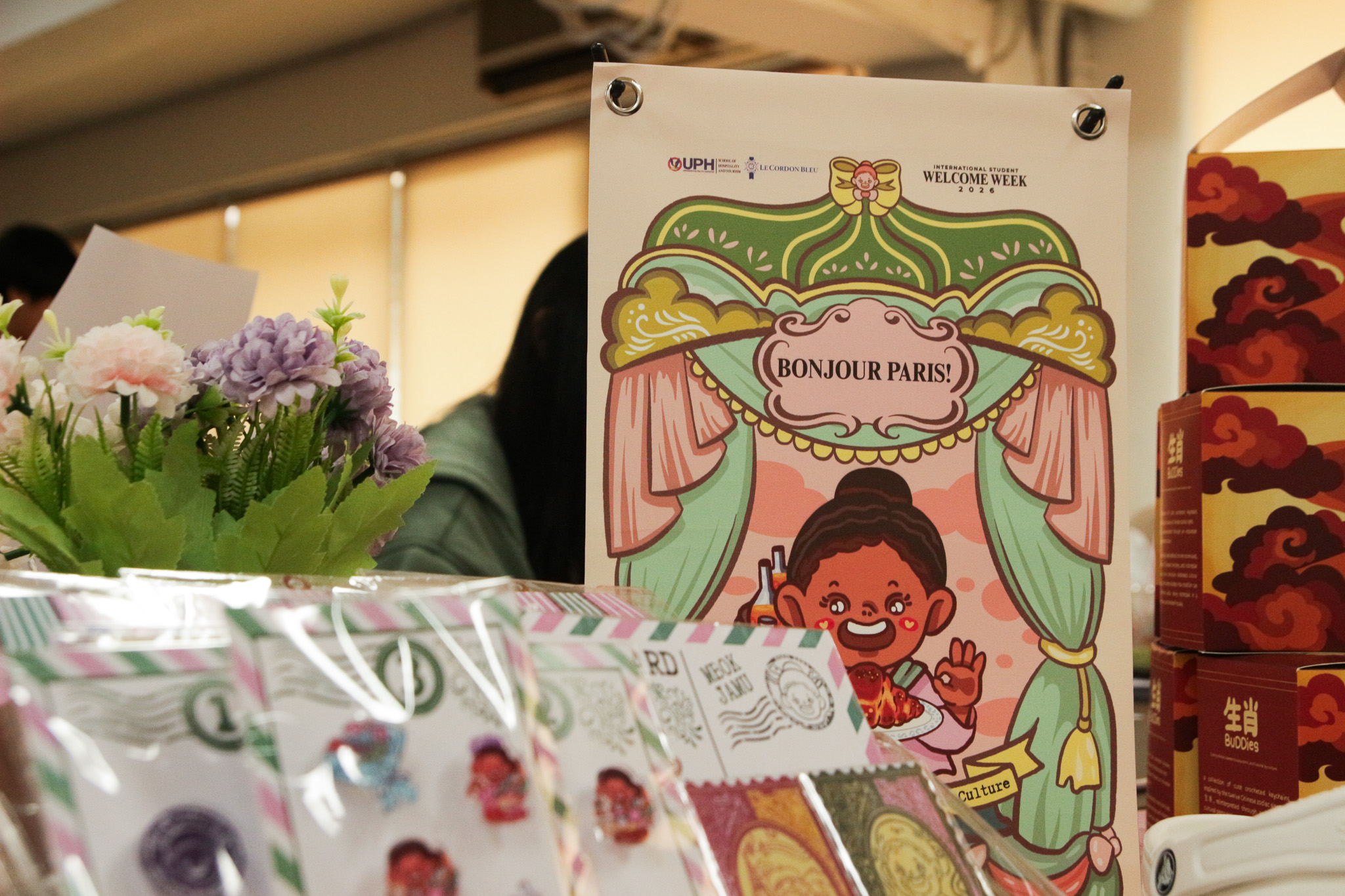
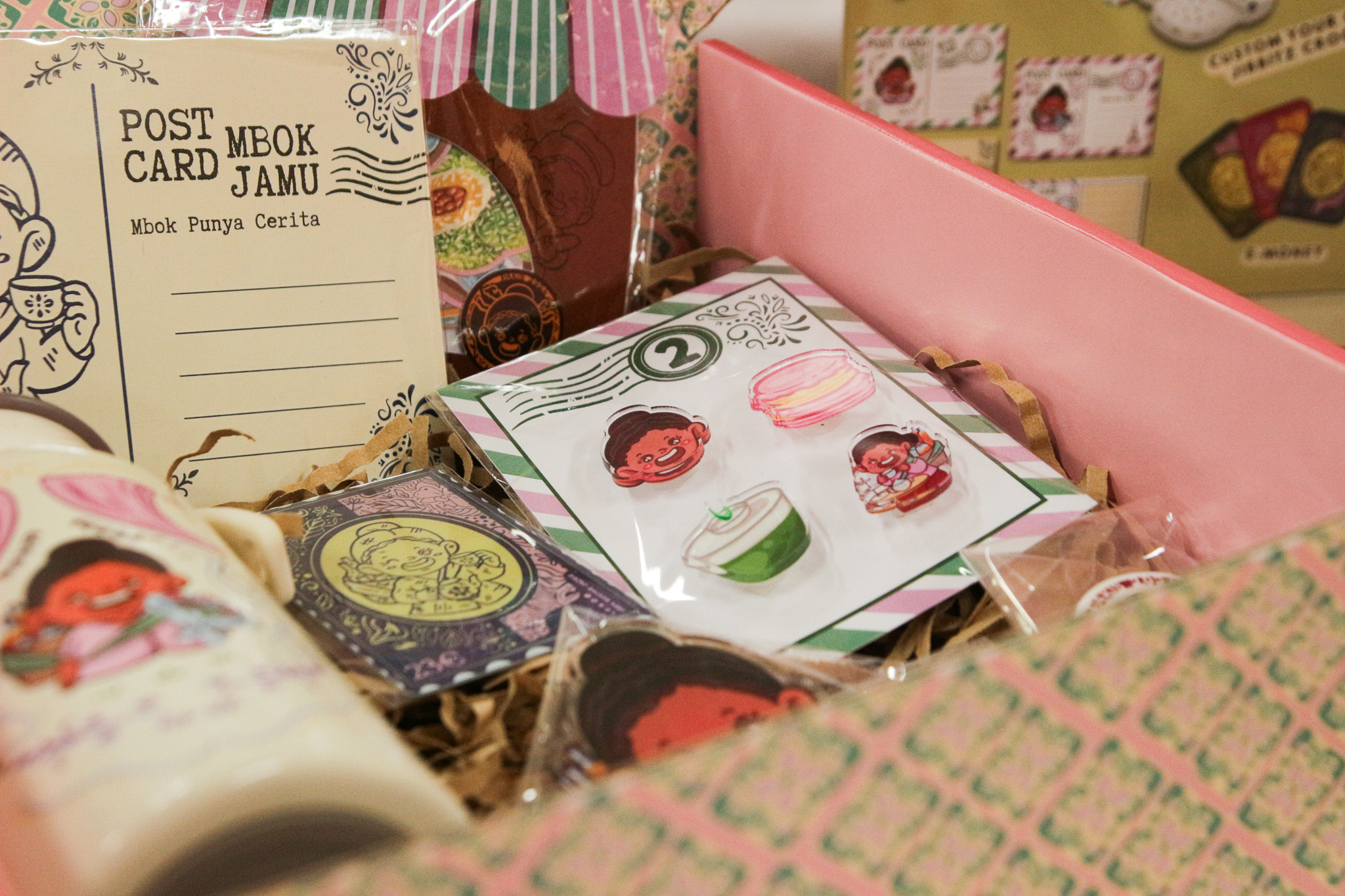
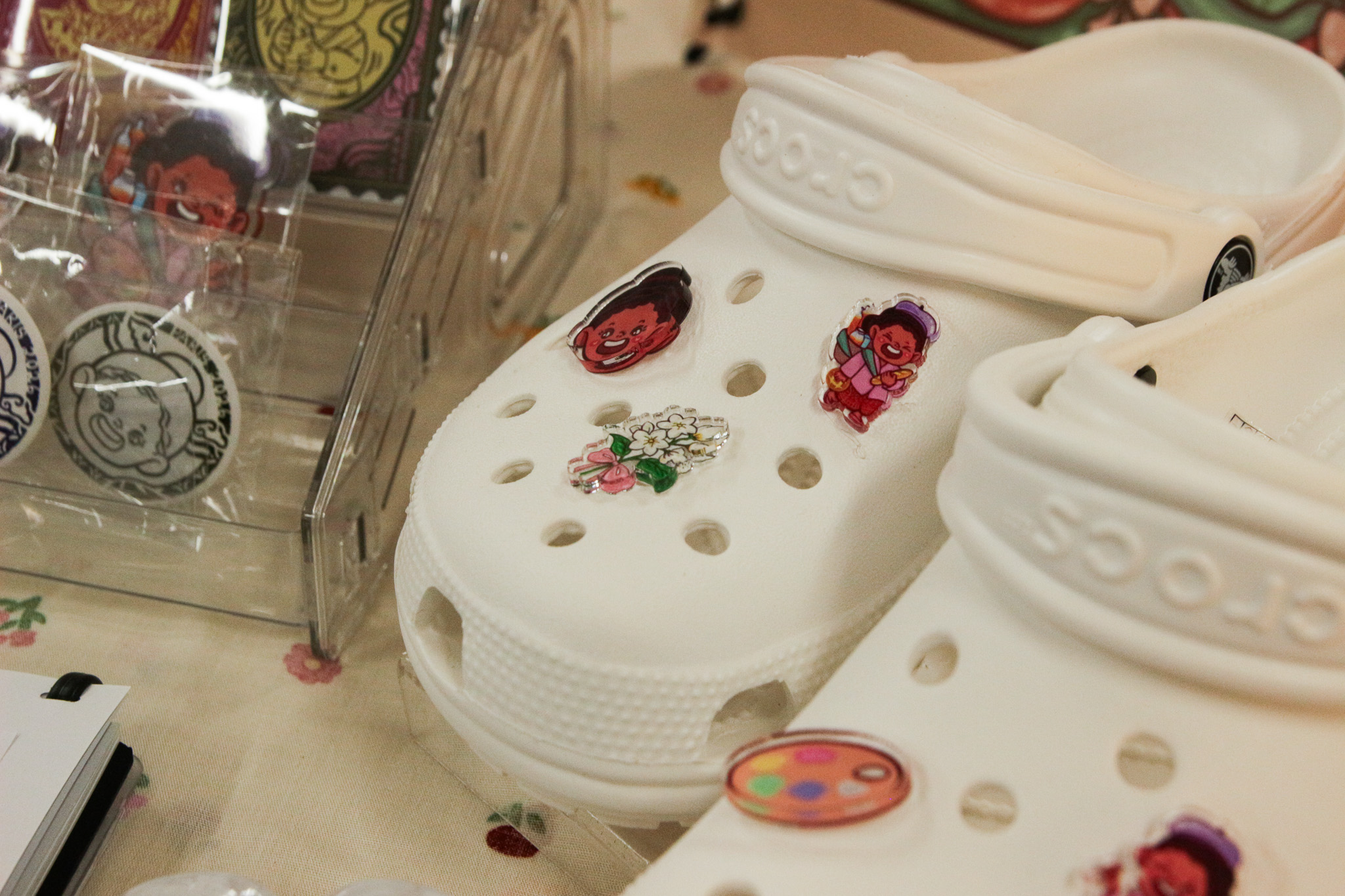
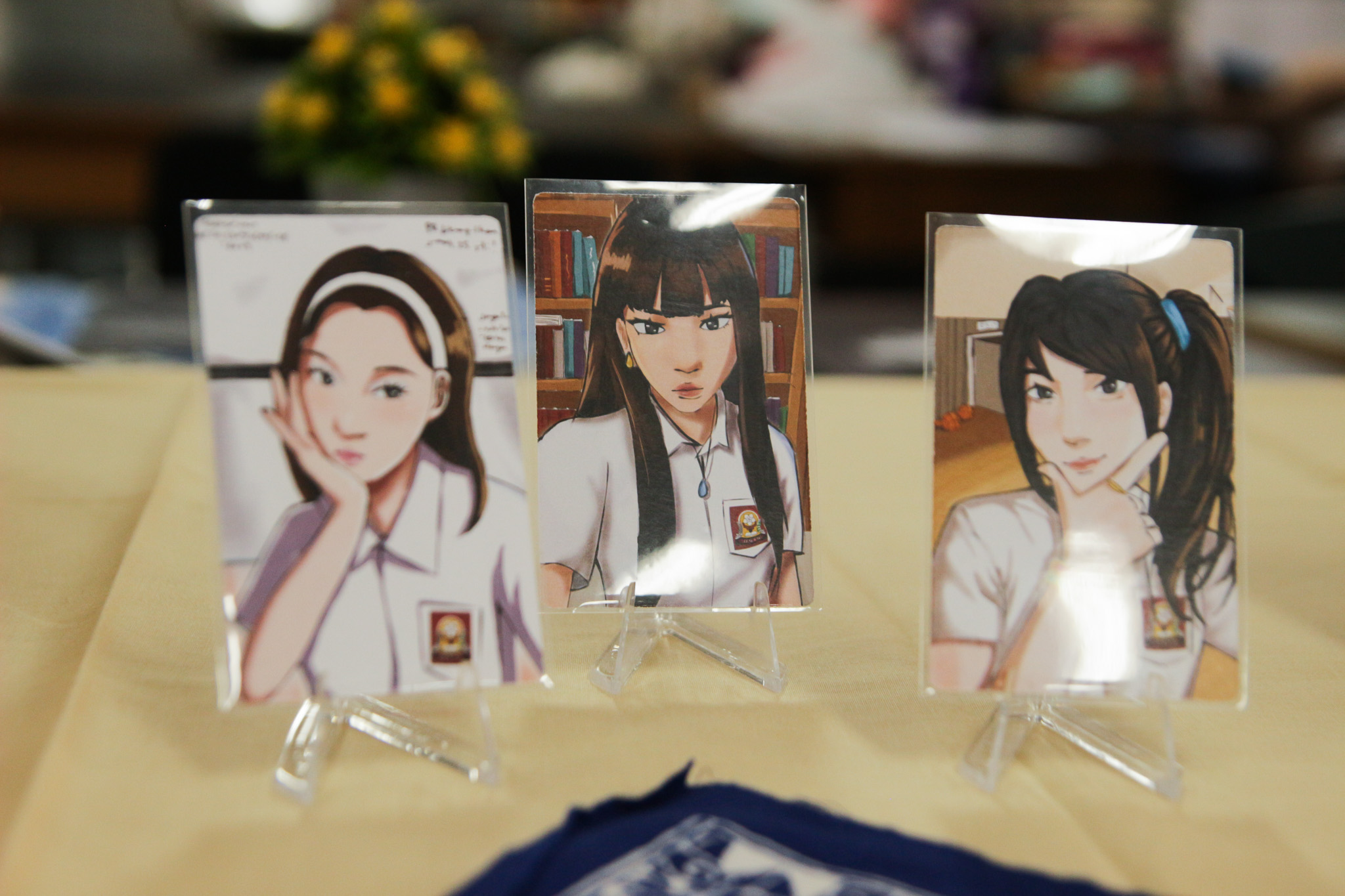
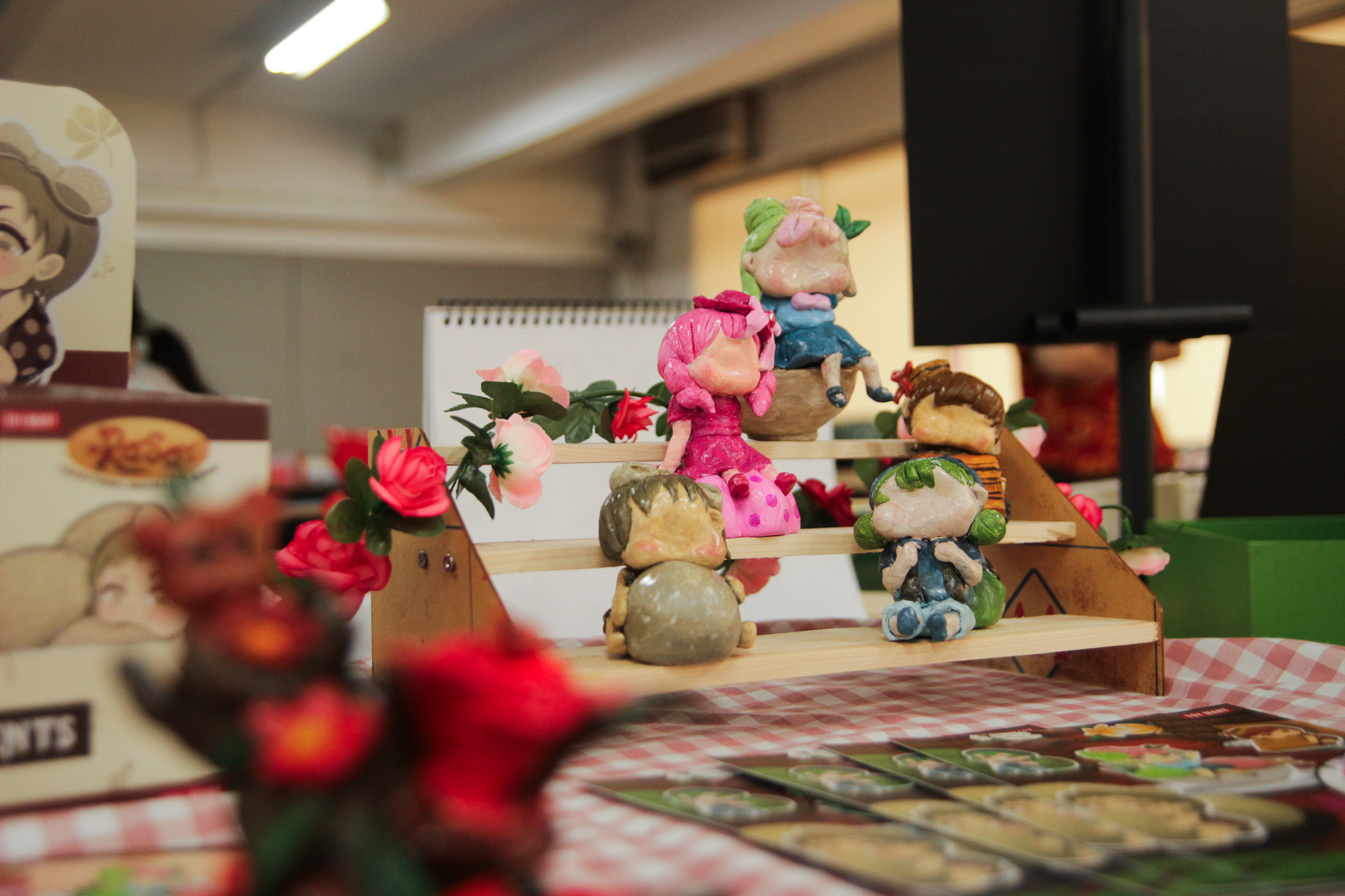
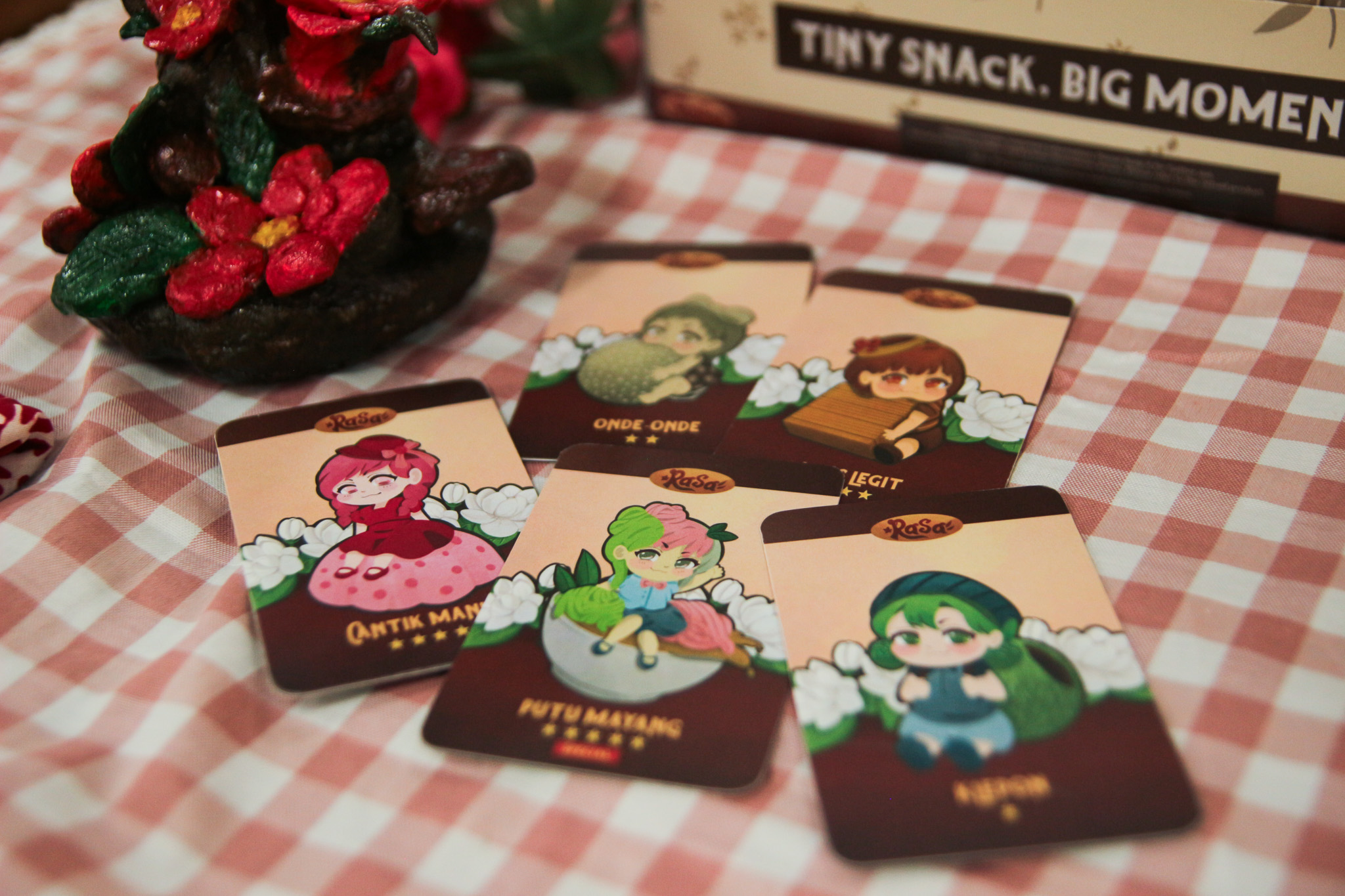
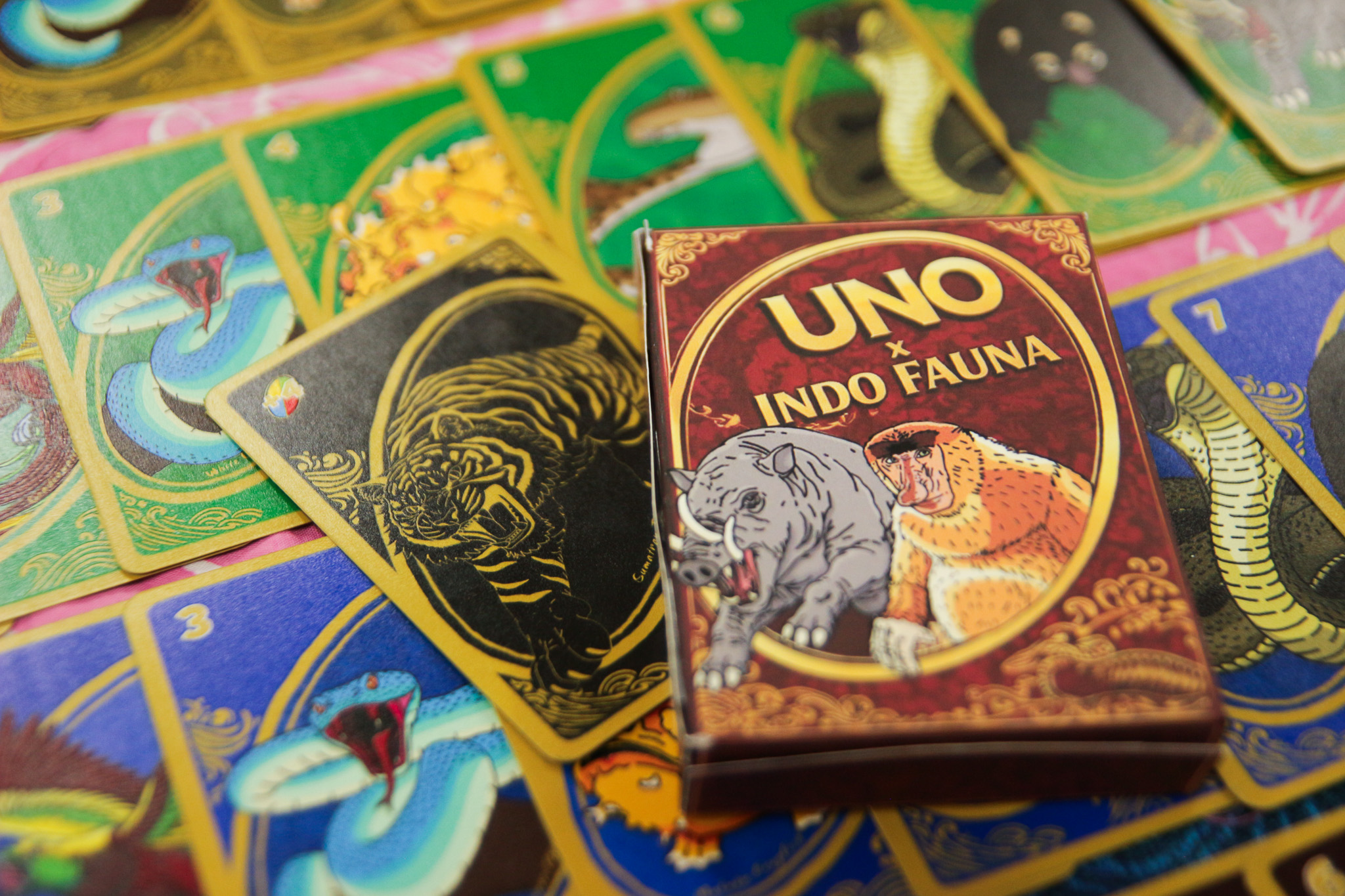
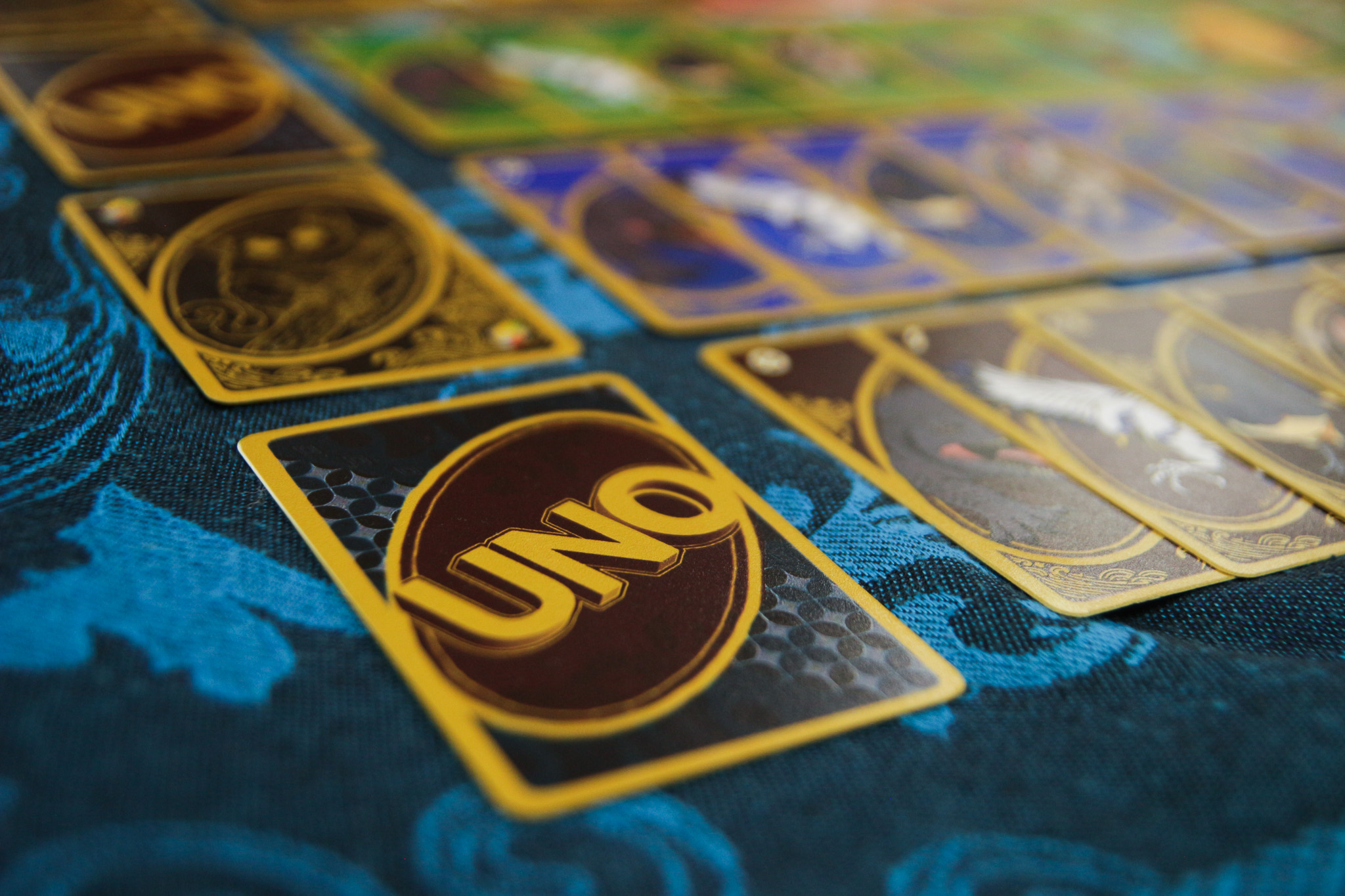
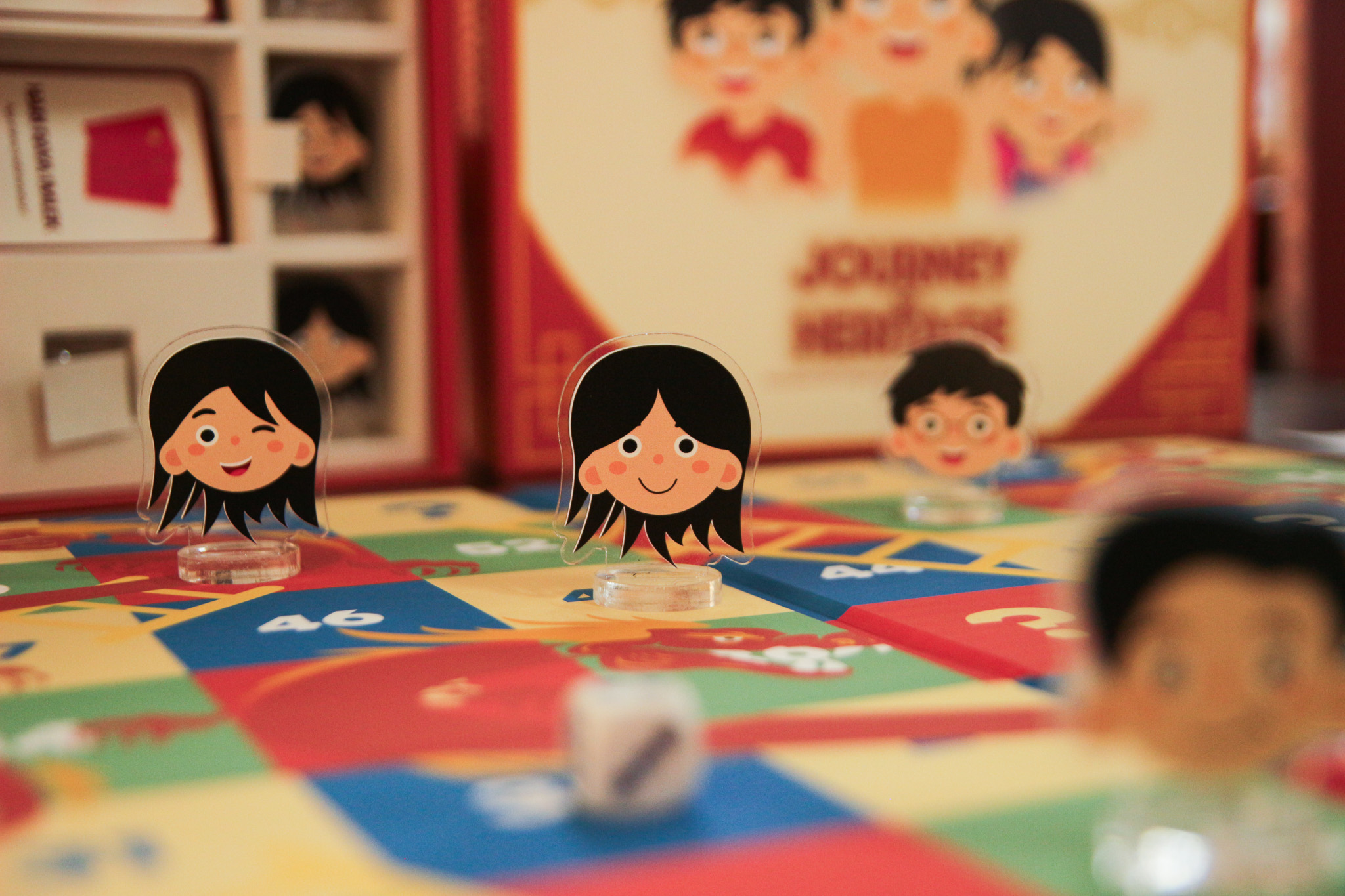
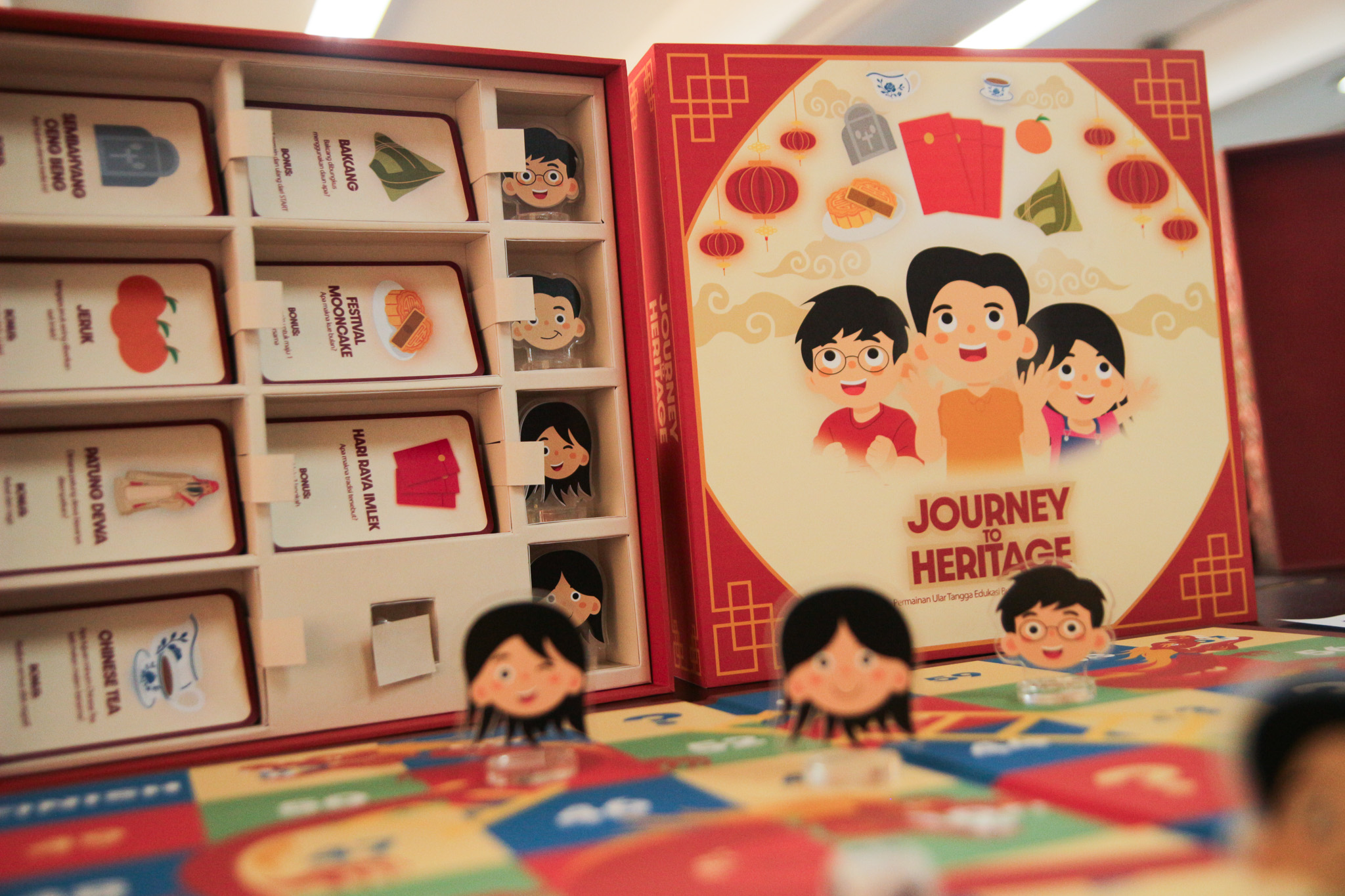
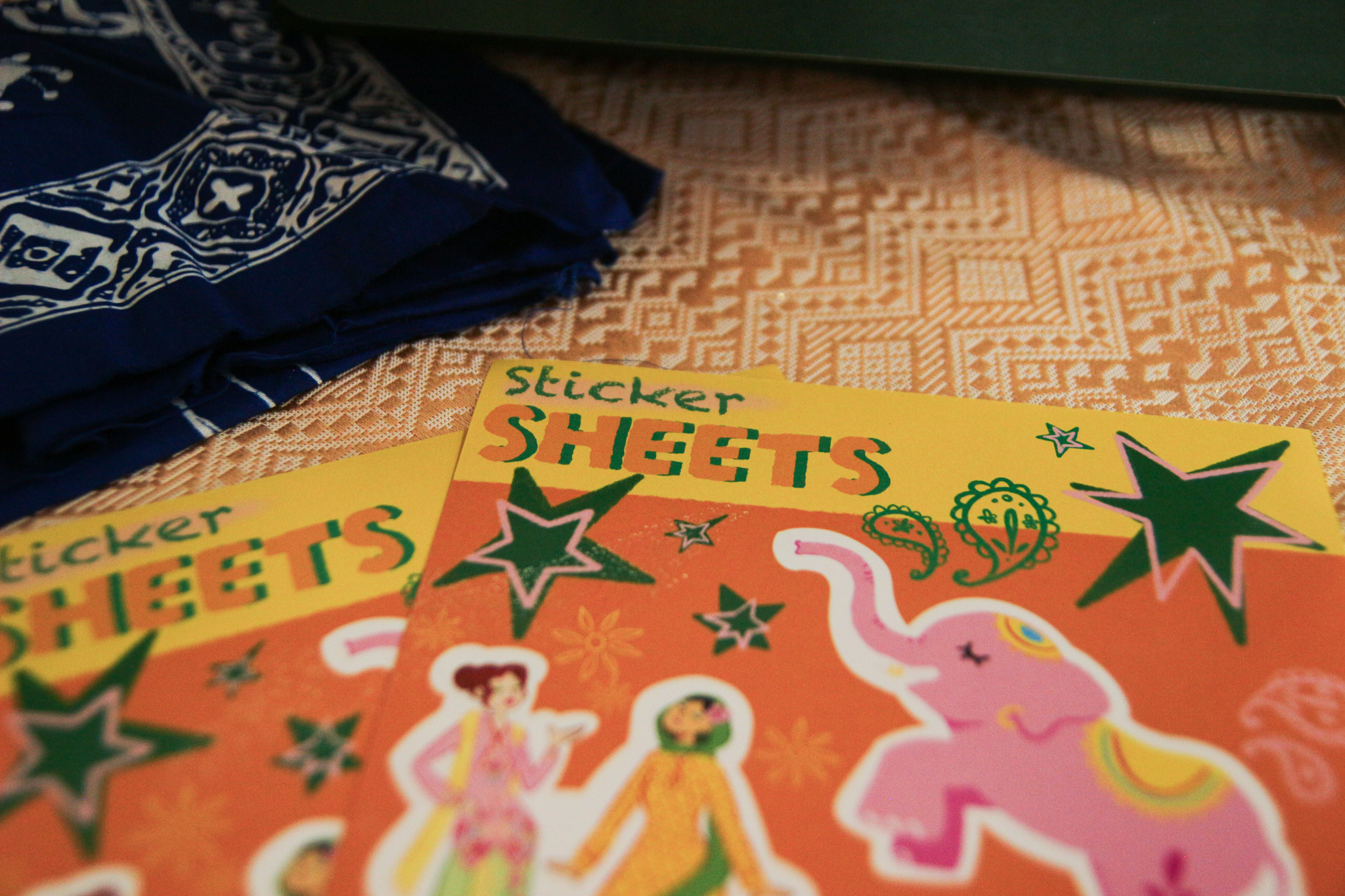
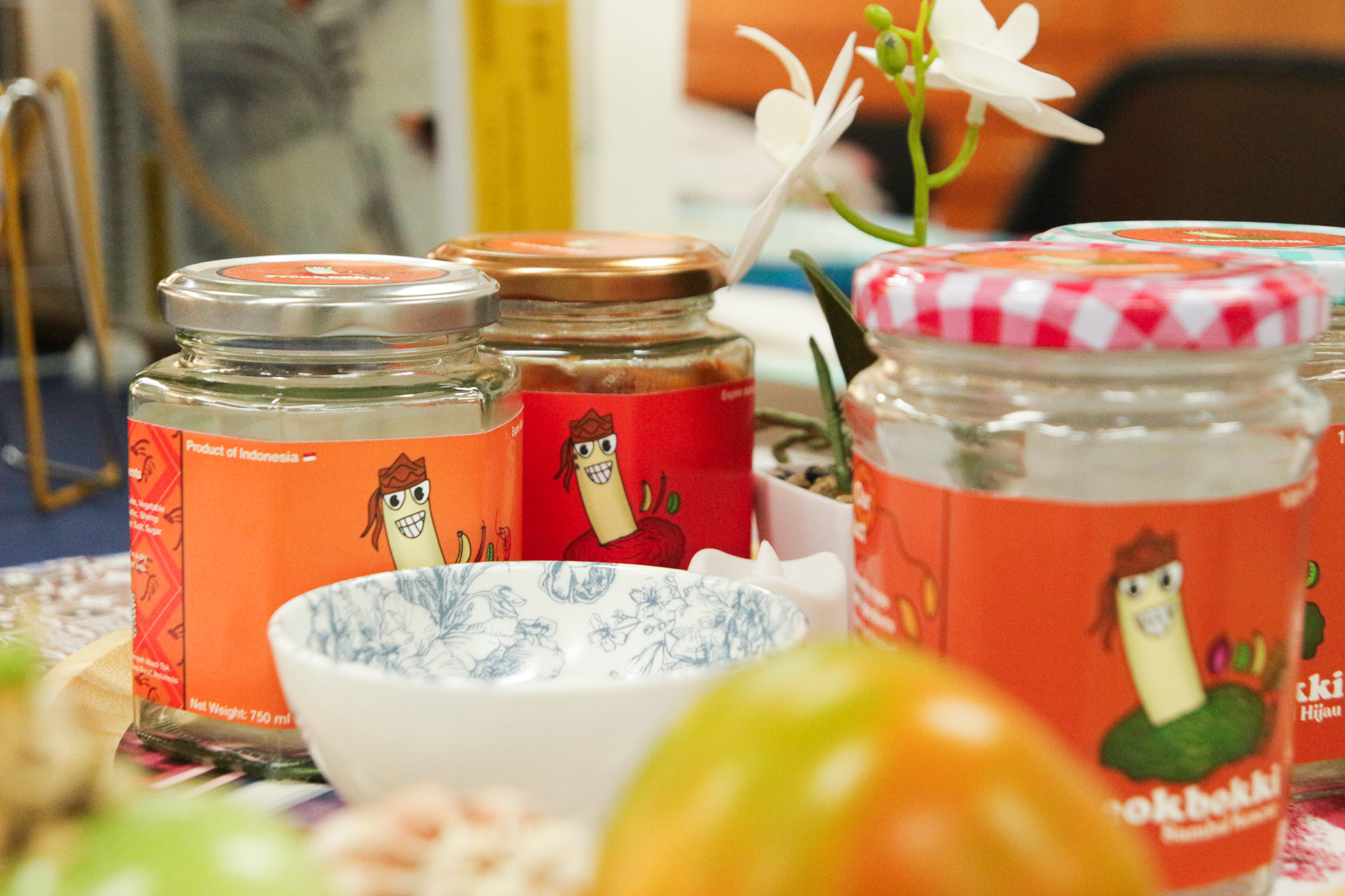
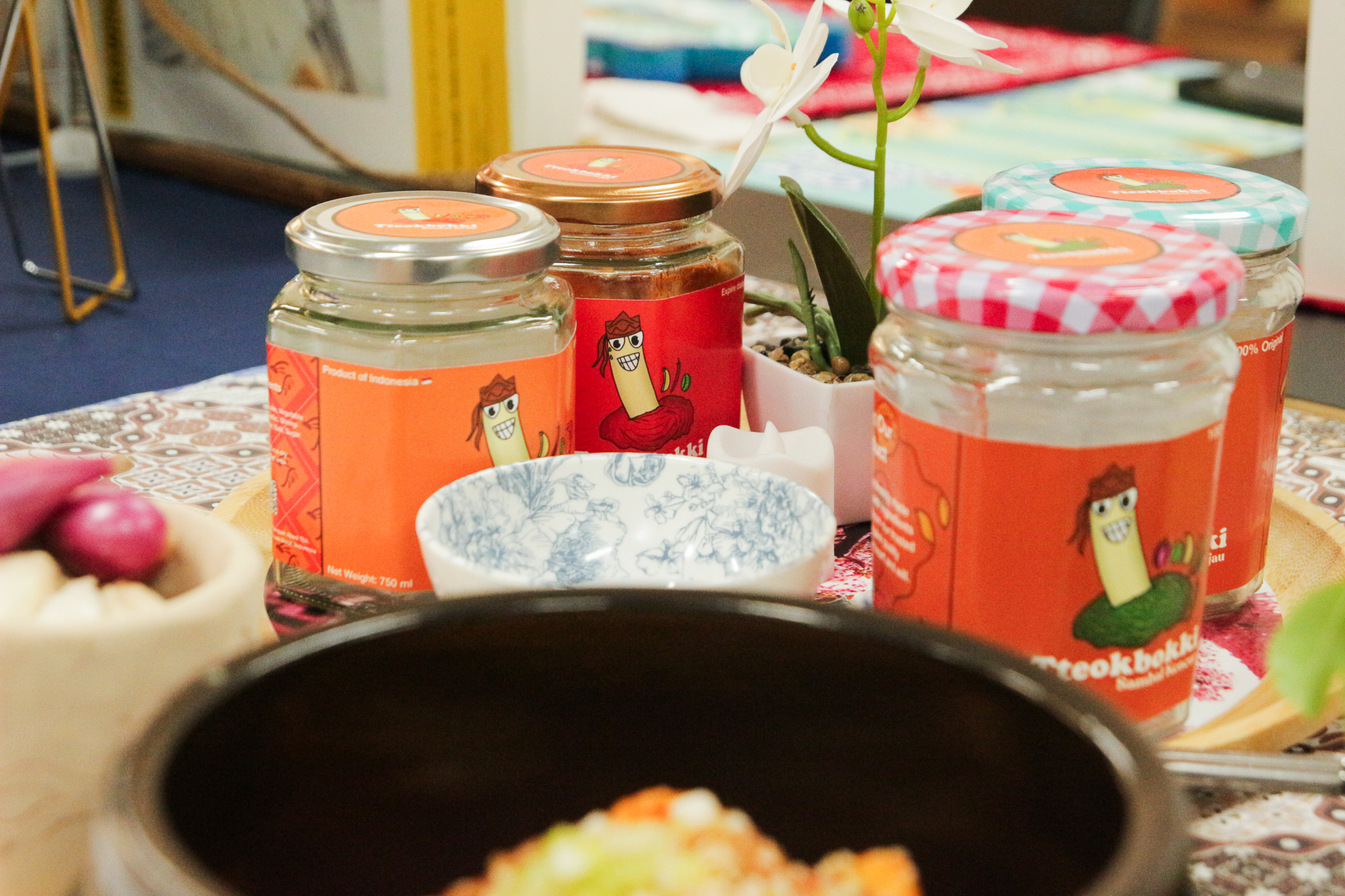
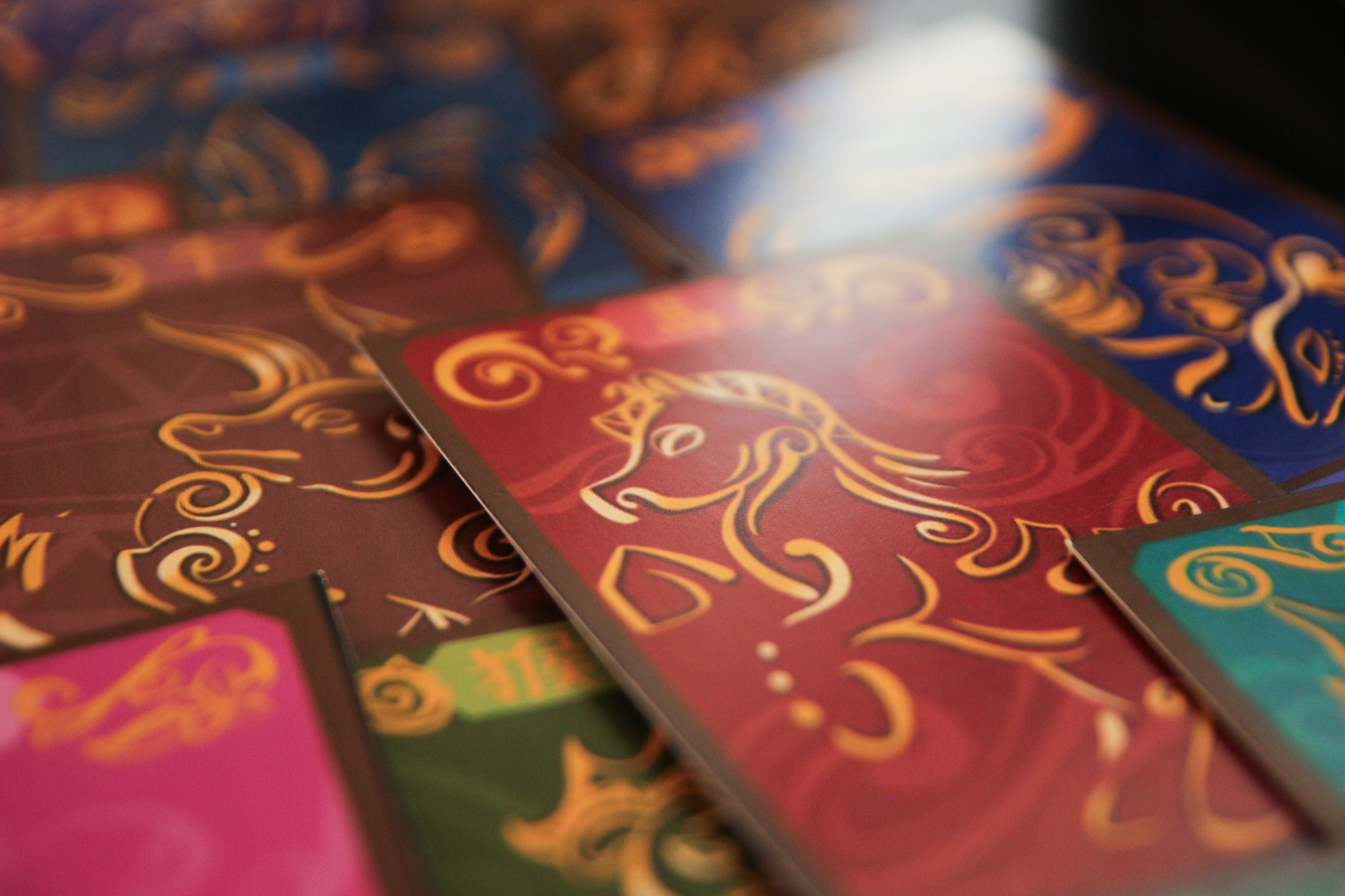
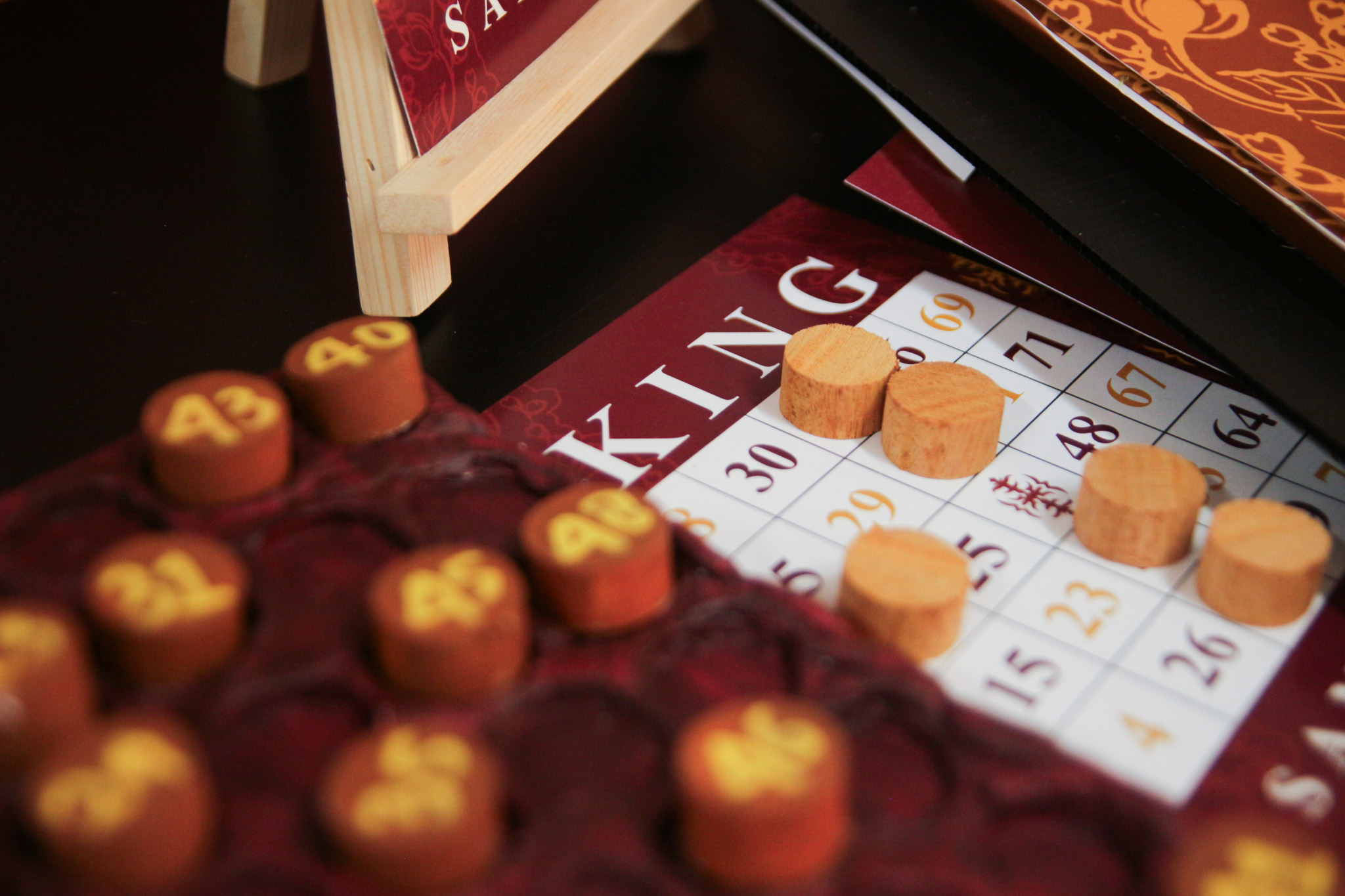
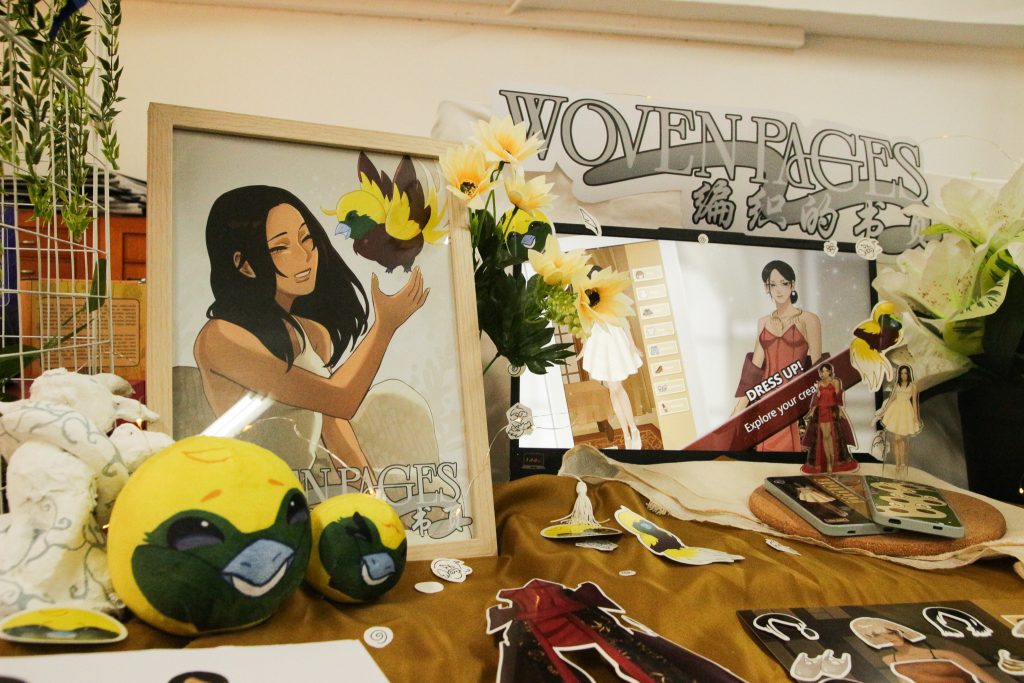
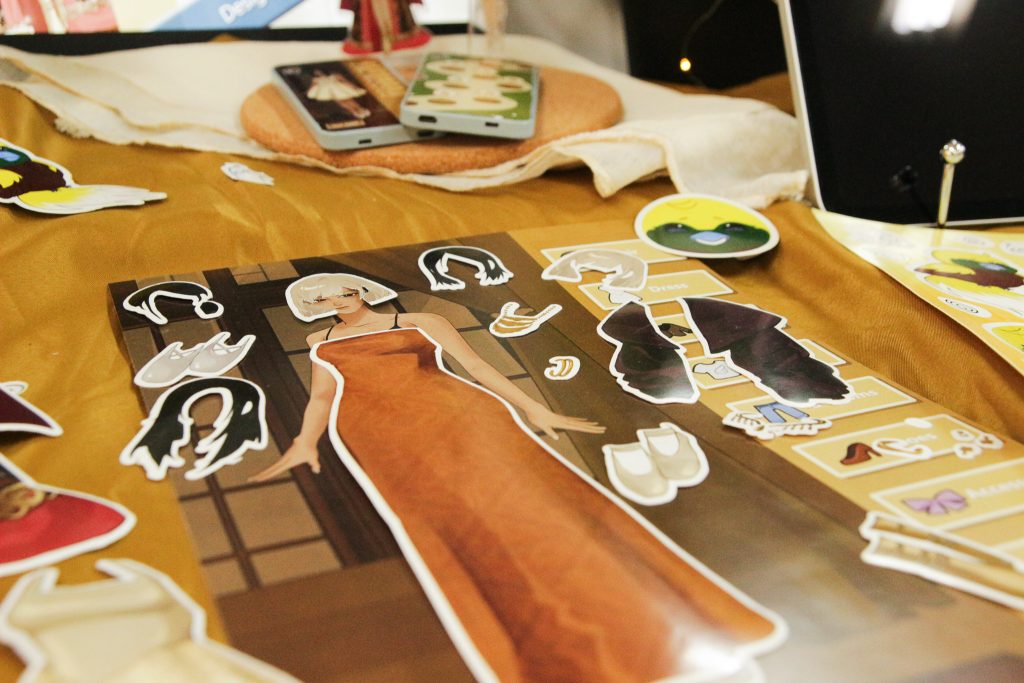
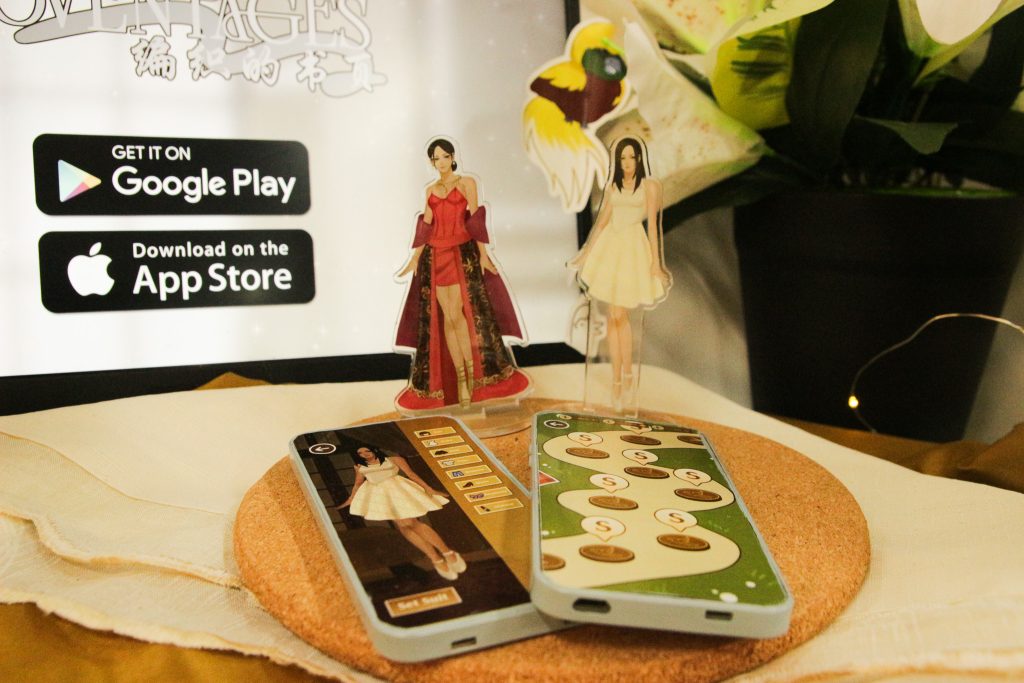
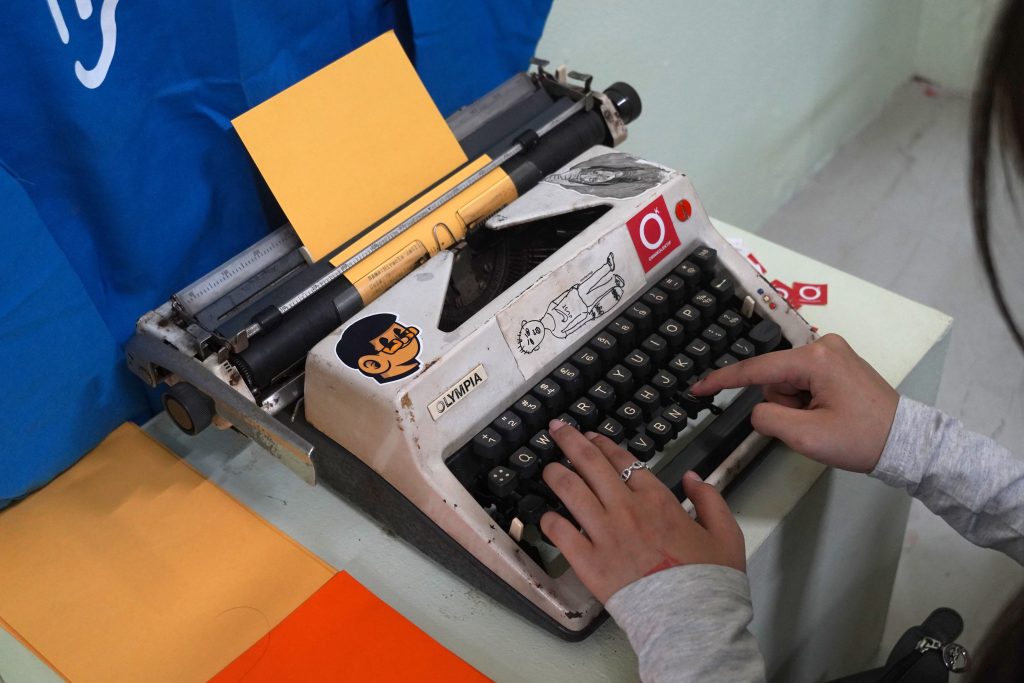
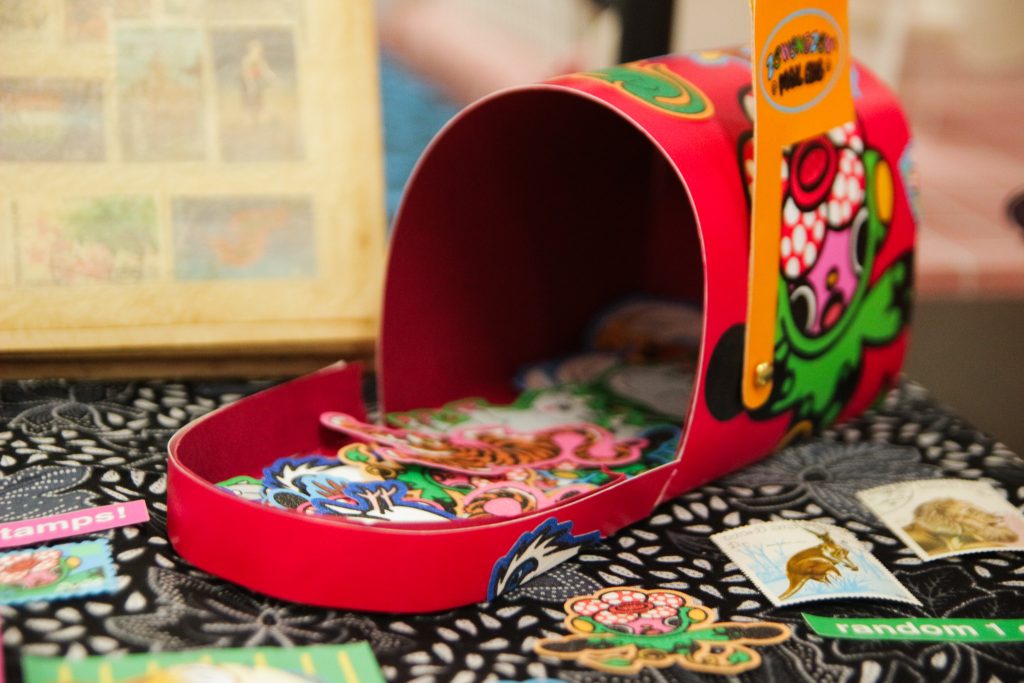
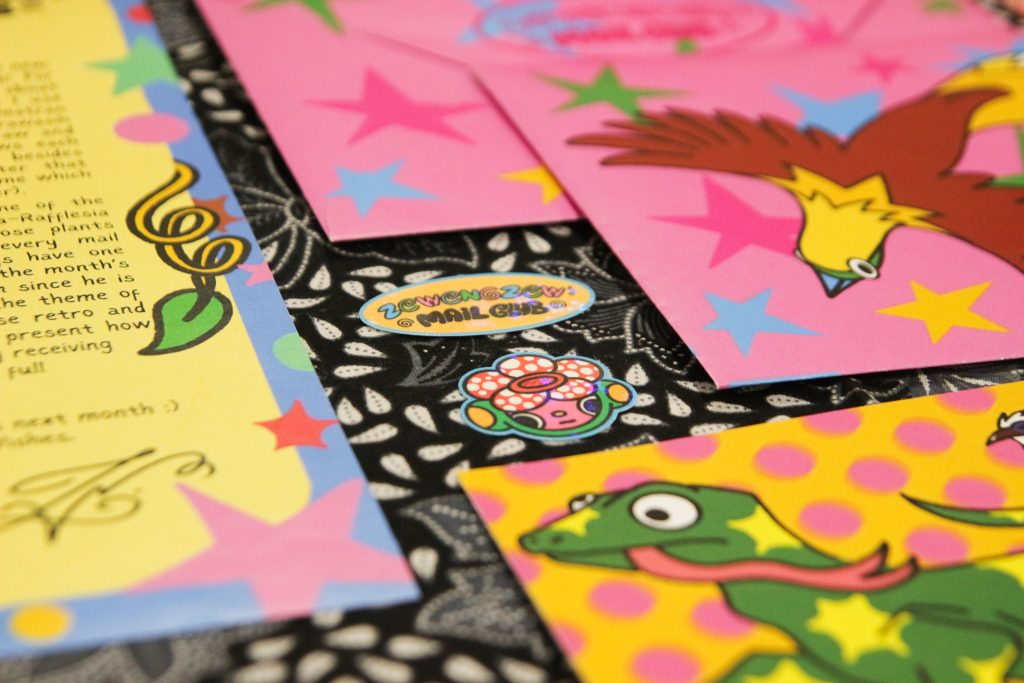
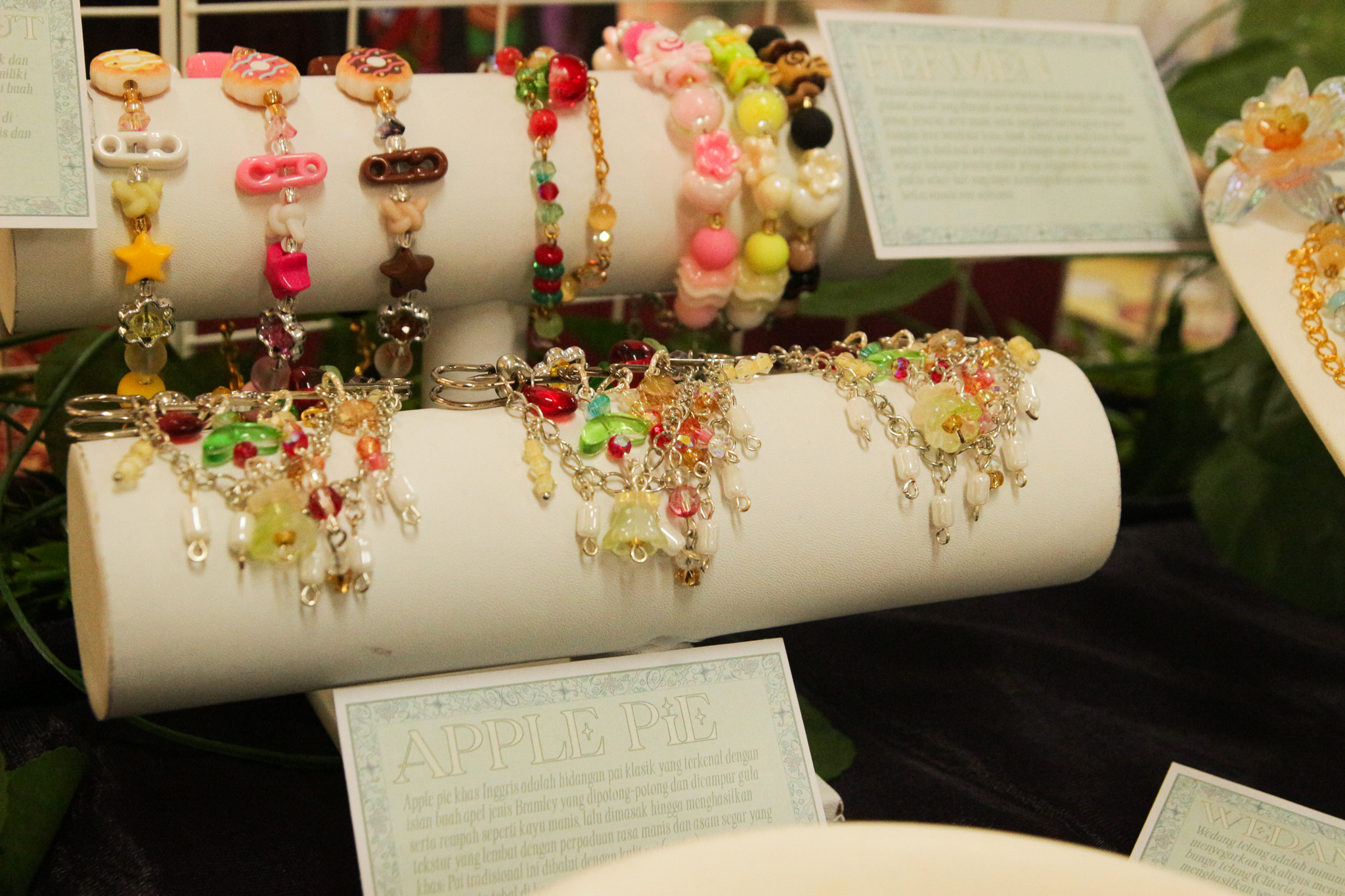
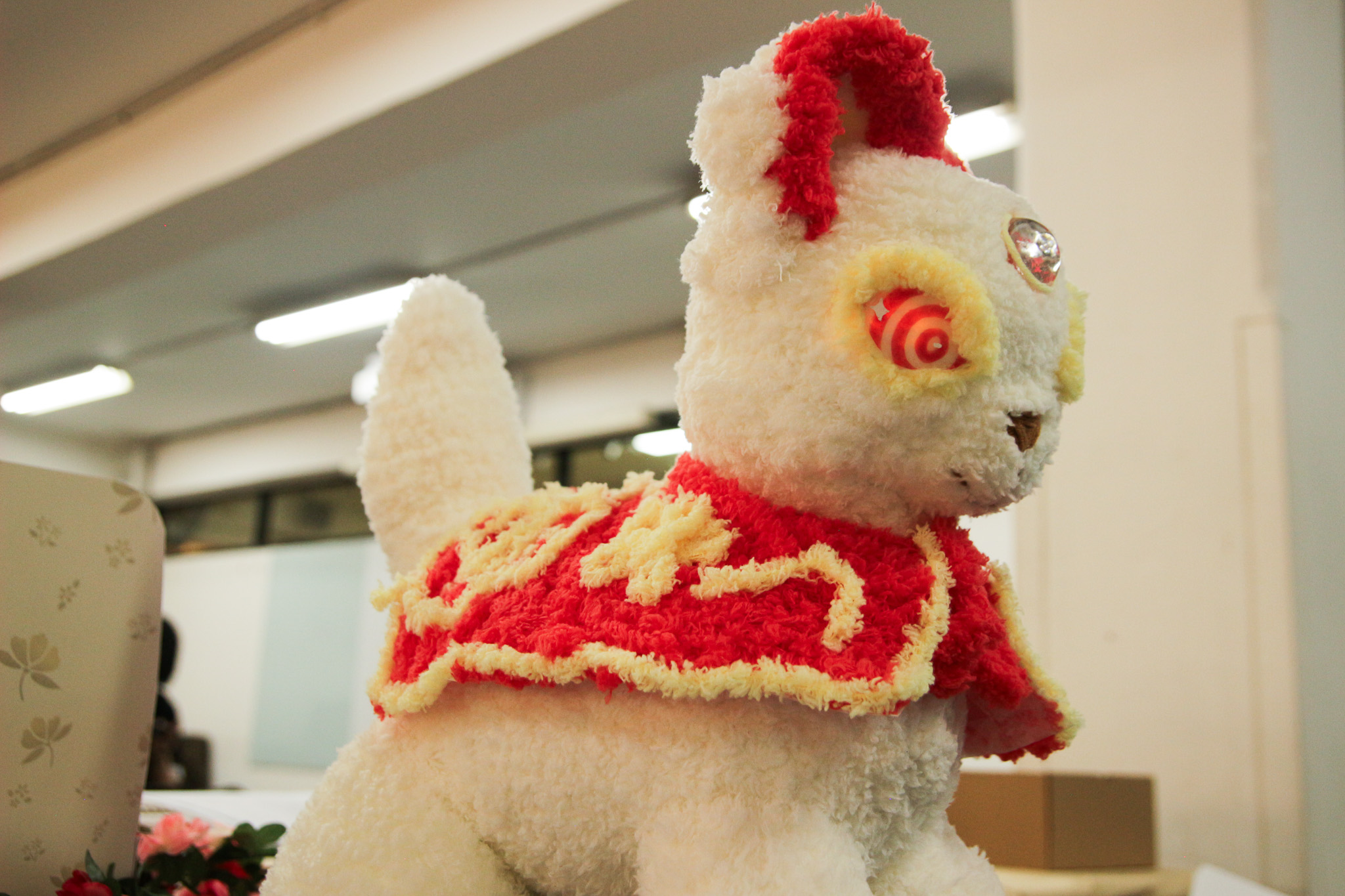
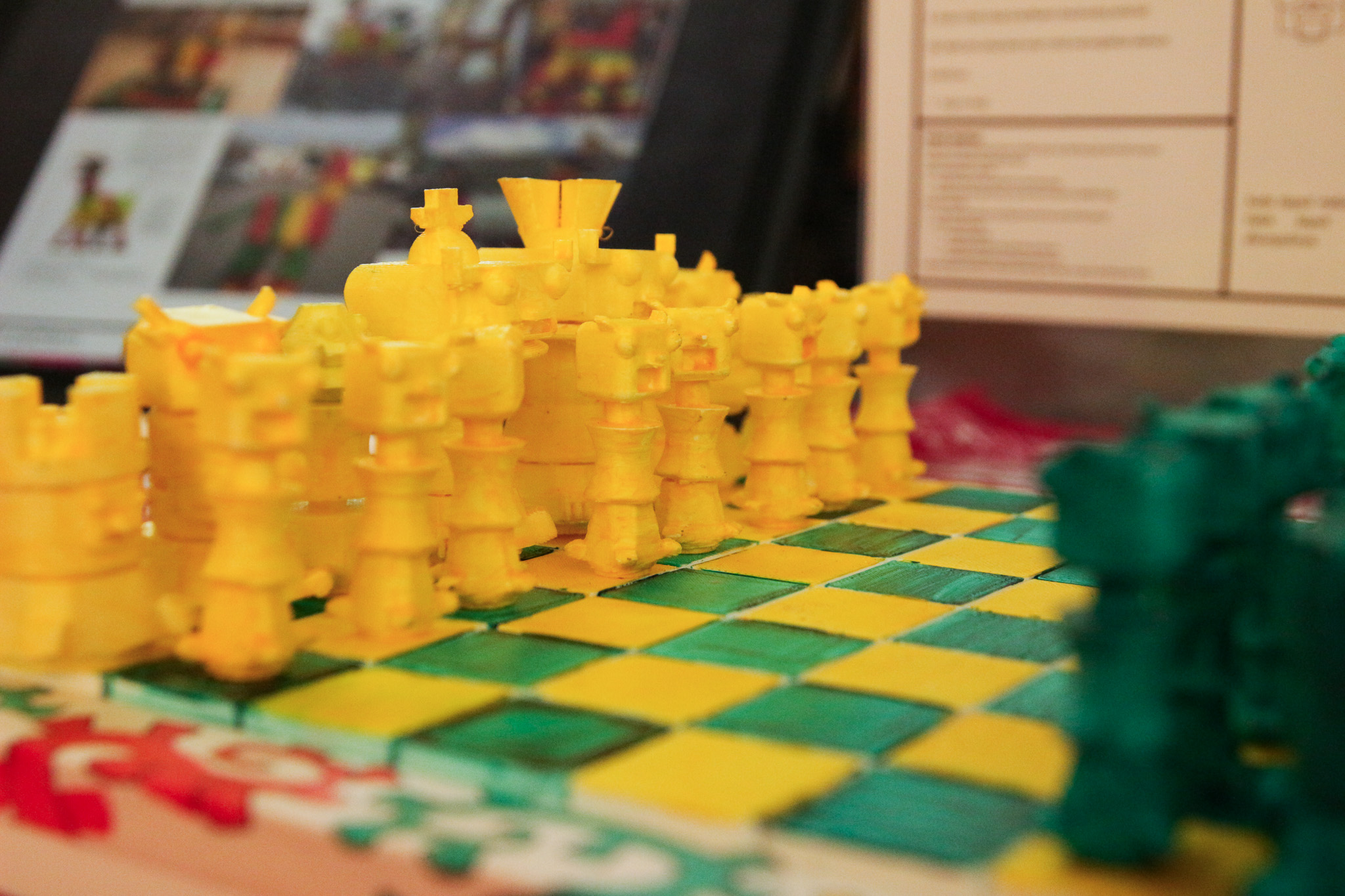
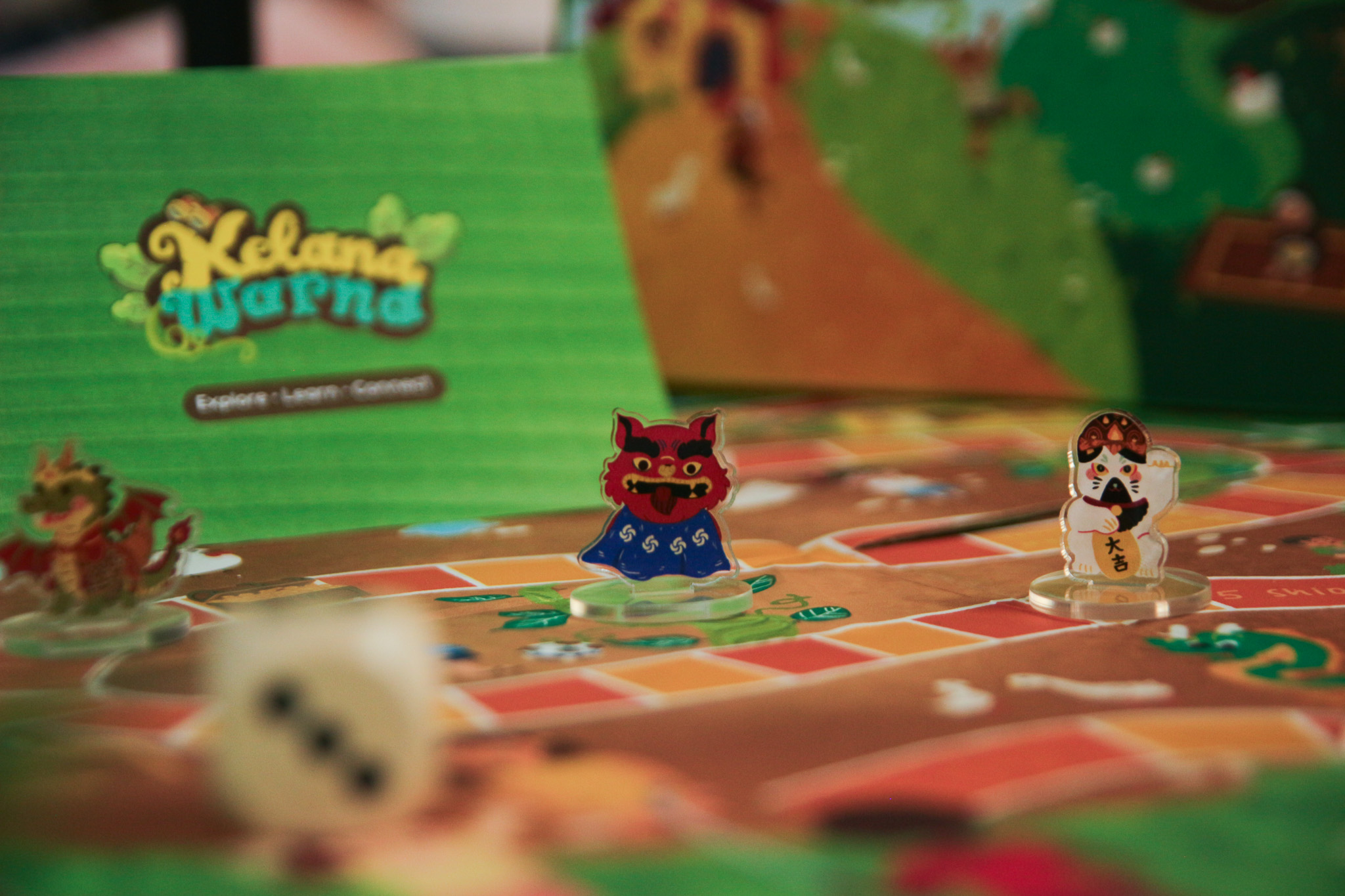
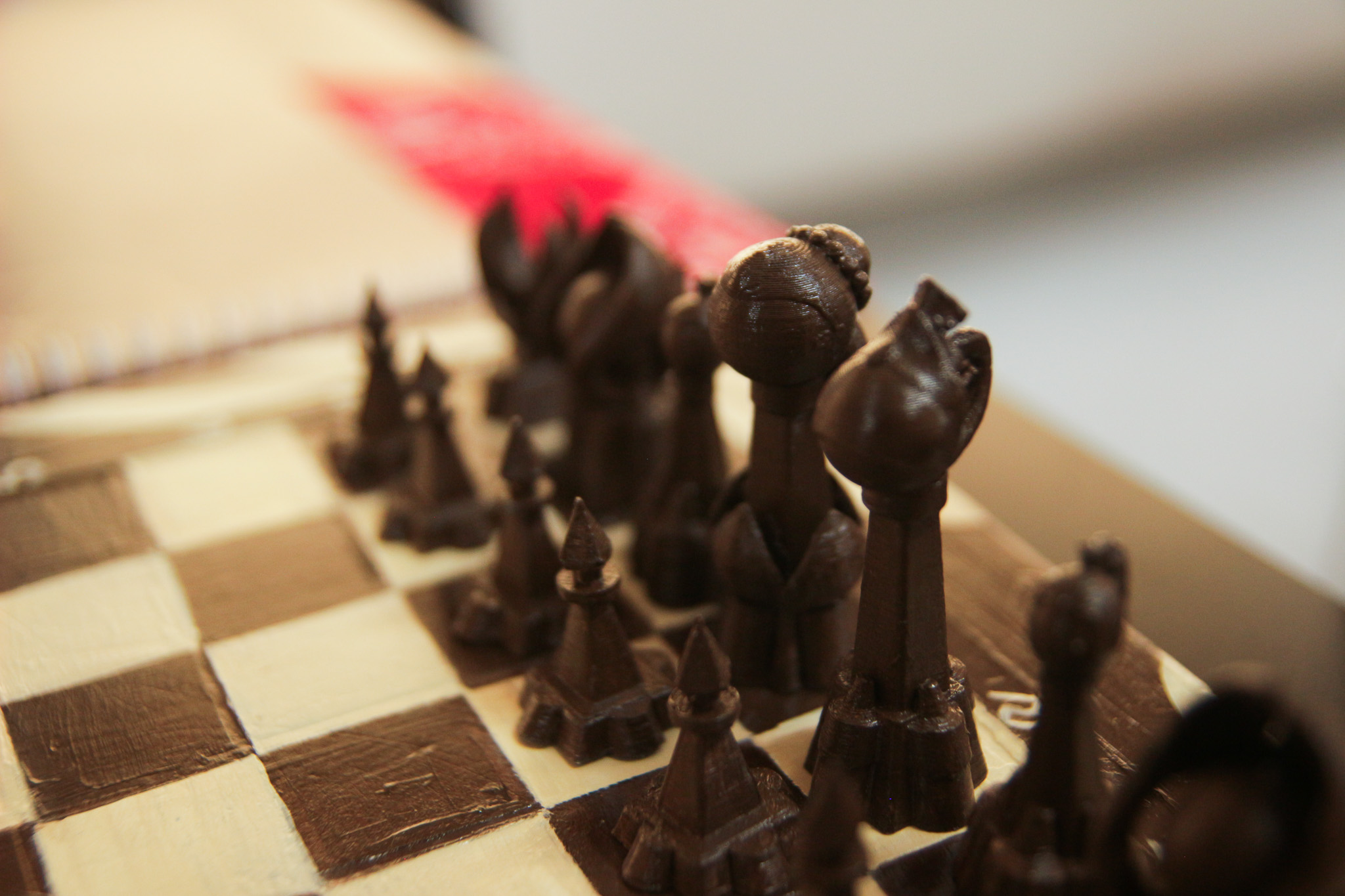
Students expressed their ideas through a wide range of media. Some designed illustrated posters that reimagined cultural narratives. Others created interactive card games and board games that invited audiences to participate in the stories they wanted to tell. Several students explored storytelling through handcrafted objects, including mail trinkets, crochet works, jewelry, blind boxes, and collectible pieces. Others experimented with chess sets, animation, and moving images.

Although many students shared similar cultural backgrounds, no two projects felt alike. Culture became something deeply personal rather than something fixed or universal. Each work reflected a unique combination of family history, personal interests, communities, and everyday experiences. Together, the exhibition showed how people can share the same heritage while telling completely different stories.
Designing the Exhibition Experience

The presentation itself became another creative challenge.

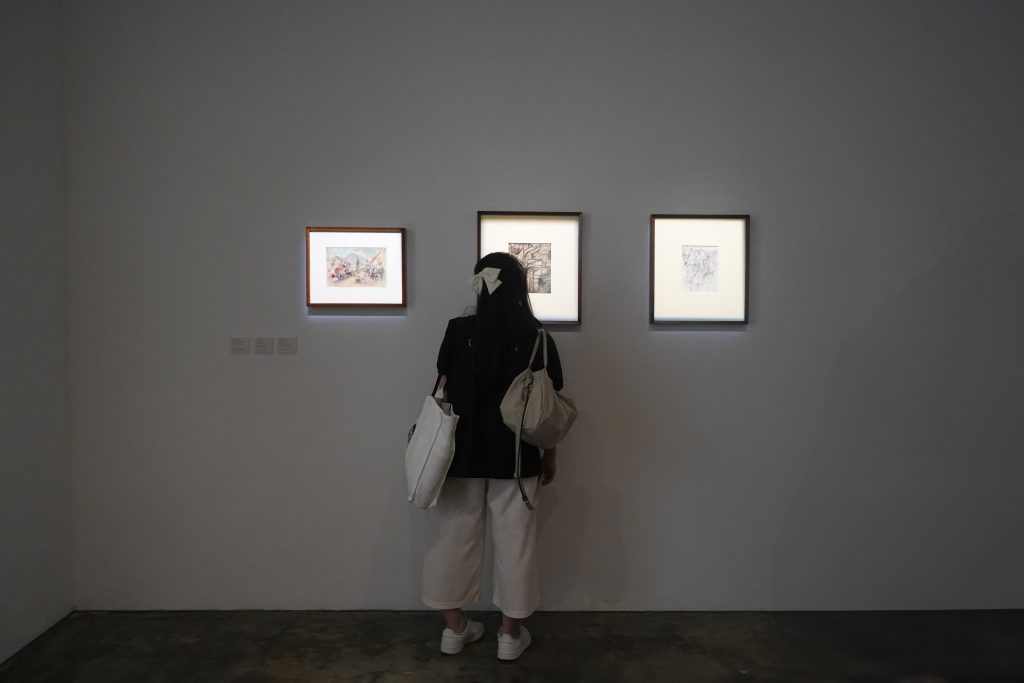
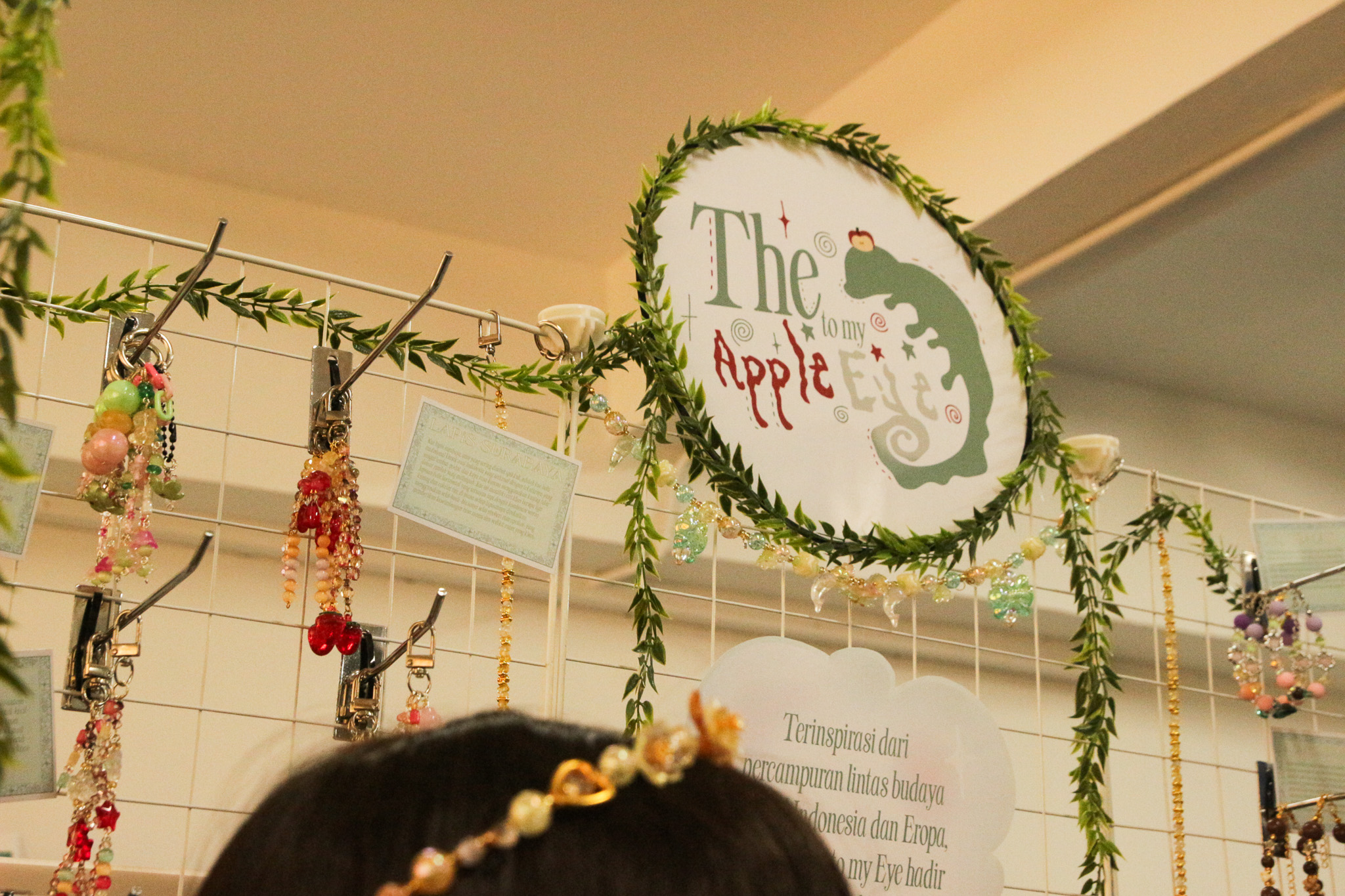
Rather than placing their work on a table, students designed displays that shaped how visitors would experience each project. For many students from the 2025 cohort, this was their first opportunity to think like exhibition designers.

The classroom transformed into a gallery filled with carefully planned installations, presentation boards, props, and display systems. Students considered every detail, from the arrangement of objects to the way viewers would move through the space. The display became part of the storytelling.

Sherina described the atmosphere with a smile,

“Everyone was really committed to their displays. People kept asking each other what they were planning to make, and it honestly turned into a friendly competition that pushed everyone to aim even higher.”

That excitement spread throughout the room. Students exchanged ideas, encouraged one another, and refined their displays until the last minute. Their conversations sparked new ideas and inspired each person to think more carefully about how audiences would experience the work.

Culture as a Living Conversation

Throughout the semester, Indonesian Visual Culture encouraged students to see culture as something that continues to evolve. It does not belong only to history or tradition. It also grows through everyday life.

As students reflected on themselves and the communities around them, they discovered that identity is never singular or fixed. Instead, it develops through encounters with people, places, traditions, media, and shared experiences.

Reflecting on the students’ journey, lecturer Yulia Amanda shared,

“As our exposure to cultures from around the world continues to grow, the visual language of Indonesia’s cross-cultural landscape becomes increasingly vibrant and rich.

Through our hands and our eyes, we continue creating so that culture can be felt, bringing together every sense until appreciation settles into the heart, grows into pride, and eventually returns as a deeper love for Indonesia.

Cultural acculturation is our strength.”

Adjunct Lecturer Yulia Amanda on BVI closing remarks.

Continuing the Conversation

The final exhibition concluded one semester of learning, but it also opened new questions about culture and identity.

Each project reminded us that culture is more than heritage preserved in museums or traditions passed down through generations. It also lives in the stories we inherit, the communities we join, the media we consume, and the passions we pursue. These influences become part of our identities, often in ways we do not immediately notice.

Throughout the project, students used design to better understand themselves and the world around them. They embraced the meeting point between inherited traditions and contemporary influences. In doing so, they discovered new ways to express their identities. The Cross Culture project ultimately reminds us that culture is not only something we preserve. It is also something we continue to shape, reinterpret, and carry forward every day.

Guest Lecture in DKV UPH: Glory Immanuela

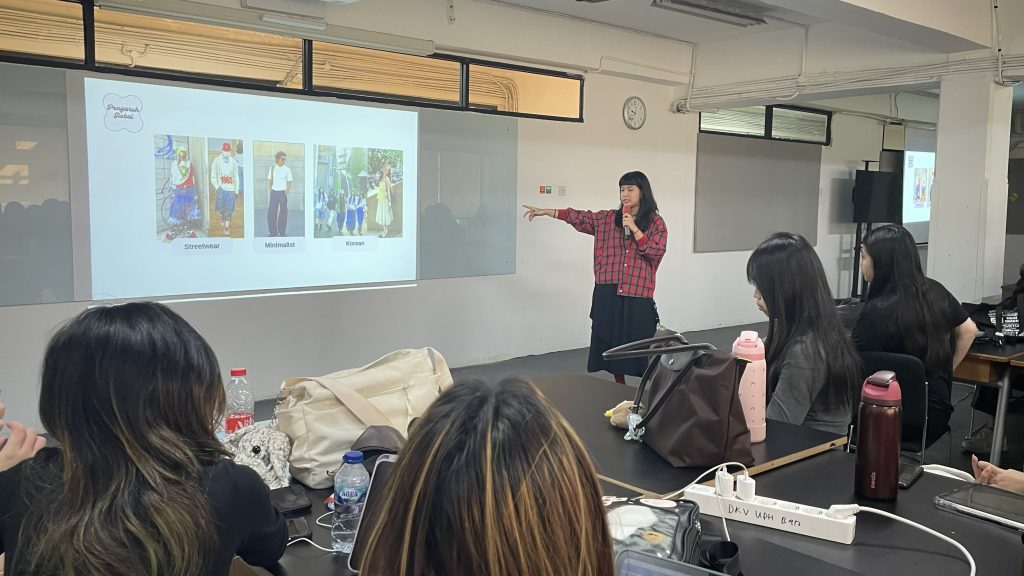
On June 18, 2026, students from the Indonesian Visual Culture and Design Management courses attended a guest lecture featuring Glory Josephine Immanuela, also known as Goi, a DKV UPH alumna and co-founder of Rupa Cerita, a custom artwear brand based in Bogor. Through Rupa Cerita, Goi has transformed her passion for illustration and storytelling into a successful creative business. Today, the brand has collaborated with many public figures, celebrities, major brands, and national campaigns across Indonesia. The guest lecture gave students valuable insights into entrepreneurship, creative identity, and building a meaningful career in the creative industry.

Final Documentation with Guest Lecture: Glory Immanuela

Building a Creative Business from Passion

The session opened with Goi sharing the story behind her entrepreneurial journey. Her interest in business began during high school, even though she felt her creative skills were still developing. Rather than waiting until she felt fully prepared, she chose to learn by doing and continued exploring different creative ideas.

Later, during her second year at DKV UPH, Goi and a friend founded Rupa Cerita, a custom artwear business that combines illustration with wearable products. They started small, but consistent experimentation and original designs helped the brand gain attention through social media. As a result, Rupa Cerita attracted a growing audience and received commissions from celebrities, public figures, creative events, and national campaigns.

Throughout the session, Goi reminded students that every creative journey starts with small steps. She encouraged them to focus on progress instead of waiting for the perfect moment to begin.

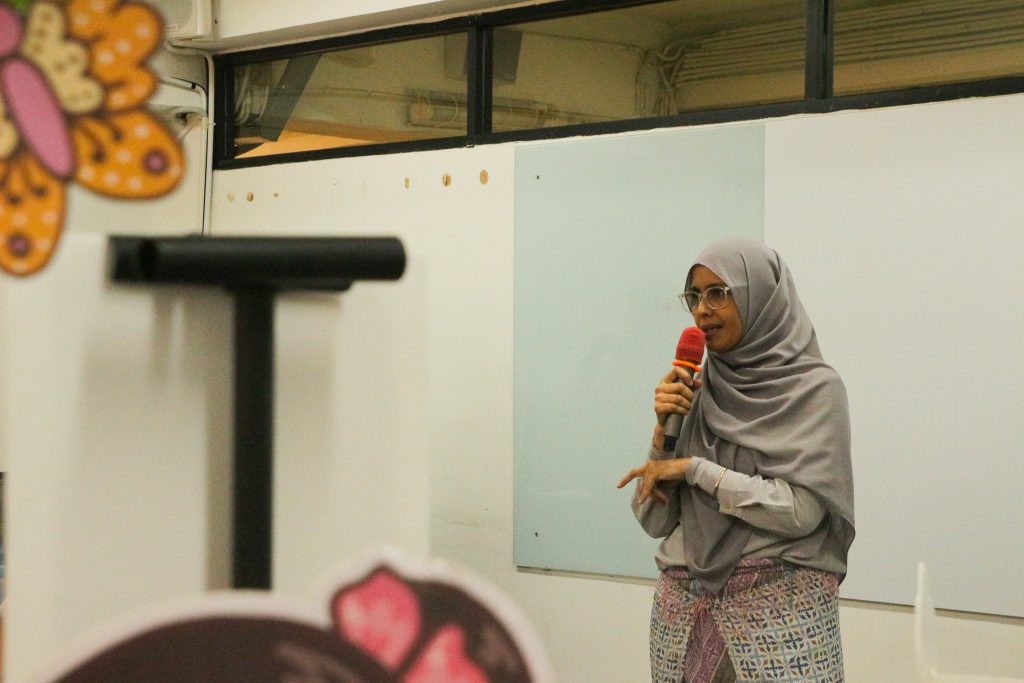
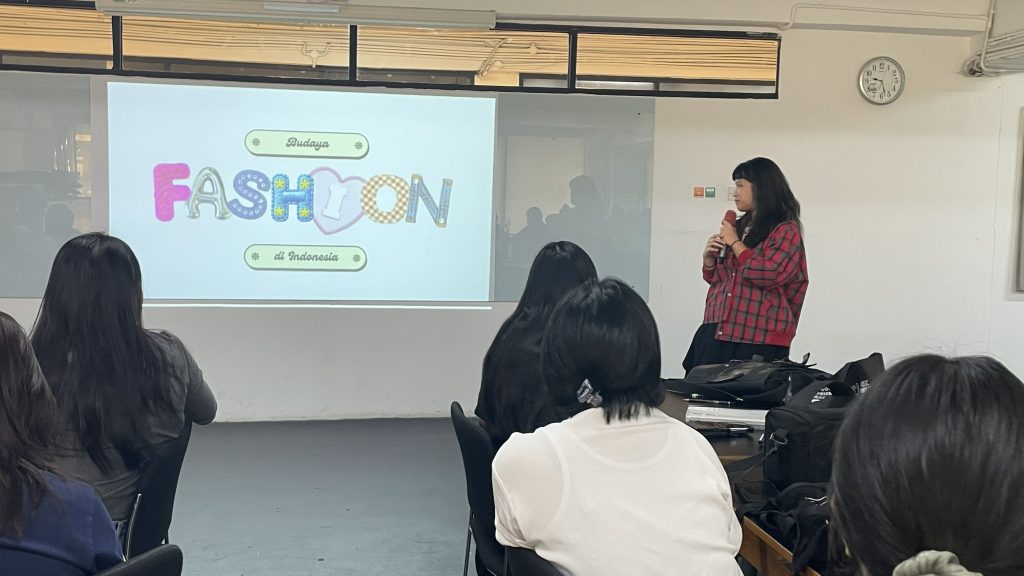
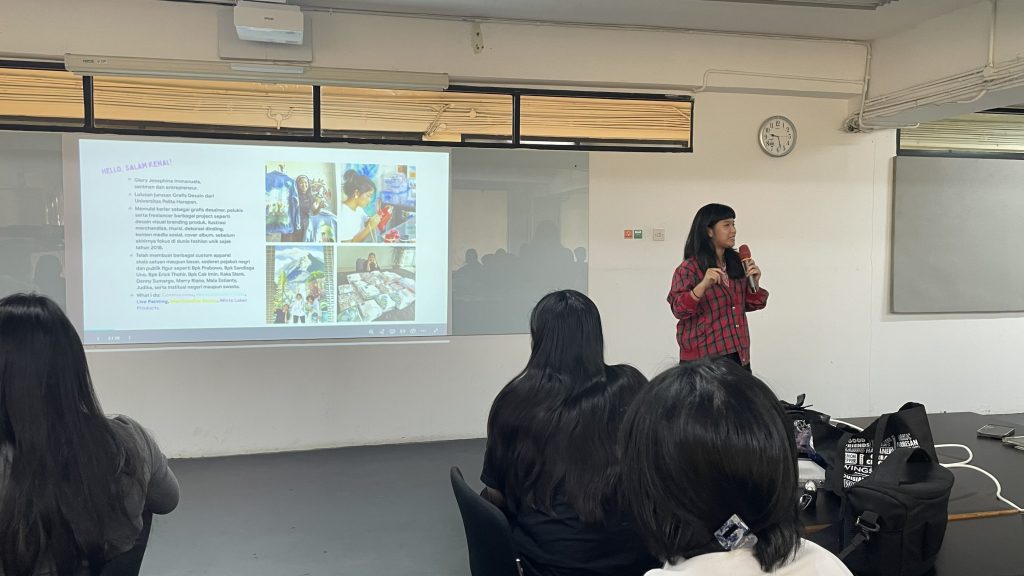
In Session: Glory Immanuela sharing her journey at Rupa Cerita and Indonesian fashion.

Developing an Authentic Creative Identity

Besides discussing entrepreneurship, Goi reflected on how her time at DKV UPH helped shape her creative identity. During university, she experienced moments of self-doubt because her visual style often differed from more conventional graphic design approaches. However, she eventually realized that those differences became one of her greatest strengths.

One of the most memorable moments came during an Experimental Typography class. After seeing her work, a lecturer commented, “This font is so Goi.” That simple remark gave her the confidence to embrace her own visual language instead of trying to follow someone else’s style.

Today, that distinctive approach has become one of Rupa Cerita’s strongest characteristics. Many clients choose to work with the brand because they appreciate its unique artistic direction and storytelling style. Goi encouraged students to keep developing their own creative voice while remaining open to learning, feedback, and new experiences.

In addition, she highlighted the importance of discipline, project management, and collaboration. Creative talent is important, but professionalism and communication are equally valuable when working with clients and creative teams.

Interactive Discussion and Q&A

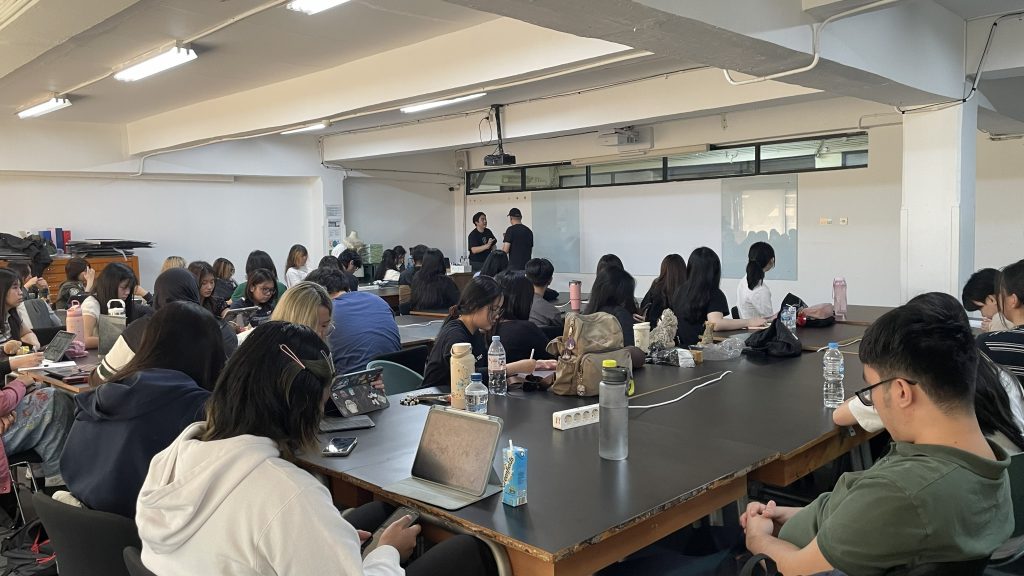
Following the presentation, students joined an interactive question-and-answer session with Goi. They discussed entrepreneurship, balancing business with creative work, managing client expectations, pricing creative services, and maintaining originality while responding to market demands.

The conversation also explored branding, social media, and the realities of growing a creative business from the ground up. Drawing from her own experiences, Goi encouraged students to stay patient, keep learning, and see every challenge as an opportunity to grow.

By the end of the discussion, students gained practical insights into creative entrepreneurship. More importantly, they saw how passion, persistence, and authenticity can become the foundation of a sustainable creative career.

@dkv.uph

Alumni Sharing Session – Glory (Rupa Cerita)

♬ original sound – Aaron – Aaron

Inspiring the Next Generation of Creative Entrepreneurs

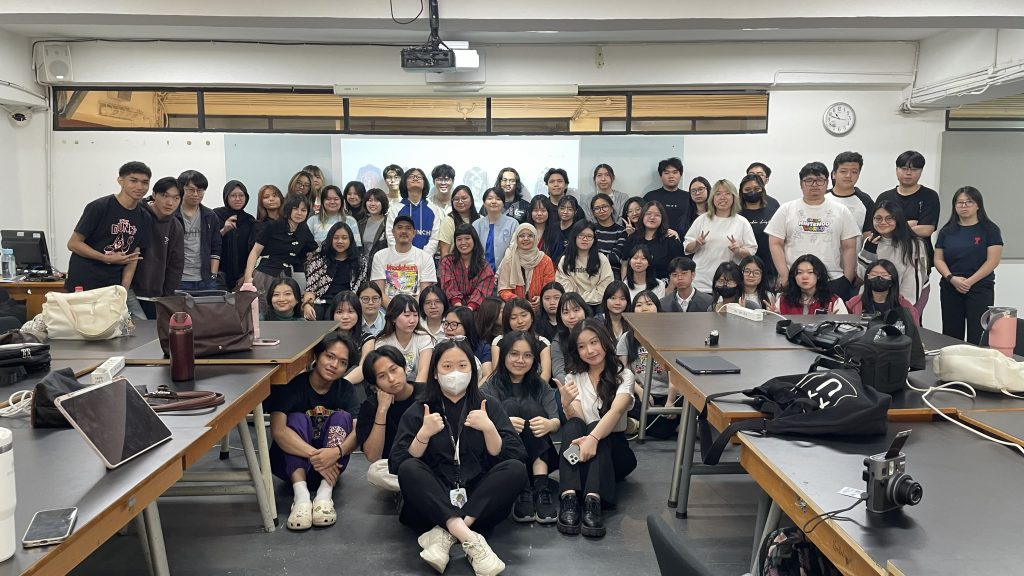
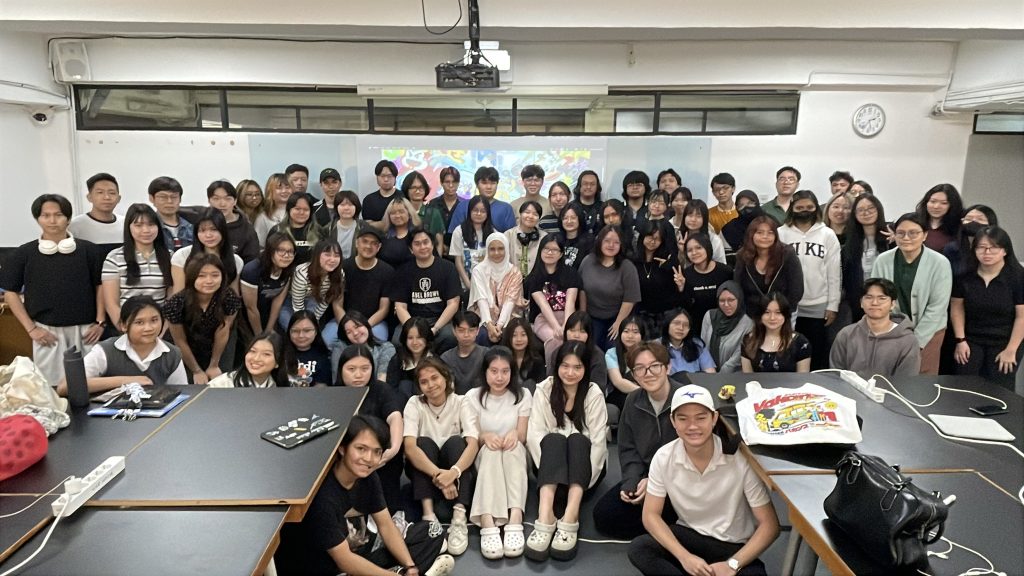
The guest lecture concluded with a group photo and an informal discussion between Goi and the students. This final session allowed participants to continue exchanging ideas while reflecting on the lessons they had learned throughout the day.

Overall, the guest lecture showed that passion, consistency, and continuous learning can grow into a successful creative business. Goi’s journey reminded students that every designer has a unique voice worth developing. By embracing their individuality and continuing to improve, they can create meaningful work that connects with clients and audiences alike.

We would like to express our sincere gratitude to Glory Josephine Immanuela (Goi) for generously sharing her entrepreneurial journey, creative experiences, and professional insights with our students. We also thank the lecturers and students from the Indonesian Visual Culture and Design Management courses for participating in this guest lecture. We hope this session inspires future designers to pursue their passions, develop authentic creative identities, and transform their ideas into meaningful opportunities within the creative industry.

Guest Lecture in DKV UPH: Ardhira Putra

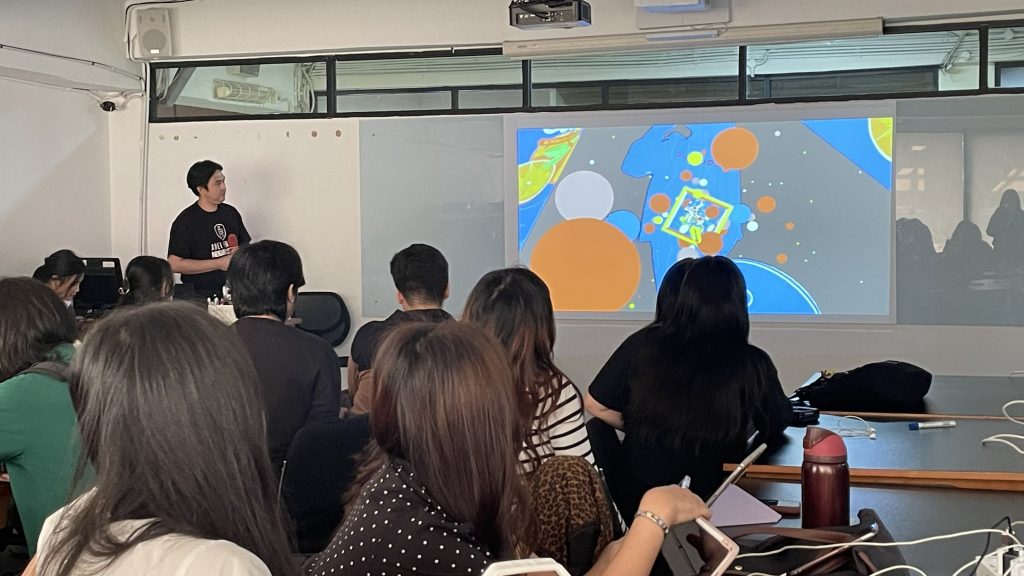
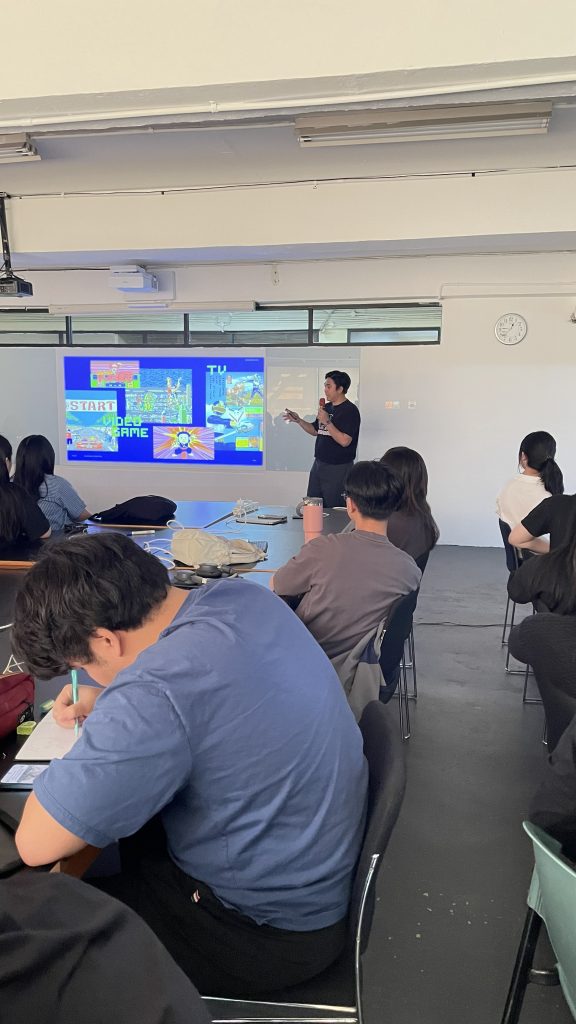
On June 18, 2026, students from the Indonesian Visual Culture and Design Management courses attended a guest lecture featuring Ardhira Anugrah Putra, an award-winning illustrator, graphic designer, and motion designer with international recognition. Throughout his career, Ardhira has collaborated with many global brands, artists, and creative companies across different industries. The session gave students valuable insights into his creative journey, professional experiences, and approach to building a sustainable career in the creative industry.
Turning Passion into a Creative Career

The session began with Ardhira sharing his journey after graduating from university. He explained that he started his career as a UI/UX designer before gradually pursuing illustration as a personal creative practice. Rather than waiting for commercial opportunities, he consistently created artwork inspired by the things he genuinely loved. His influences included retro video games, Japanese city pop, classic game consoles, and pop culture.

Over time, his distinctive visual style attracted attention from the creative community. Personal projects gradually opened the door to professional opportunities as more people discovered his work and recommended him to others. As his network grew, so did his experience. These opportunities eventually led him to international collaborations, industry awards, and recognition for his creative work.

Building a Personal Style and Professional Practice

During the guest lecture, Ardhira emphasized the importance of developing a unique creative identity. His work spans illustration, vector graphics, 3D design, and motion graphics. Even so, he continues to maintain a consistent visual style shaped by his personal interests and influences.
Instead of accepting every project, Ardhira carefully selects work that aligns with his creative direction. Likewise, many clients approach him because they appreciate his distinctive style. His experiences showed students that authenticity and consistency can create long-term opportunities in the creative industry.

Beyond discussing technical skills, Ardhira also spoke about professionalism. He highlighted the importance of communication, collaboration, and building trust with clients throughout every project.

Interactive Discussion and Q&A

Following the presentation, students participated in an interactive question-and-answer session with Ardhira. They asked about project management, client communication, time management, organizing design files, and maintaining a healthy creative workflow.

The discussion also explored the growing role of artificial intelligence in the creative industry. Ardhira encouraged students to see AI as a tool that supports creativity rather than replacing it. At the same time, he emphasized that original ideas, personal perspectives, and distinctive visual styles remain valuable qualities for every designer.

Students left the session with practical insights into professional creative practice. More importantly, they were encouraged to keep developing their own creative voice while remaining adaptable in a constantly changing industry.

Inspiring Future Creative Professionals

The guest lecture concluded with a group photo and informal discussion between the speaker and students. This final session allowed participants to continue exchanging ideas in a relaxed setting while reflecting on the lessons they had learned throughout the day.
Overall, the guest lecture demonstrated how passion, consistency, and continuous learning can shape a meaningful creative career. Ardhira’s journey encouraged students to pursue their own interests, refine their unique style, and embrace every opportunity to grow as designers.

@dkv.uph

Guest Lecture with @ardhiraputra ✨ A special session where our students gained valuable insights into the creative industry, design thinking, and professional practice. Thank you for sharing your experience, knowledge, and inspiration with the DKV UPH community. We look forward to seeing these ideas spark new creativity and innovation in our students’ future works. #DKVUPH #UPH #GuestLecture #DesignEducation #CreativeIndustry
♬ Super Rare (Feat. Wonstein, pH-1) – Epik High

We would like to express our sincere gratitude to Ardhira Anugrah Putra for generously sharing his experiences, creative journey, and professional insights with our students. We also thank the lecturers and students from the Indonesian Visual Culture and Design Management courses for participating in this guest lecture. We hope this session inspires future designers to develop their creative identity, continue learning, and build meaningful careers in the ever-evolving creative industry.

DKV UPH Study Tour 2026 : Bandung

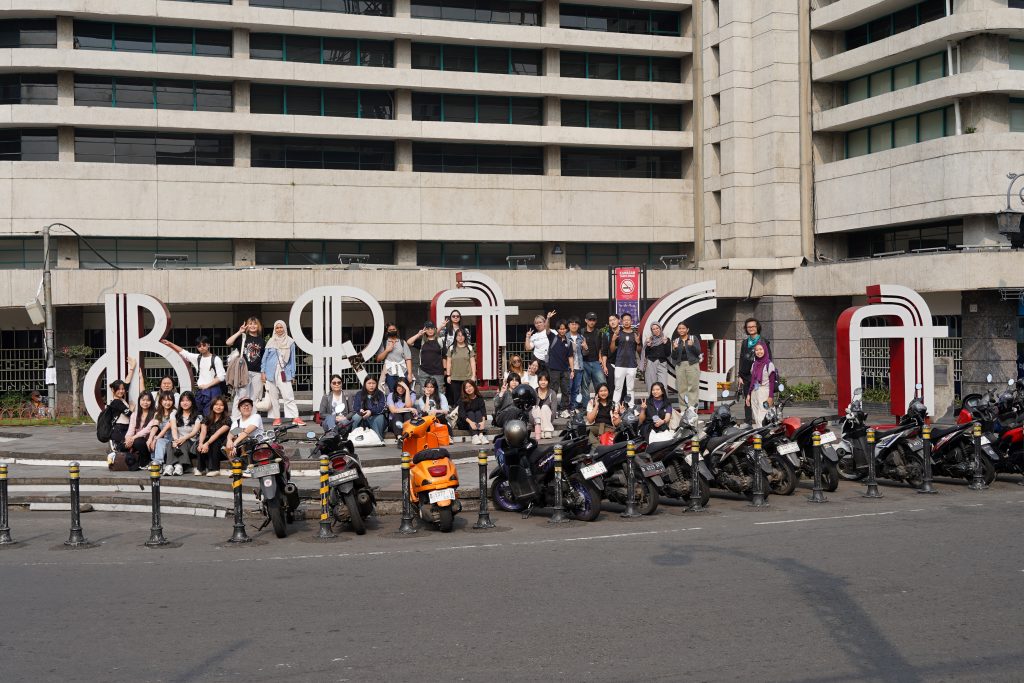
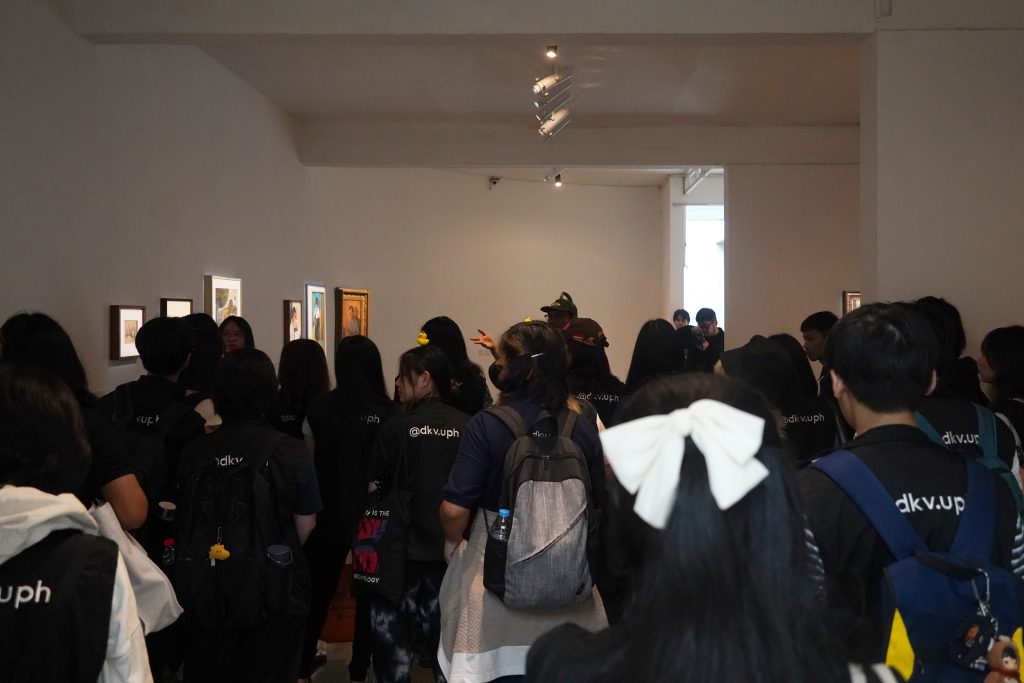
The Study Tour Bandung 2026 was held from June 2–5, 2026, involving Visual Communication Design students from Universitas Pelita Harapan, Class of 2025. The program aimed to broaden students’ understanding of art, design, culture, and history through direct engagement with Bandung’s creative landscape.

Throughout the four-day journey, students visited cultural destinations, galleries, creative spaces, and workshops. As a result, they gained firsthand experience of how art, design, and local heritage continue to shape contemporary society.

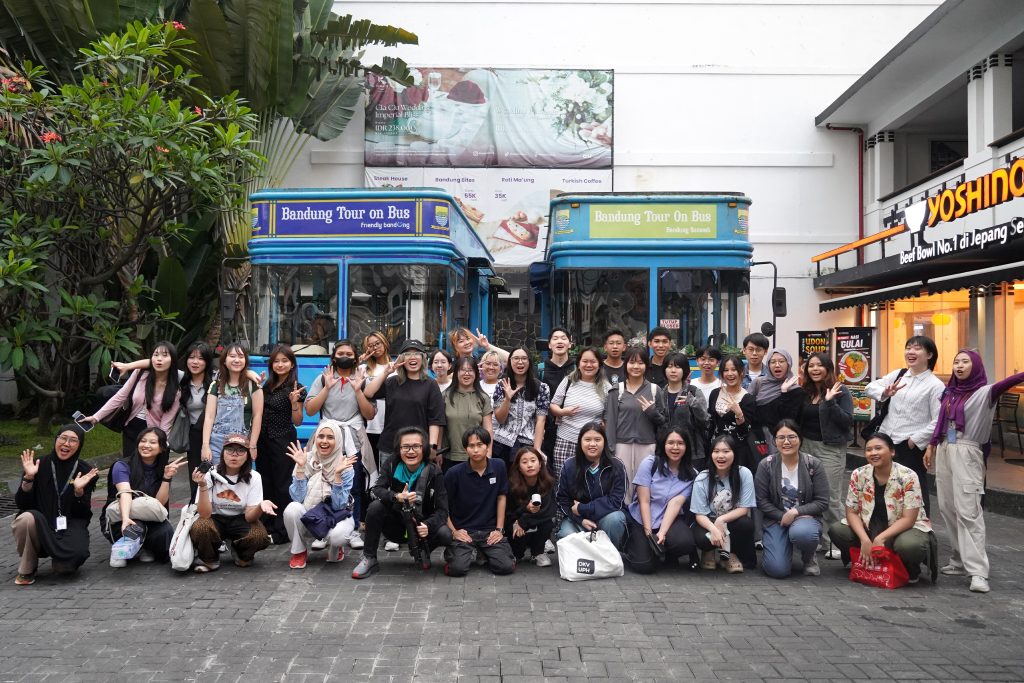
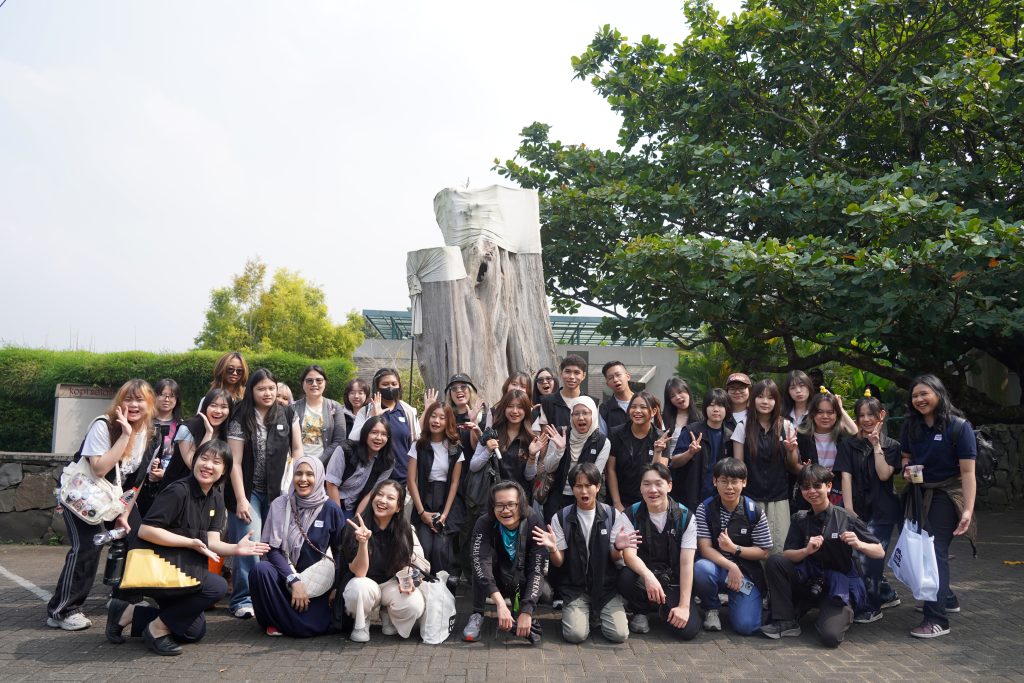
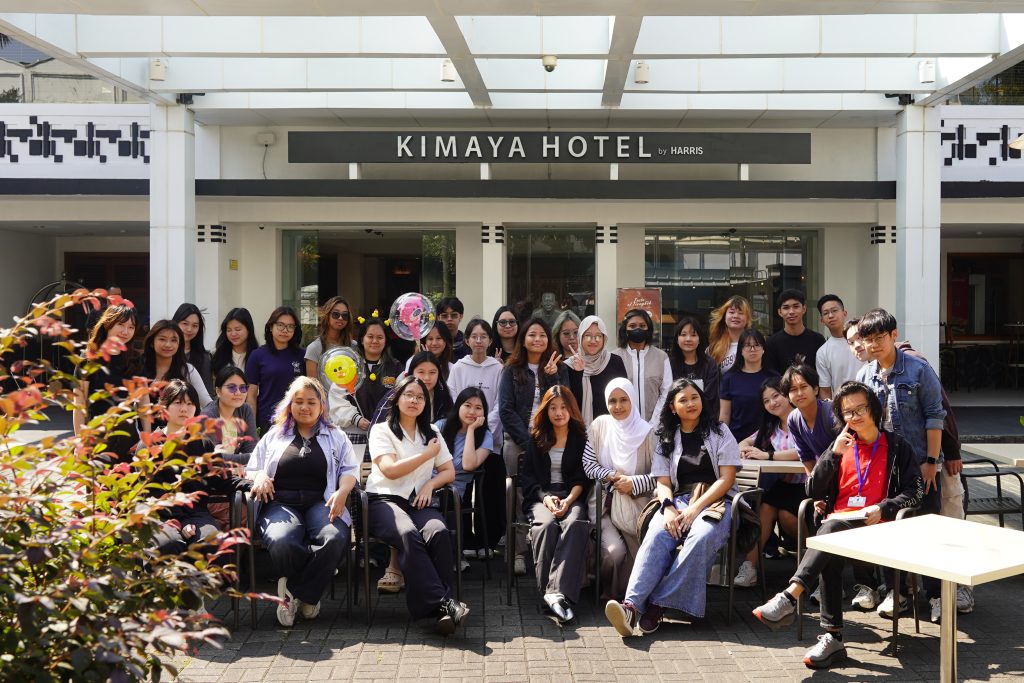
Study Tour Bandung 2026 with DKV UPH Class of 2025

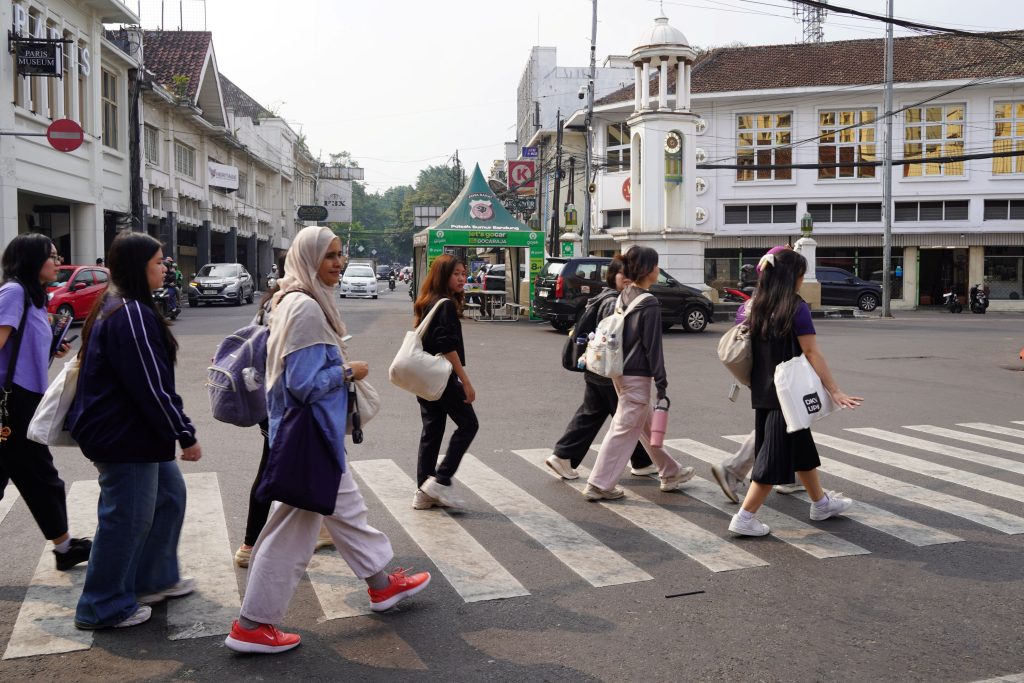
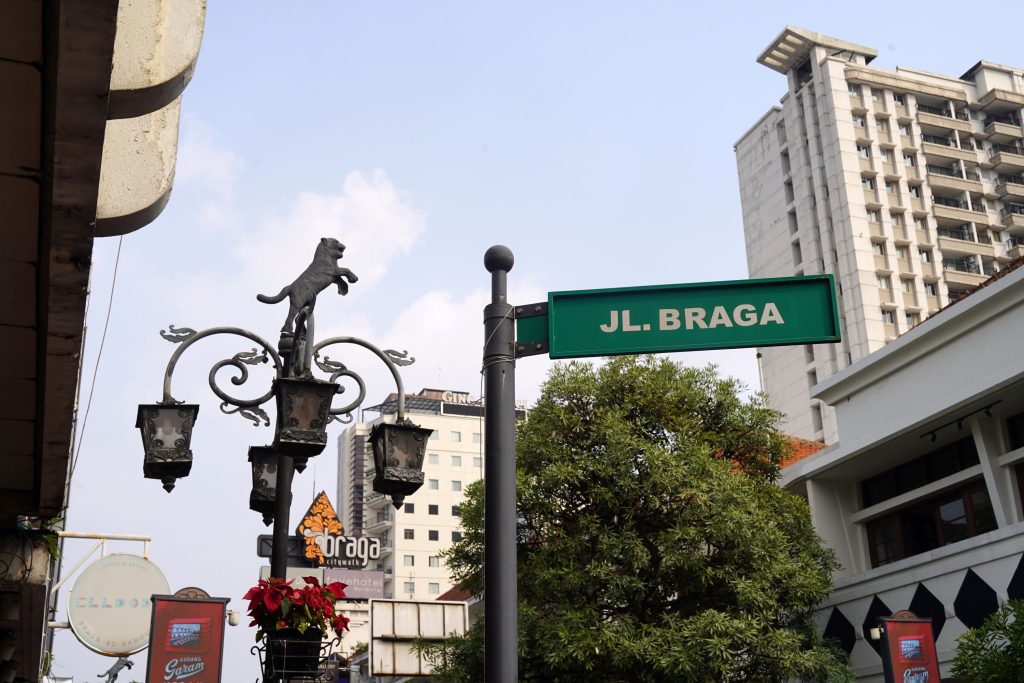
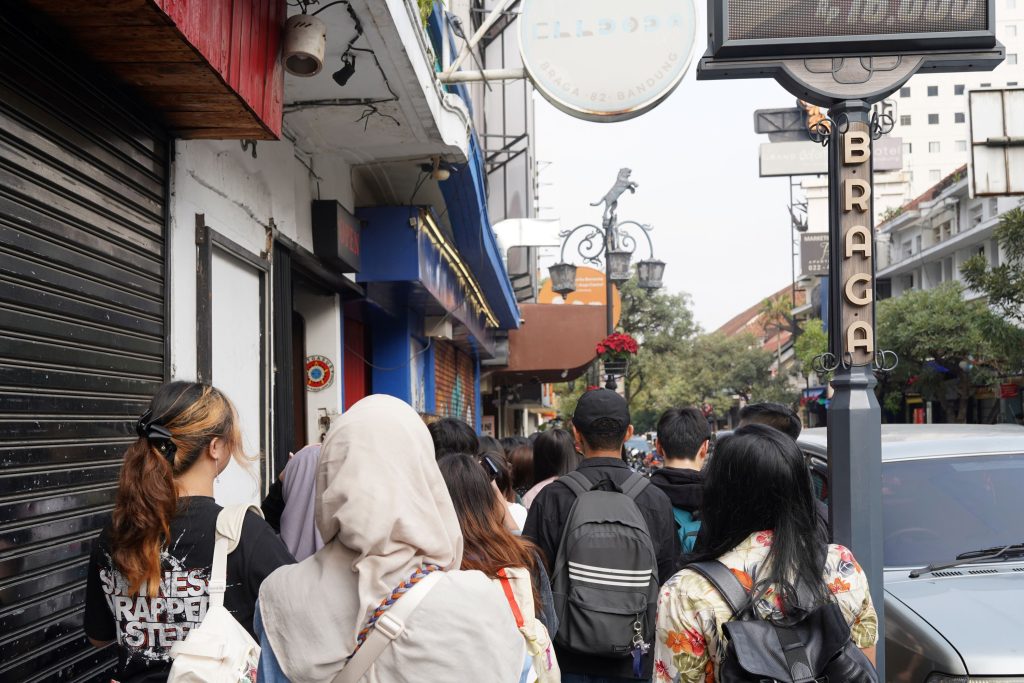
The first day began with an exploration of Braga Street, one of Bandung’s most iconic historical districts. Surrounded by preserved colonial architecture and vibrant creative spaces, students observed how history and contemporary culture coexist within the city.

During the visit, the group explored Grey Art Gallery and enjoyed a special exhibition dedicated to PERSIB. The exhibition highlighted the cultural significance and history of one of Indonesia’s most beloved football clubs.

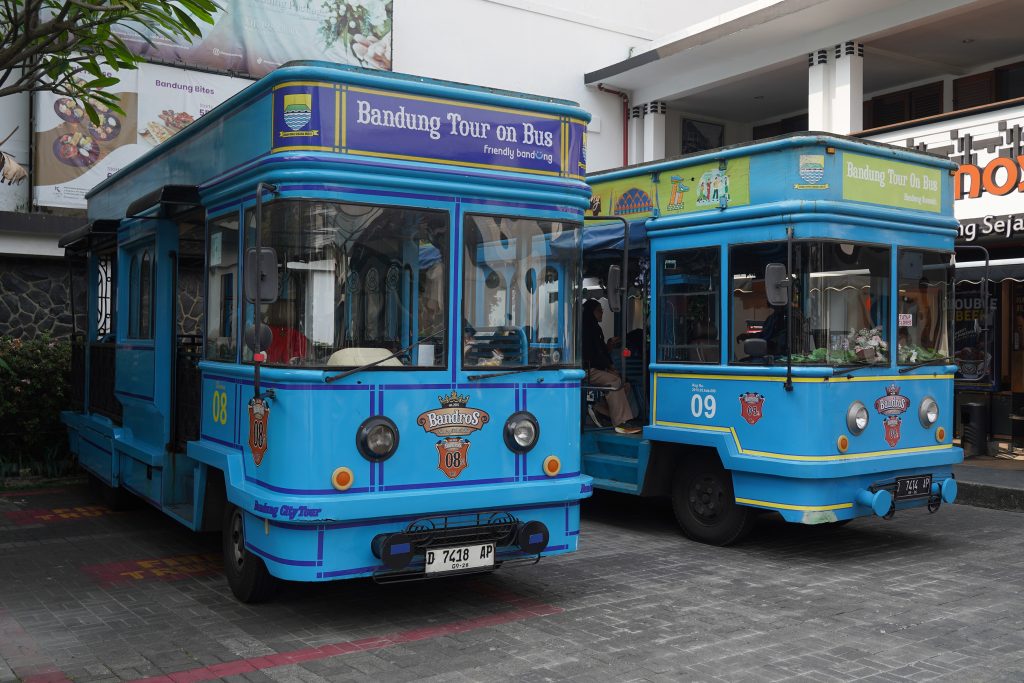
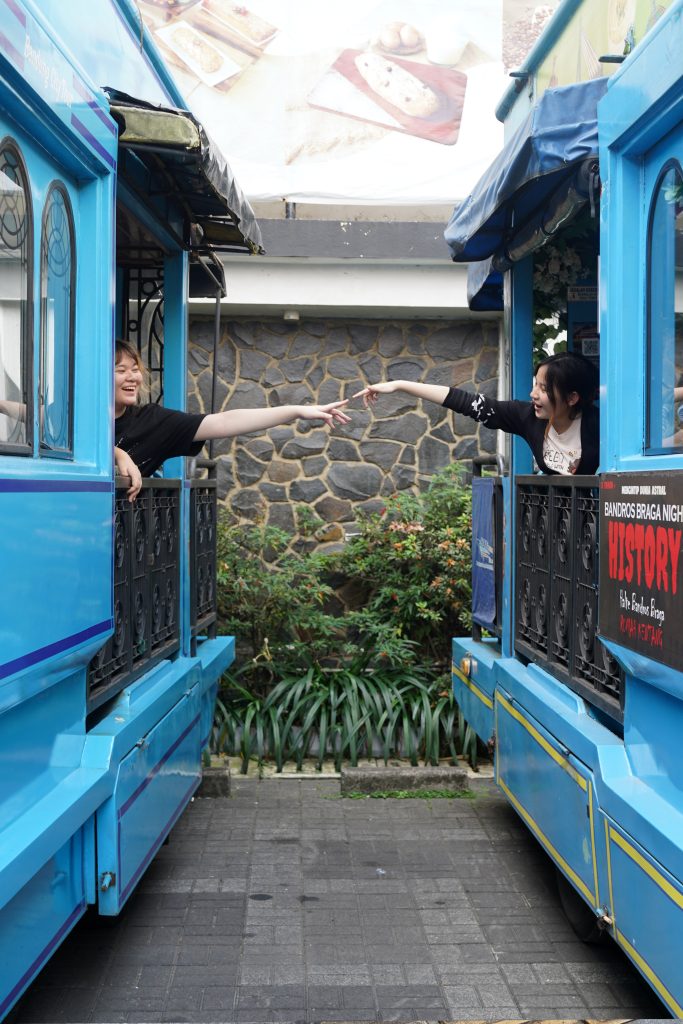
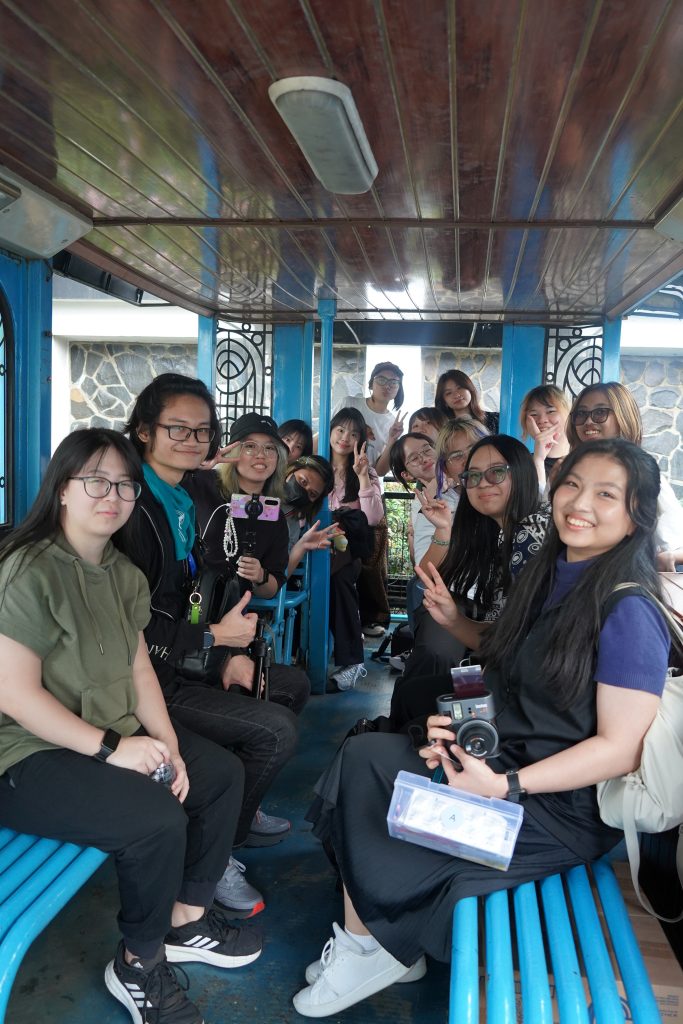
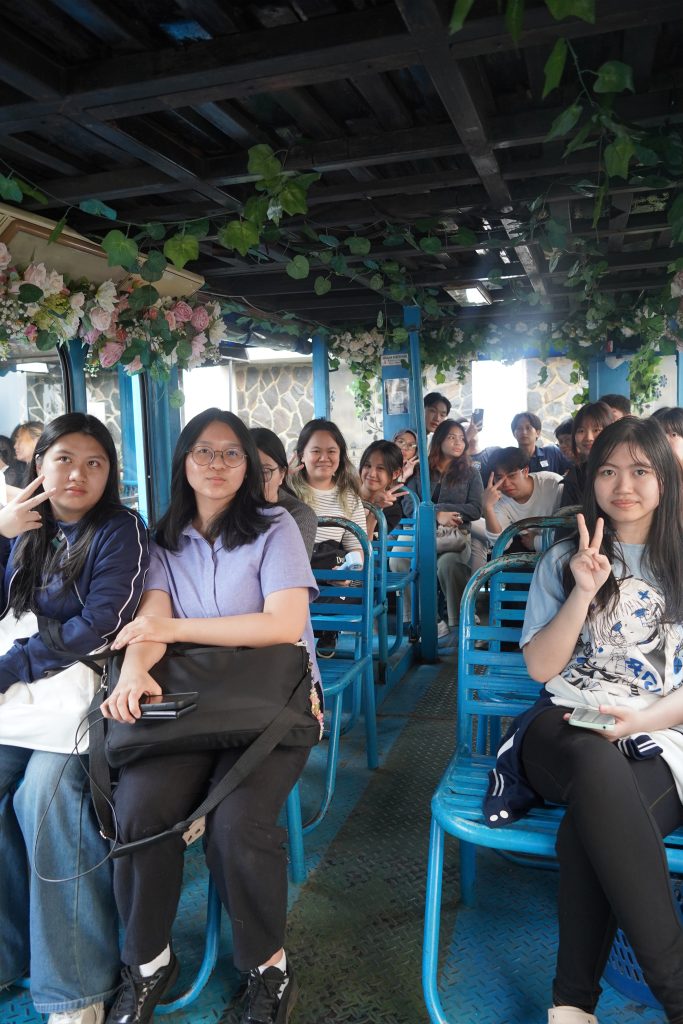
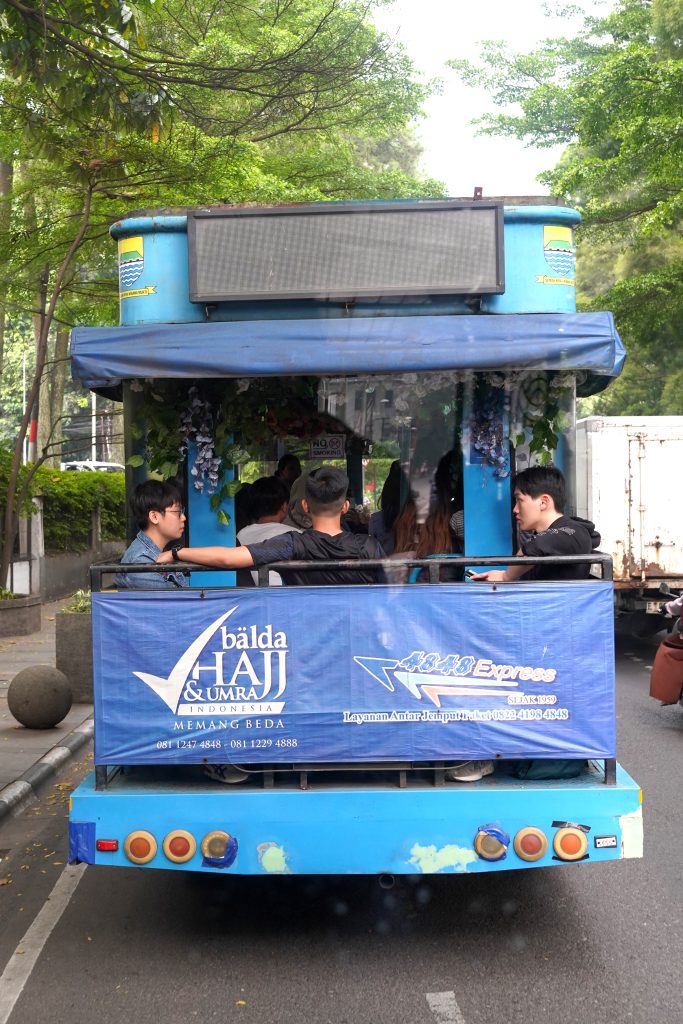
Afterward, students continued the journey aboard Bandros (Bandung Tour on Bus). During the 45-minute tour, they were introduced to various historical and cultural landmarks across the city. Among the sites discussed were Penjara Banceuy, Indonesia Menggugat, and several other important locations that played a role in Bandung’s historical development.

Through this experience, students developed a deeper appreciation of Bandung’s cultural identity and historical significance.

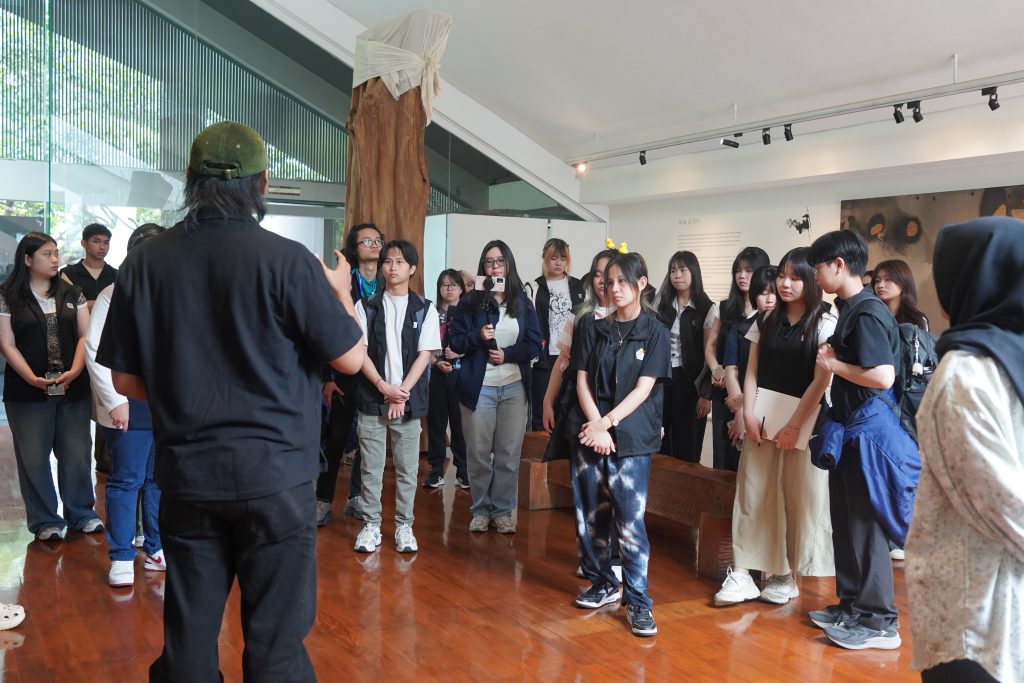
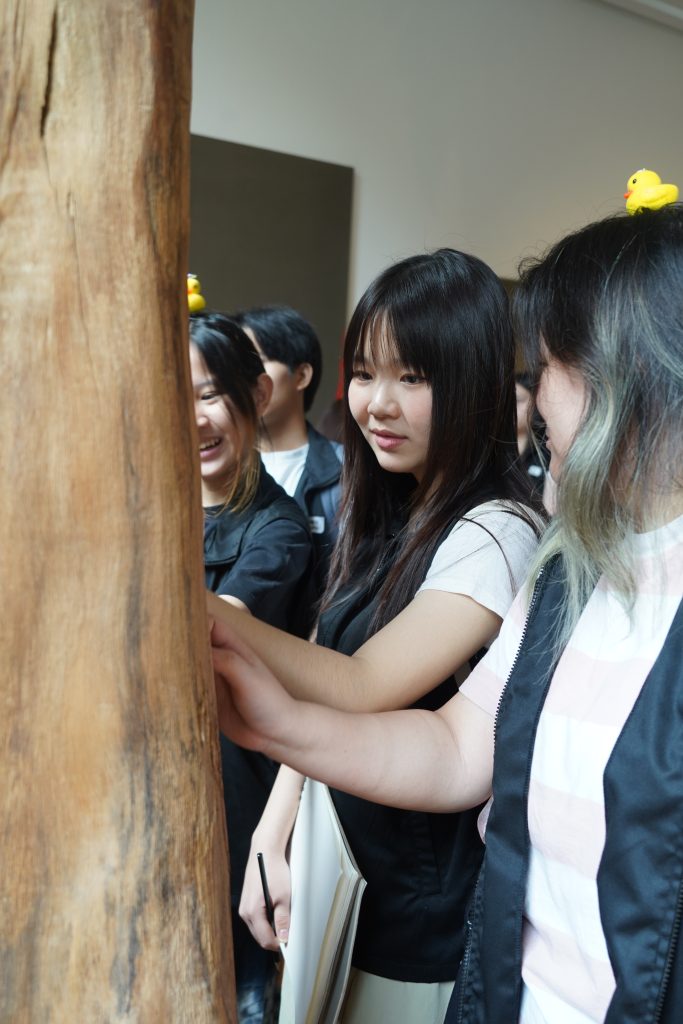
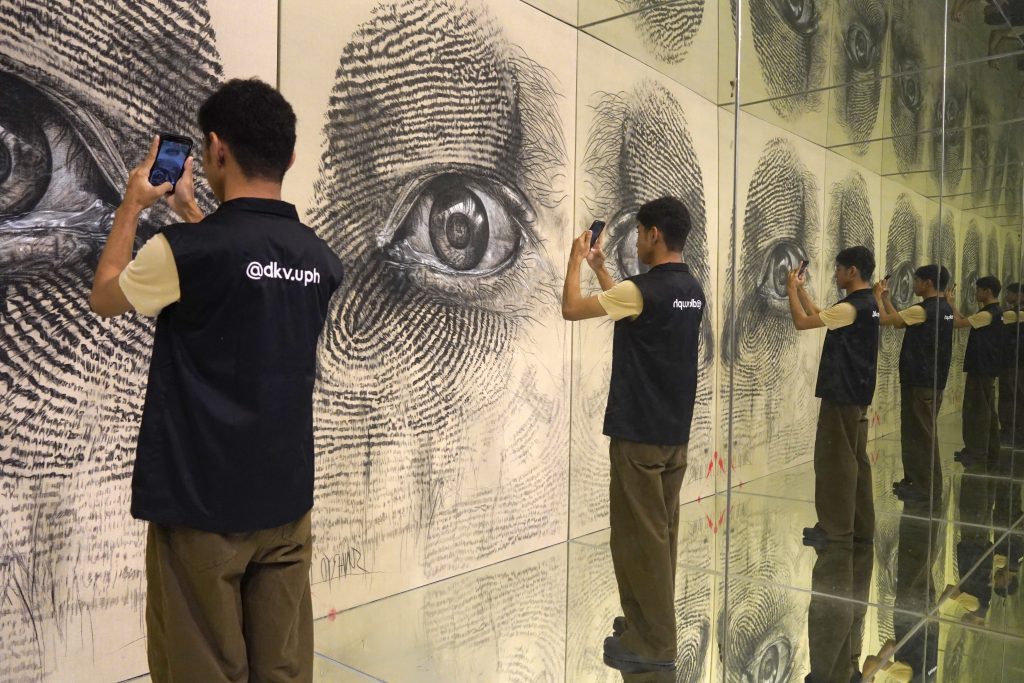
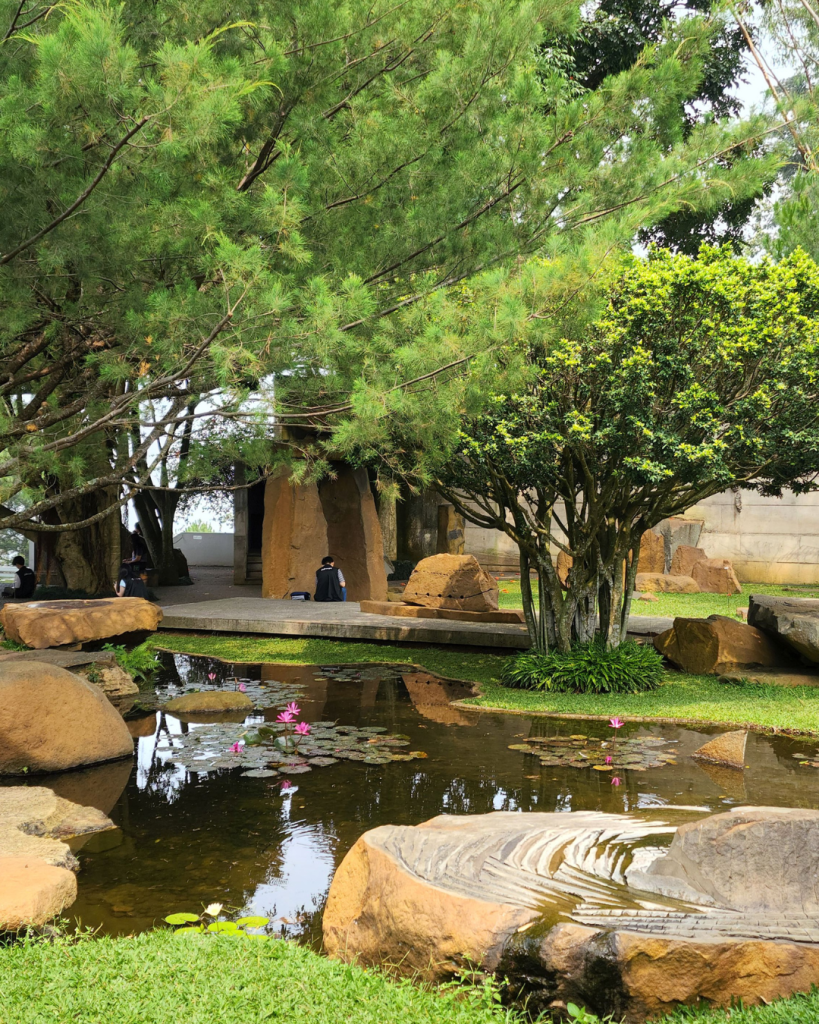
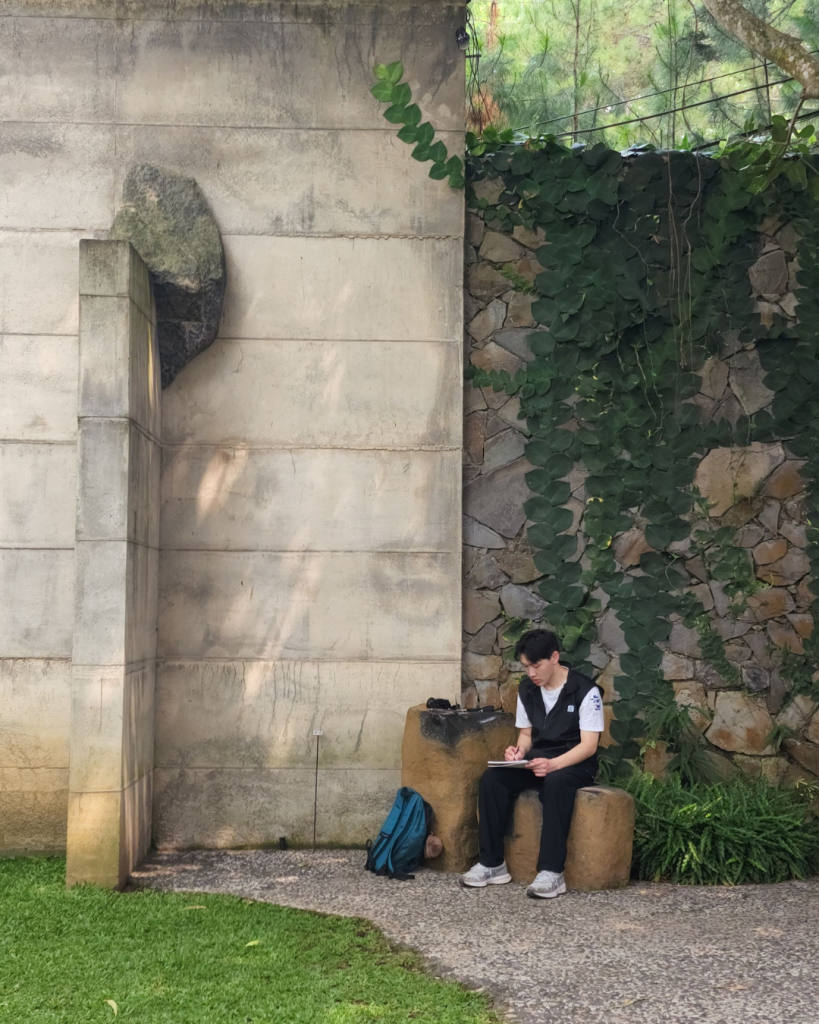
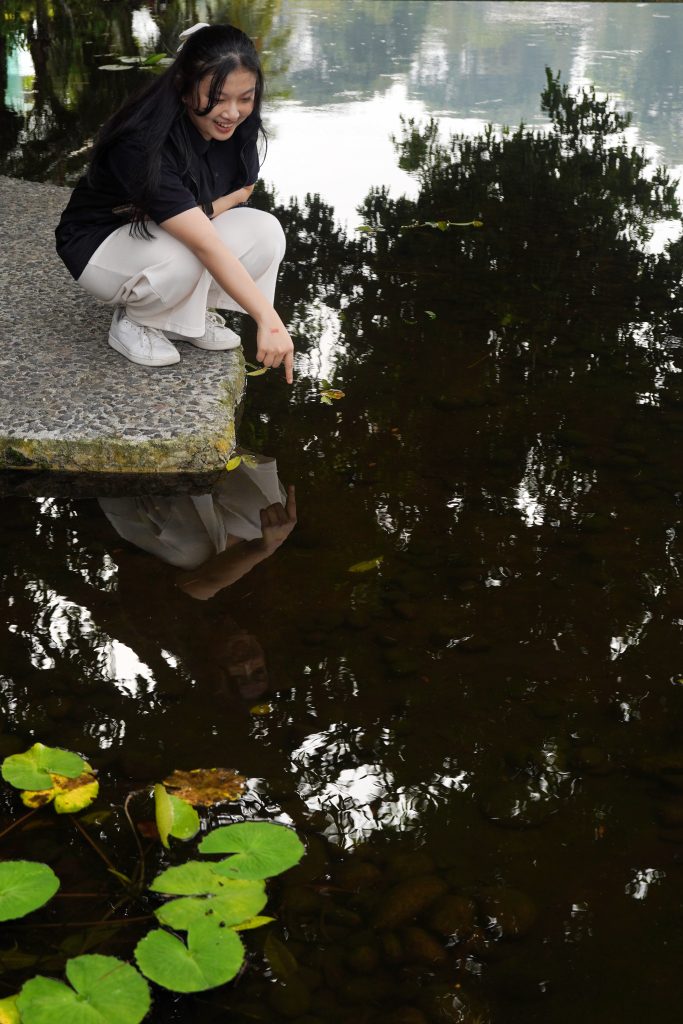
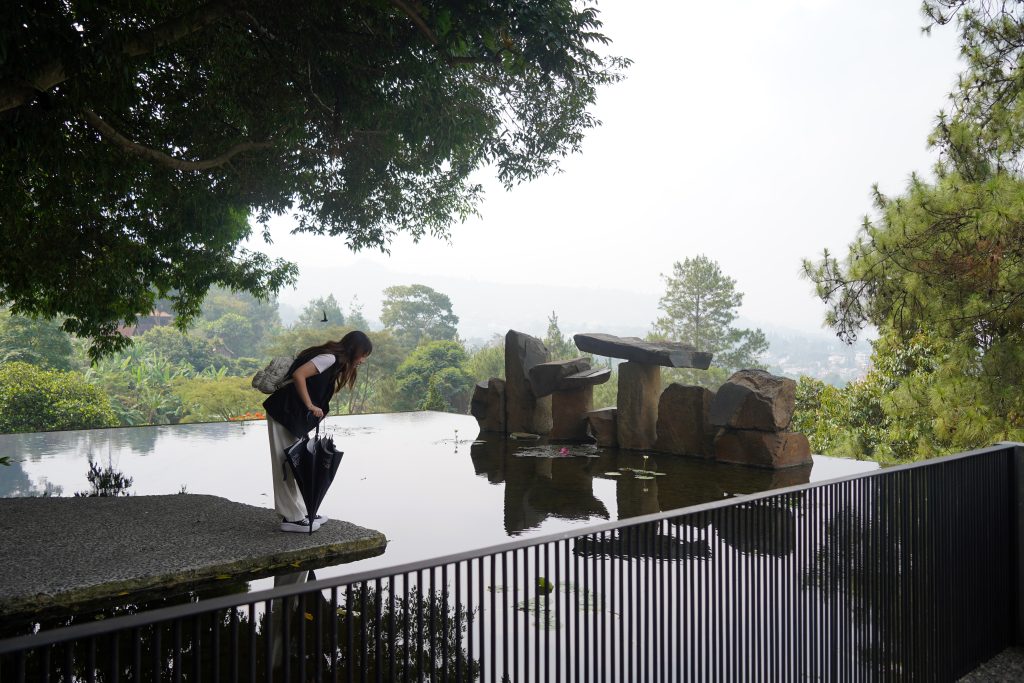
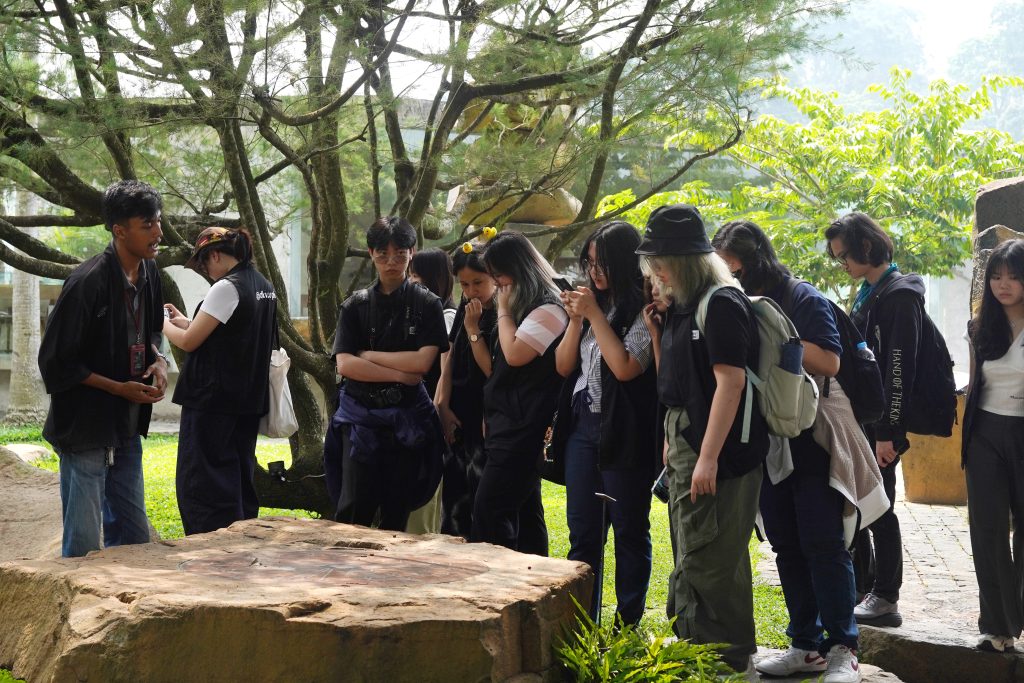
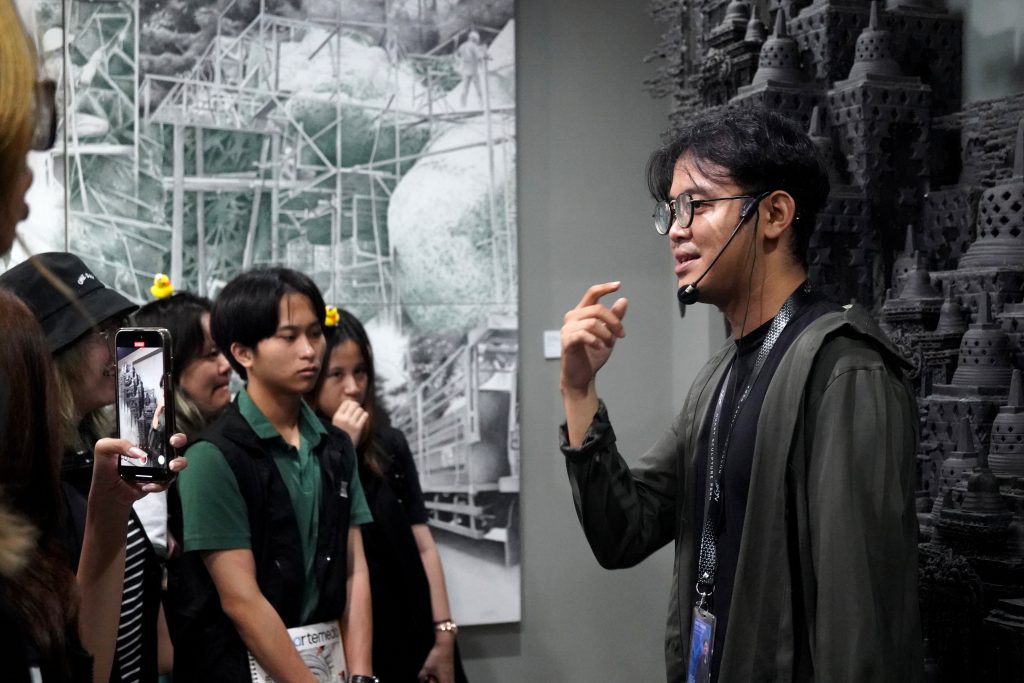
On the second day, students visited two sites closely associated with renowned Indonesian artist Sunaryo: Selasar Sunaryo Art Space and Wot Batu. Guided tours provided insight into Sunaryo’s artistic philosophy, creative process, and the meaning behind many of his installations.

In addition, students were encouraged to reflect on the relationship between art, nature, space, and human experience. By observing the works directly, they gained a better understanding of how artistic concepts can be translated into physical environments.

Selasar Sunaryo Visit

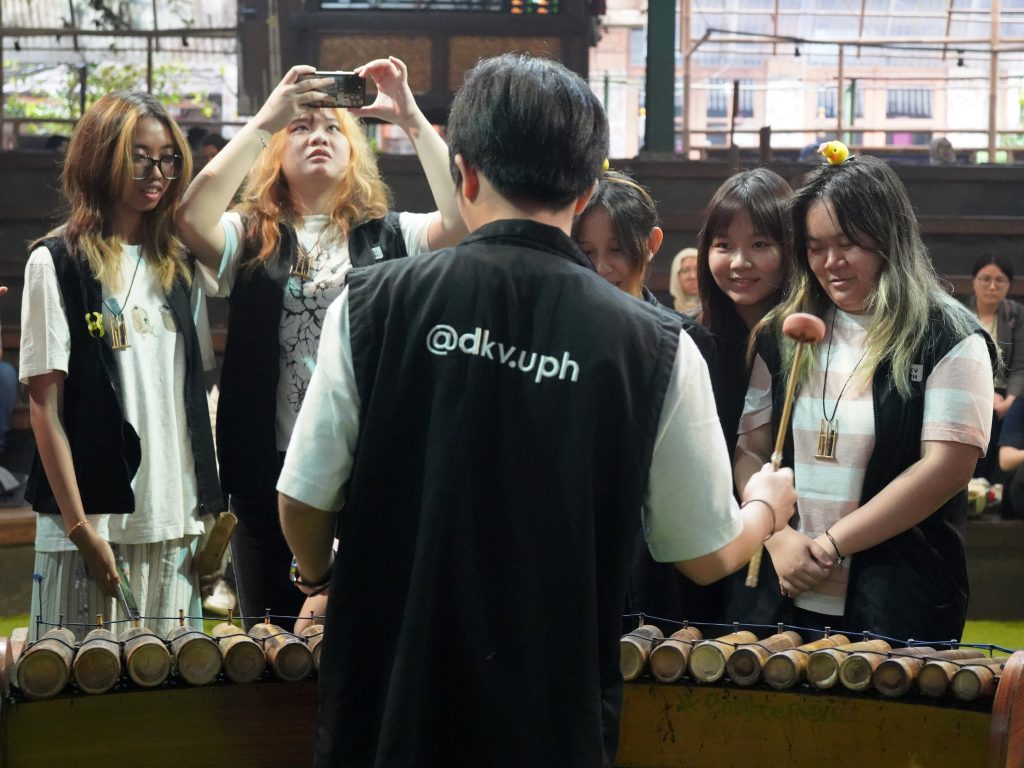
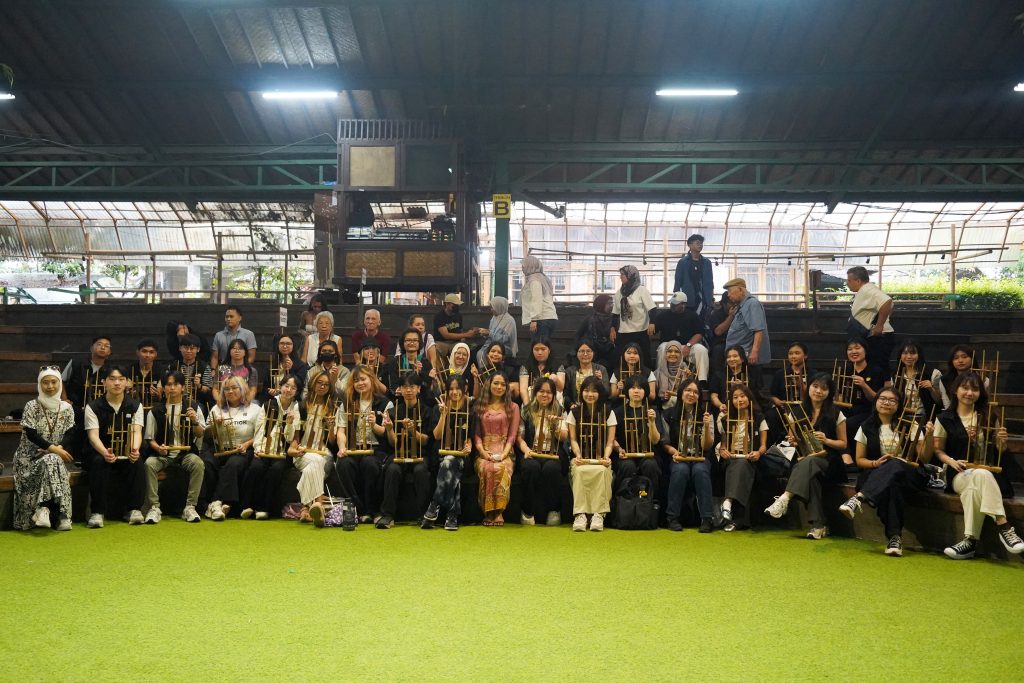
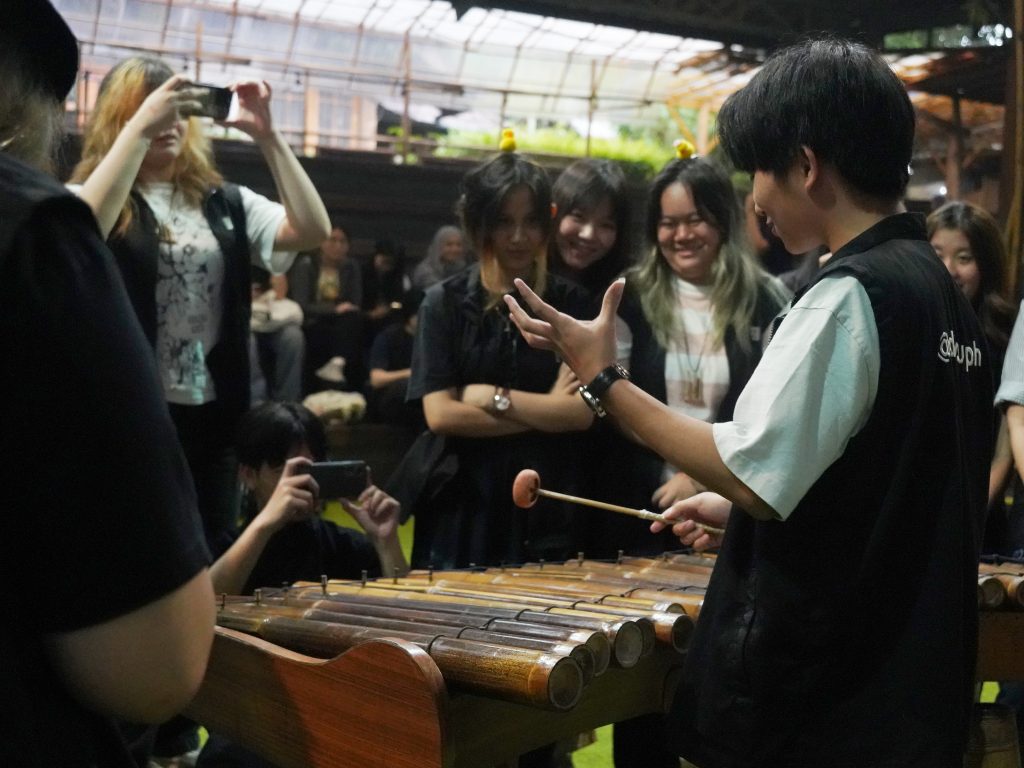
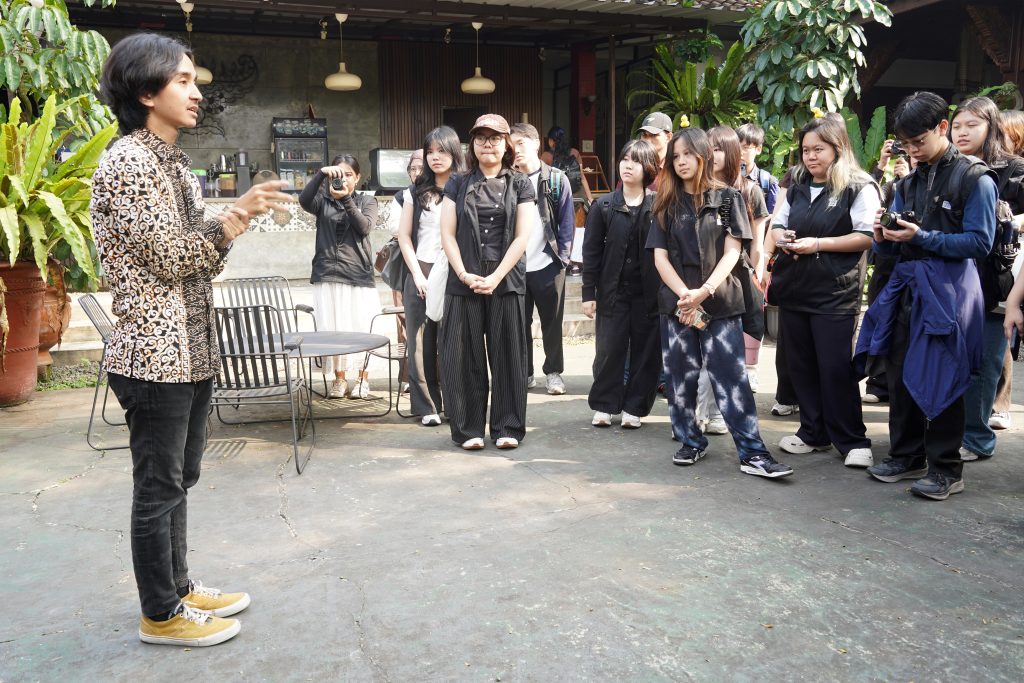
Later in the day, the group visited Saung Angklung Udjo, one of Bandung’s most celebrated cultural destinations. There, students enjoyed a series of traditional performances featuring Indonesian music, dance, and cultural heritage.

Furthermore, they participated in a special angklung-making workshop. This hands-on activity introduced students to the craftsmanship behind Indonesia’s traditional bamboo instrument while also highlighting its cultural importance.

Saung Angklung Udjo Cultural Performance and Workshop

The third day focused on practical learning experiences through a series of creative workshops.

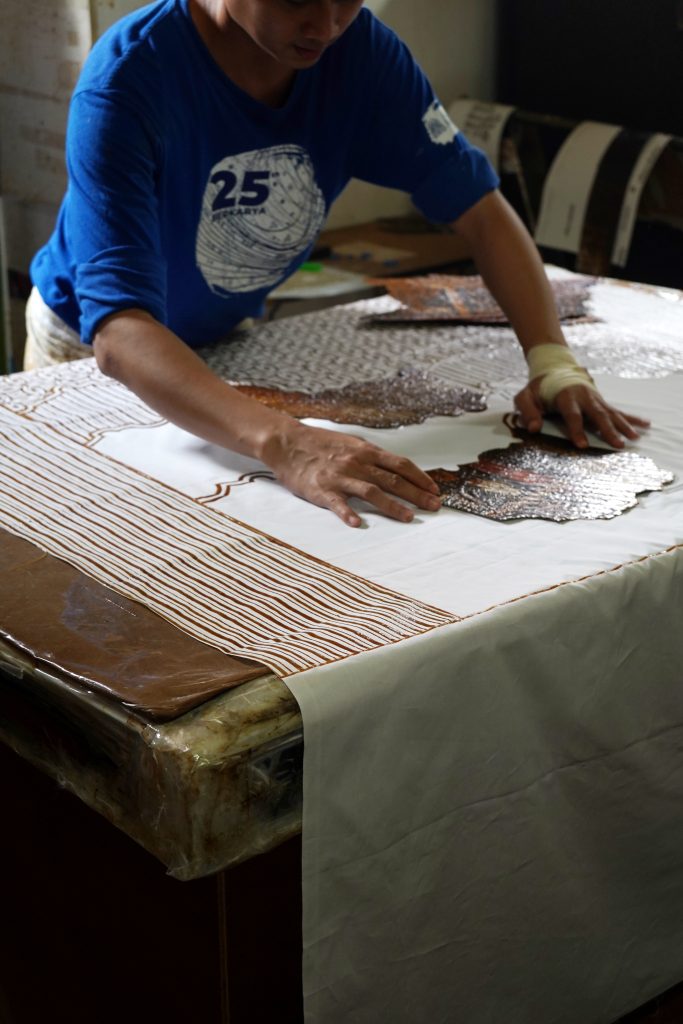
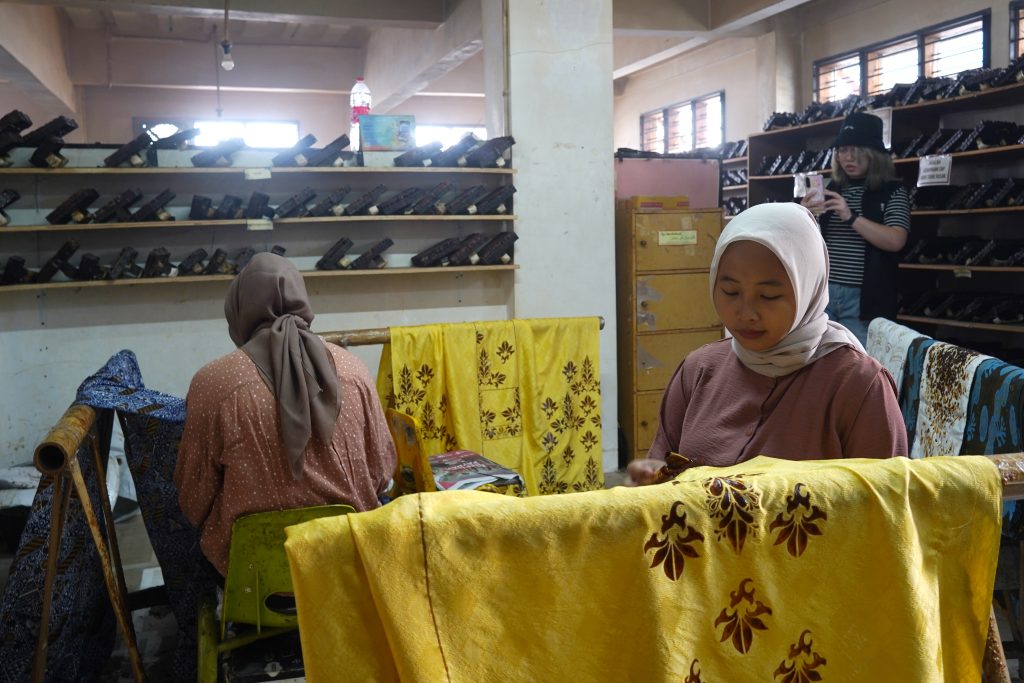
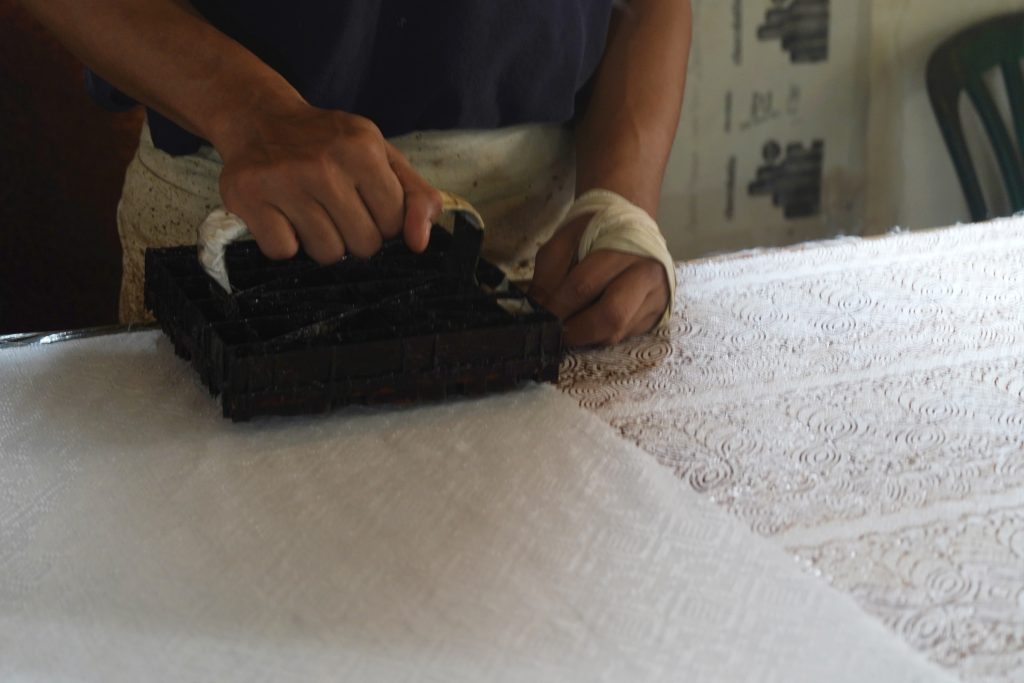
The first destination was Batik Komar, where students learned about the history and development of Indonesian batik. They then participated in both Batik Cap and Batik Tulis workshops, creating their own designs while exploring traditional production techniques.

Through this activity, students gained a greater appreciation for the craftsmanship, patience, and attention to detail required in batik-making.

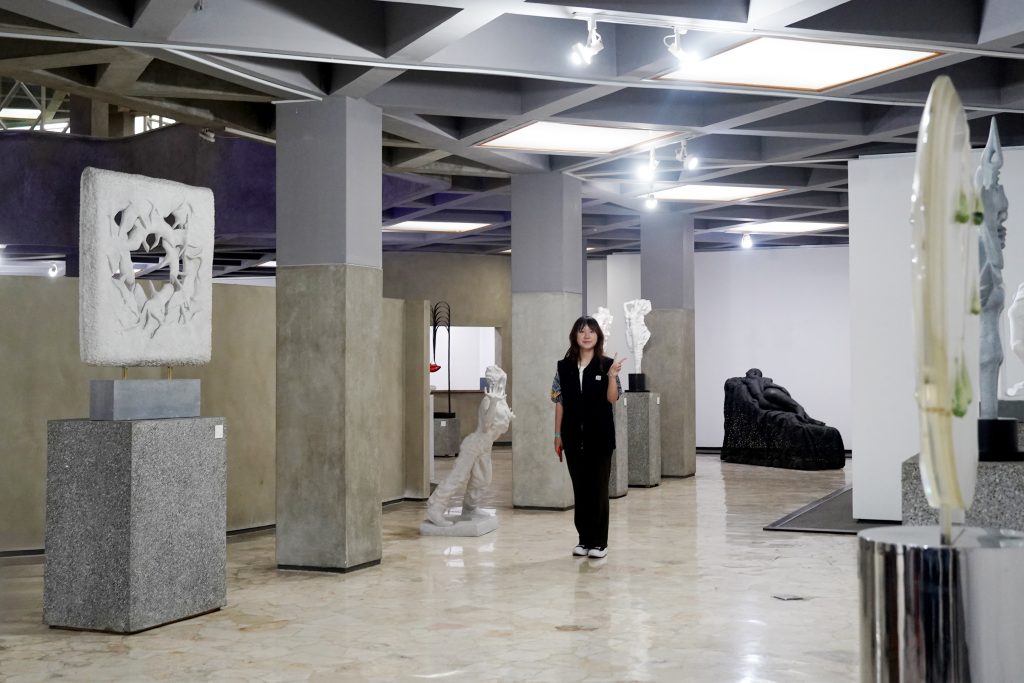
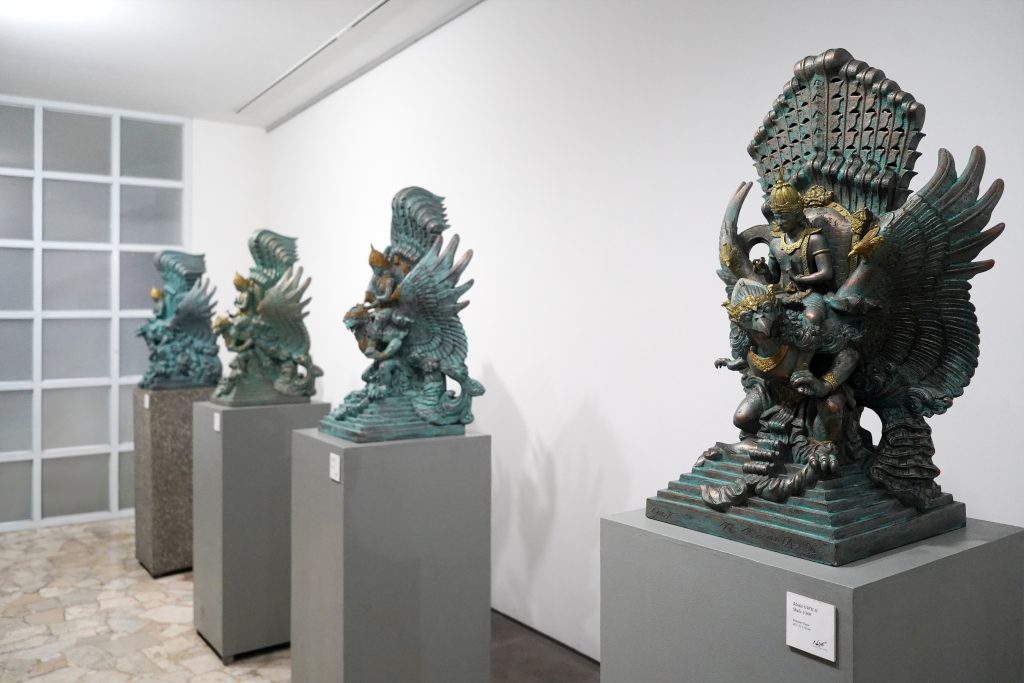
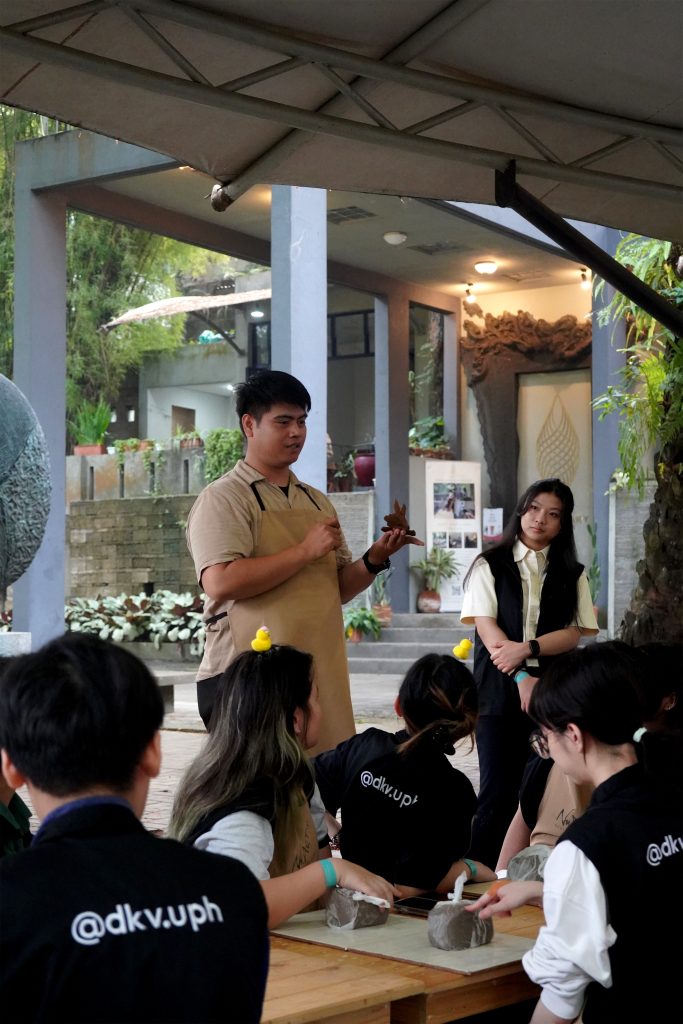
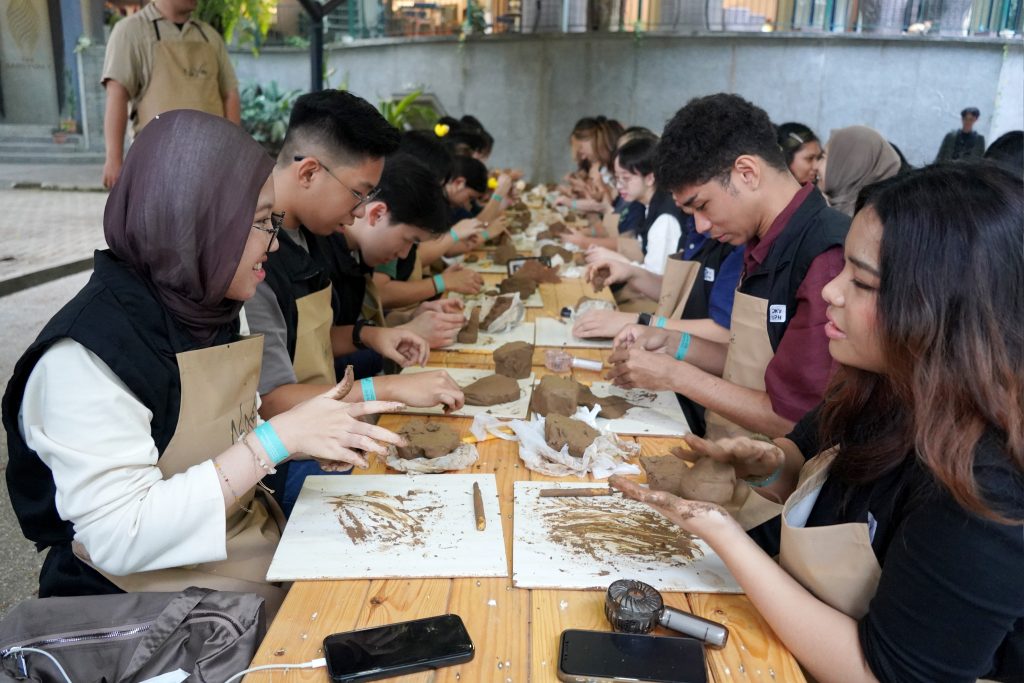
The workshop experience continued at NuArt Sculpture Park, home to the works of renowned Indonesian sculptor I Nyoman Nuarta. During the visit, students joined a guided tour of the sculpture park and explored several exhibitions within the complex.

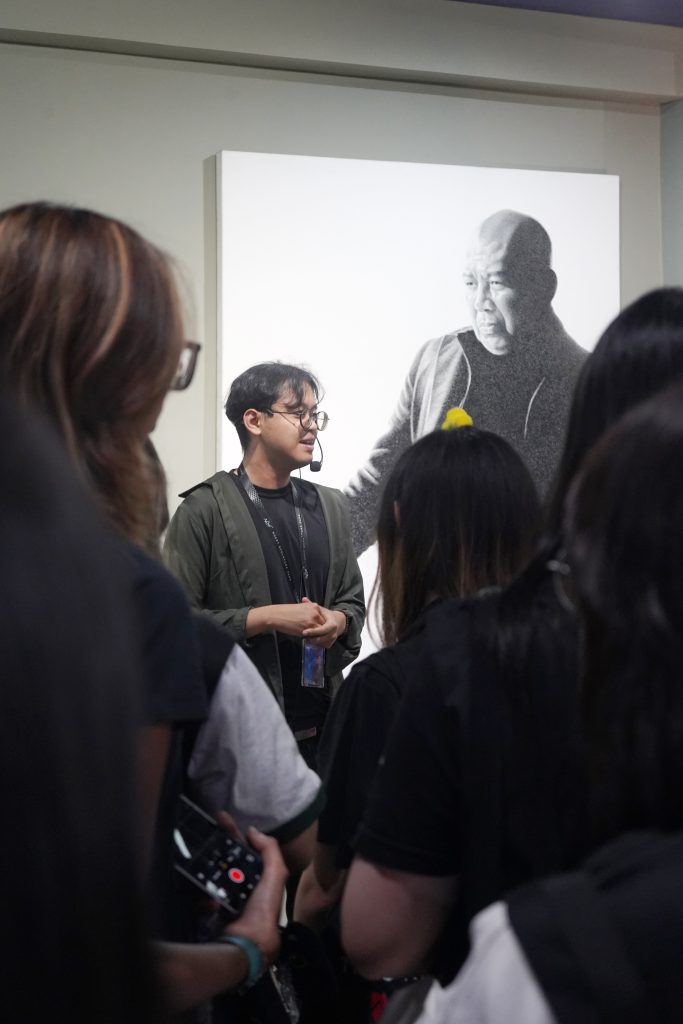
Additionally, they watched documentary screenings that provided insight into Nuarta’s artistic journey and major projects. The visit concluded with a clay-making short course, allowing students to experiment with three-dimensional form and create their own sculptural works.

NuArt Sculpture Park Visit

Following three days of exploration, learning, and creative activities, the study tour concluded on the fourth day as students prepared for their return to Universitas Pelita Harapan.

Before departing Bandung, many students had the opportunity to purchase local souvenirs and reflect on the experiences gained throughout the program. Beyond the destinations visited, the trip offered valuable opportunities for observation, discussion, and creative inspiration.

We would like to express our sincere gratitude to Dwidaya Tour for their support and collaboration in organizing this study tour. We also thank all lecturers and staff members who accompanied and guided the students throughout the journey.

Lastly, thank you to all DKV UPH Class of 2025 students for their enthusiasm, participation, and willingness to learn. We hope the knowledge, inspiration, and cultural insights gained during this experience will continue to enrich your creative journey in the future.

Until the next adventure!

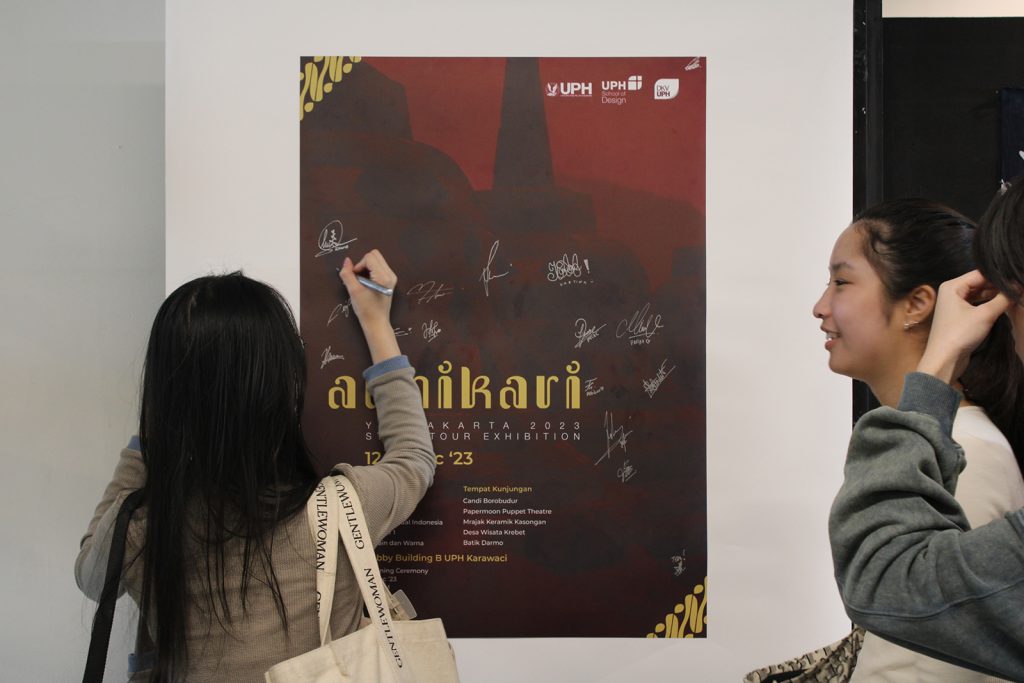
ADHIKARI

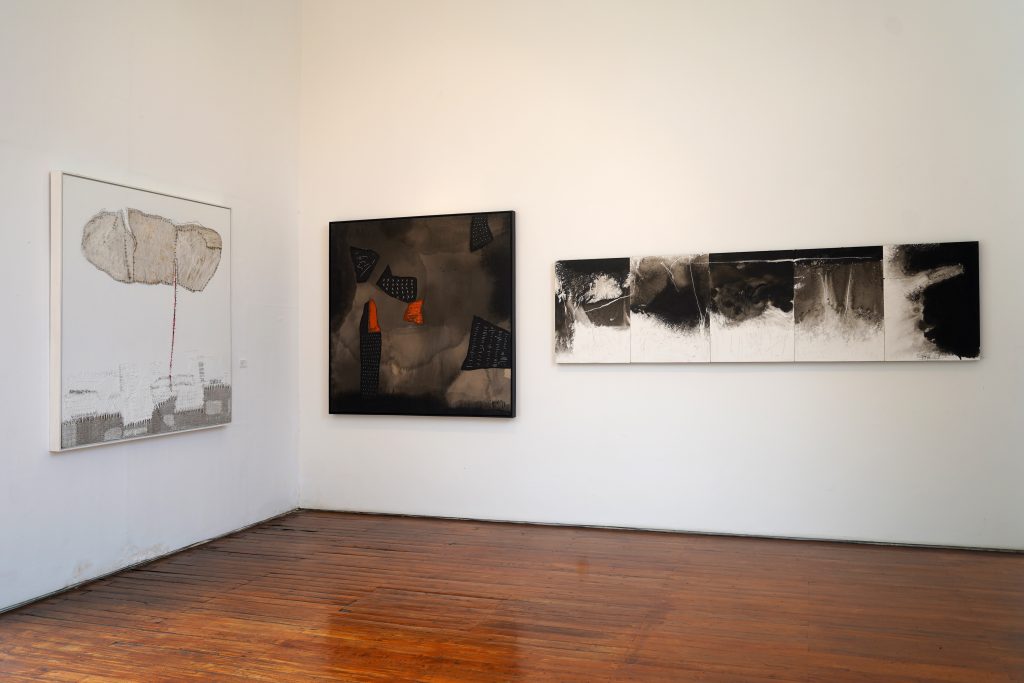
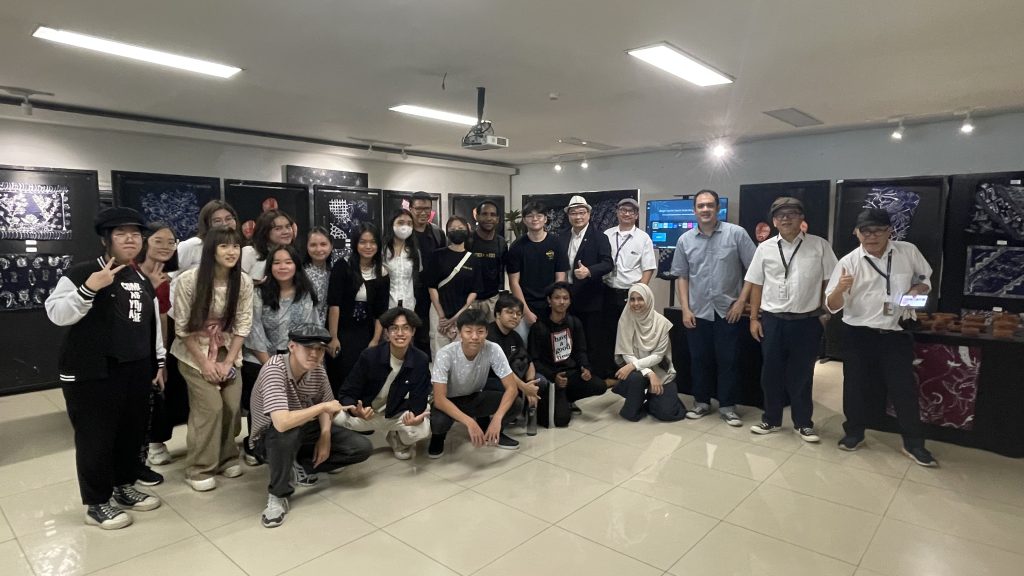
On Tuesday, December 12, 2023, VCD UPH (Visual Communication Design at Universitas Pelita Harapan) opened the exhibition “ADHIKARI,” showcasing works created by the students of VCD UPH in 2023 who had recently participated in a study tour to Yogyakarta from November 23 to 27, 2023. The exhibition features various artworks, including drawings, photographs, batik fabric, masks, and clay, produced by these students during their time in Yogyakarta.