For many artists, inspiration begins with observation. For Visual Communication Design student Iam Cello Sambo Paku, it began much earlier, woven into the fabric of everyday life.
Growing up in a family of Torajan textile artisans, Cello was surrounded by generations of craftsmanship. His parents, grandparents, aunts, and uncles continued creating wastra not only as a livelihood, but also as a way of preserving culture and passing it forward. Those memories eventually became the foundation of a painting that earned First Place at this year’s PEKSIMIDA (Pekan Seni Mahasiswa Daerah).
More than a competition entry, the work became a reflection on heritage, identity, and the stories that continue to shape who we are.
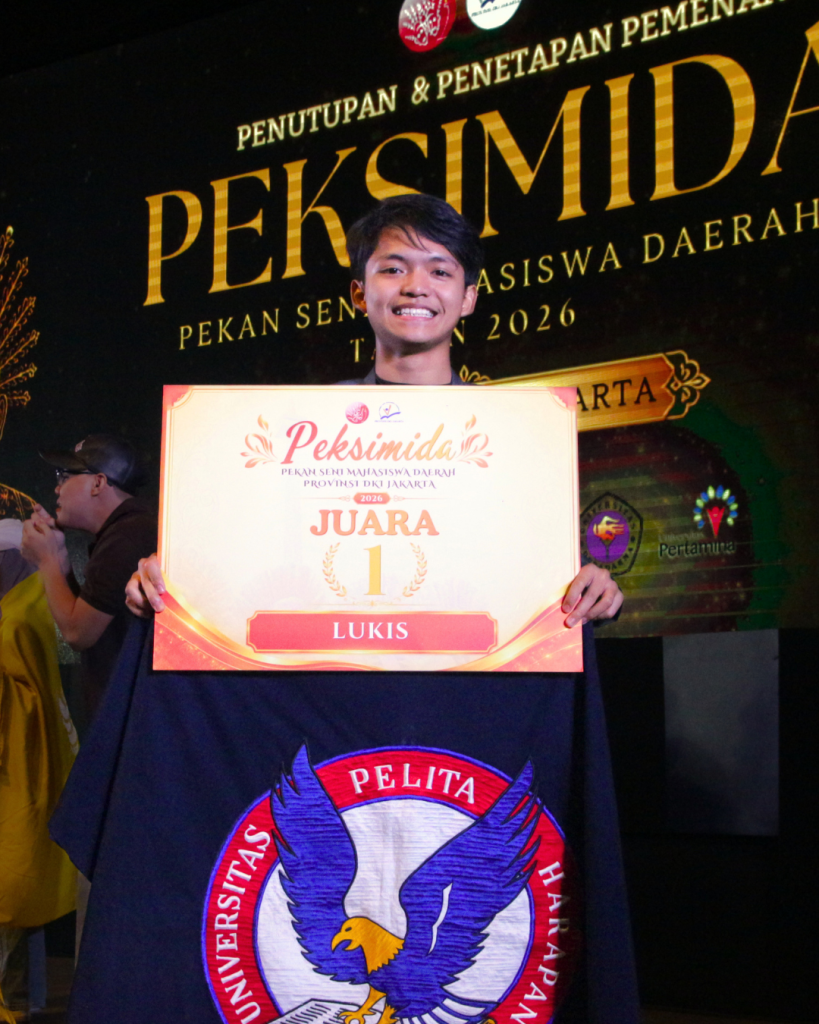
Iam Cello Sambo Paku, winning the first place in PEKSIMIDA 2026
Heritage as Creative Practice
This year’s PEKSIMIDA theme, “Art for a Better Indonesia,” invited participants to consider how art can contribute to society. Rather than searching for inspiration elsewhere, Cello chose to begin with what was closest to home.
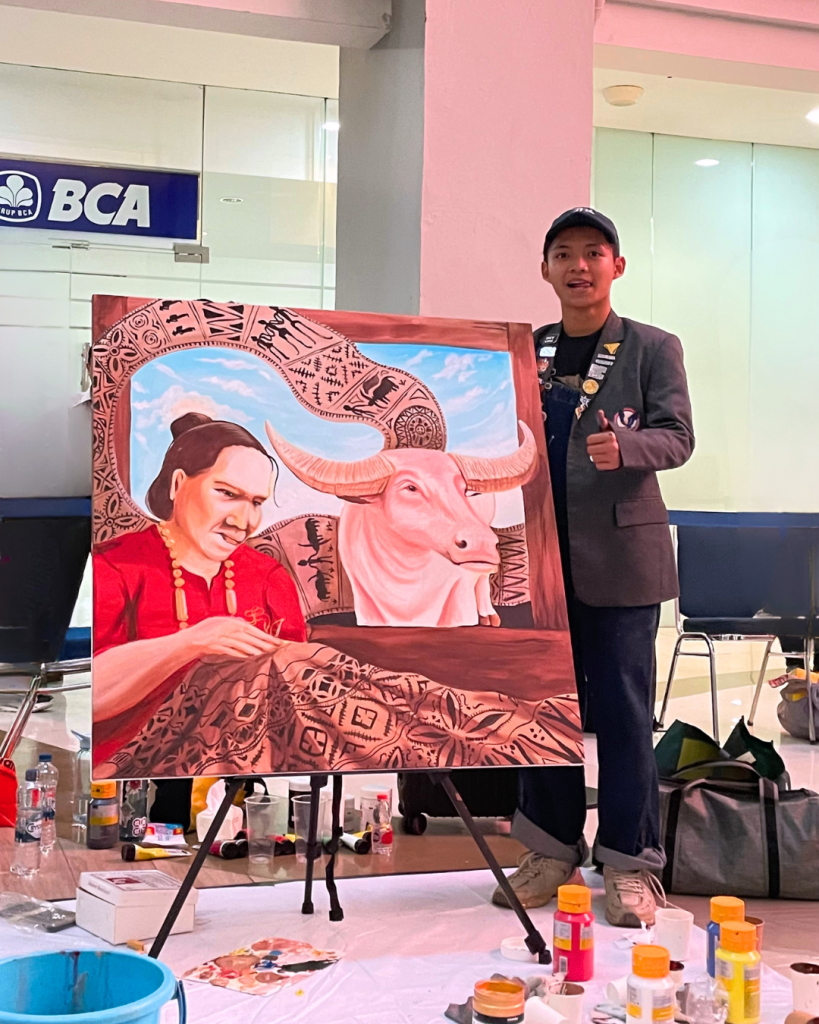
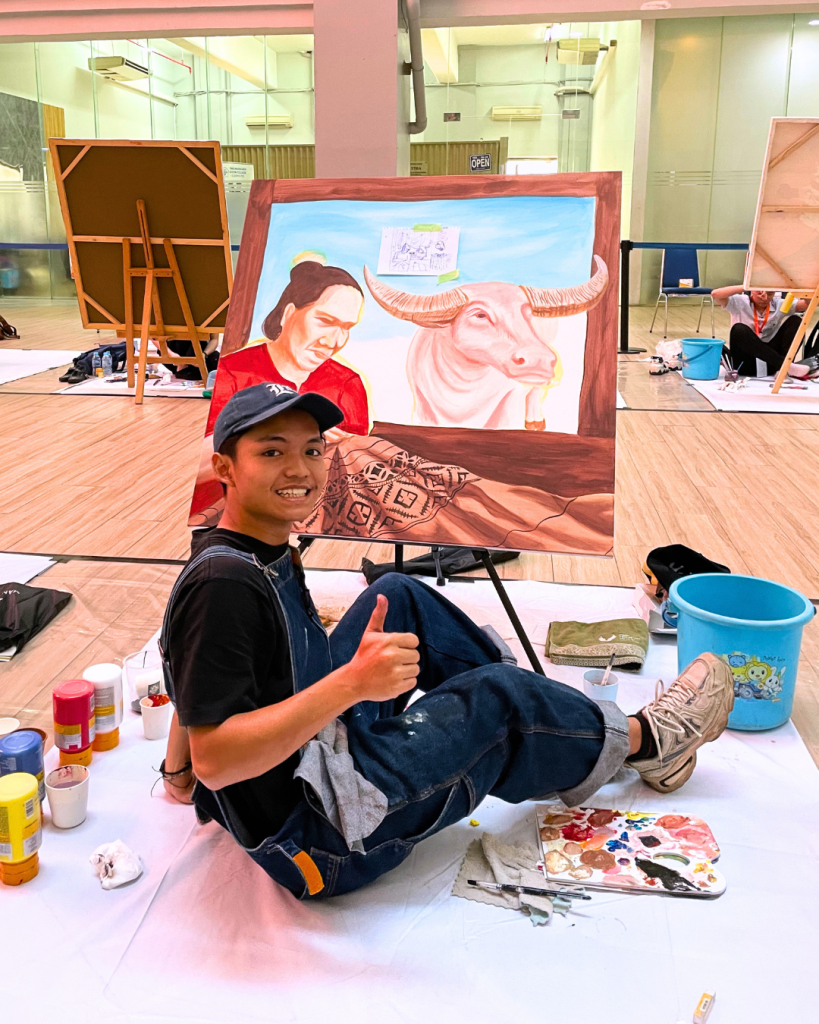
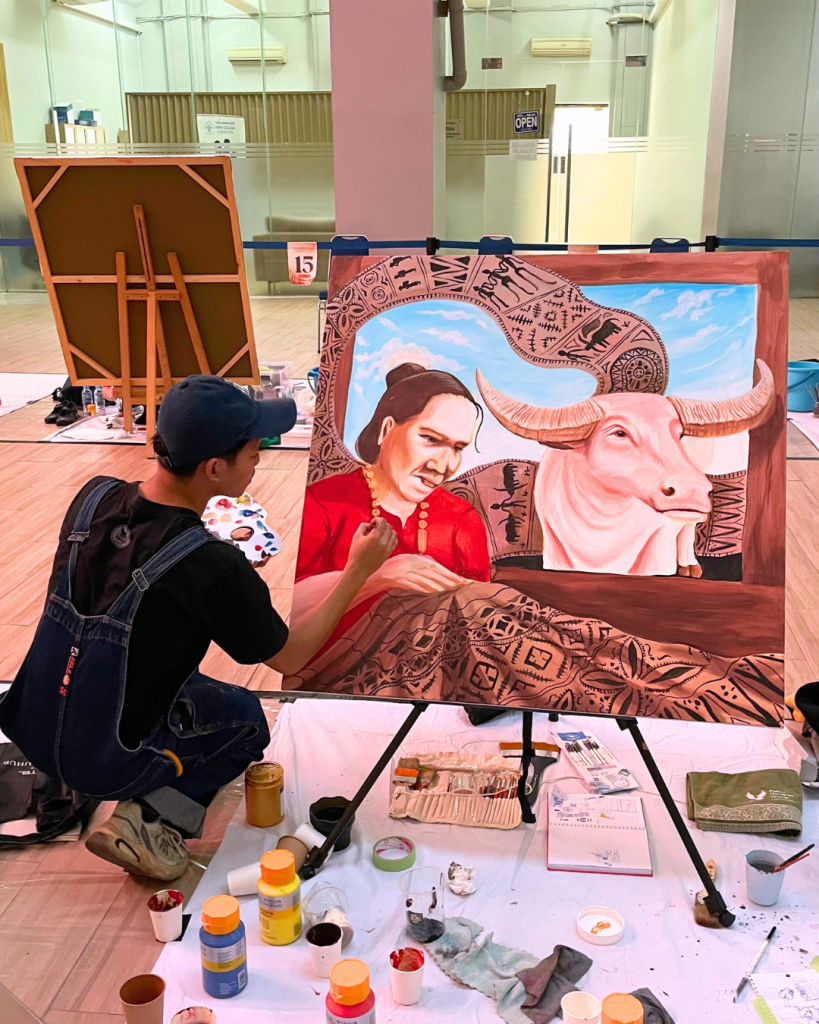
The painting portrays a mother sewing, symbolizing the quiet dedication of preserving tradition while nurturing hope for future generations. The image reflects not only Cello’s personal experience but also the generations of family members who have devoted themselves to Torajan textile craftsmanship.
Reflecting on the work, he shared,
“I interpreted the theme by looking at what was closest to my own life. Since childhood, I have grown up in a family of Torajan textile artisans. Through this painting, I wanted to portray a mother sewing as a symbol of preserving both heritage and hope for a better future.”
Cello with the work he painted for PEKSIMIDA 2026
The painting also incorporates symbols deeply rooted in Torajan culture, including traditional wastra and the albino buffalo. For Cello, these are far more than visual elements. They represent generations of family history, cultural identity, and spiritual meaning.
In Torajan tradition, buffaloes hold an important place in ceremonies, family history, and beliefs surrounding the journey of the soul. Meanwhile, wastra reflects a legacy of craftsmanship that has been passed down within Cello’s family for generations.
“Culture is deeply personal to me. I wanted to bring this heritage into a wider space as a way of continuing what my family has worked so hard to preserve.”
Rather than presenting tradition as something static, the work reinterprets these symbols through a contemporary visual language, allowing personal heritage to become part of an ongoing cultural conversation.
Trusting the Creative Process
Transforming that idea into a finished painting required more than technical skill.
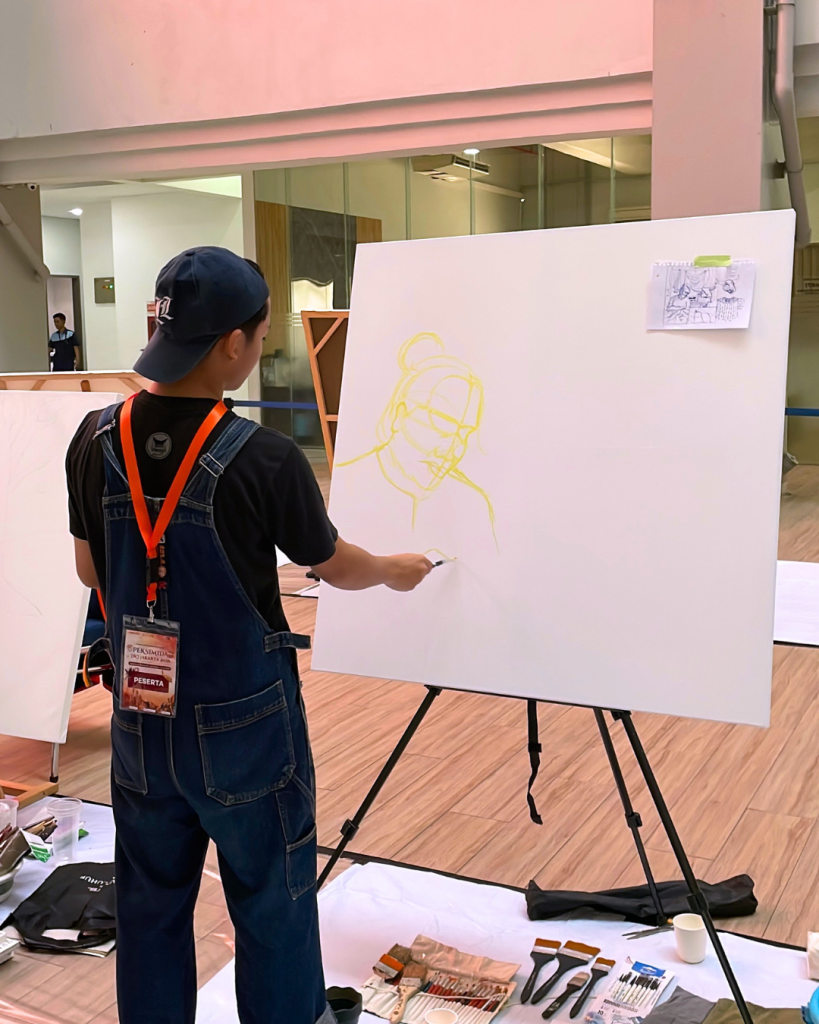
During the competition, participants worked within strict time constraints and without visual references. Every compositional decision had to rely on careful preparation, intuition, and the confidence to adapt when plans inevitably changed.
Determining the placement of each object and balancing the composition became one of the most challenging parts of the process. Although several ideas had to be adjusted along the way, the experience reinforced an important lesson about creativity.
“I learned to trust both the process and myself. Even with limited time and changing circumstances, I kept moving forward instead of letting uncertainty hold me back.”
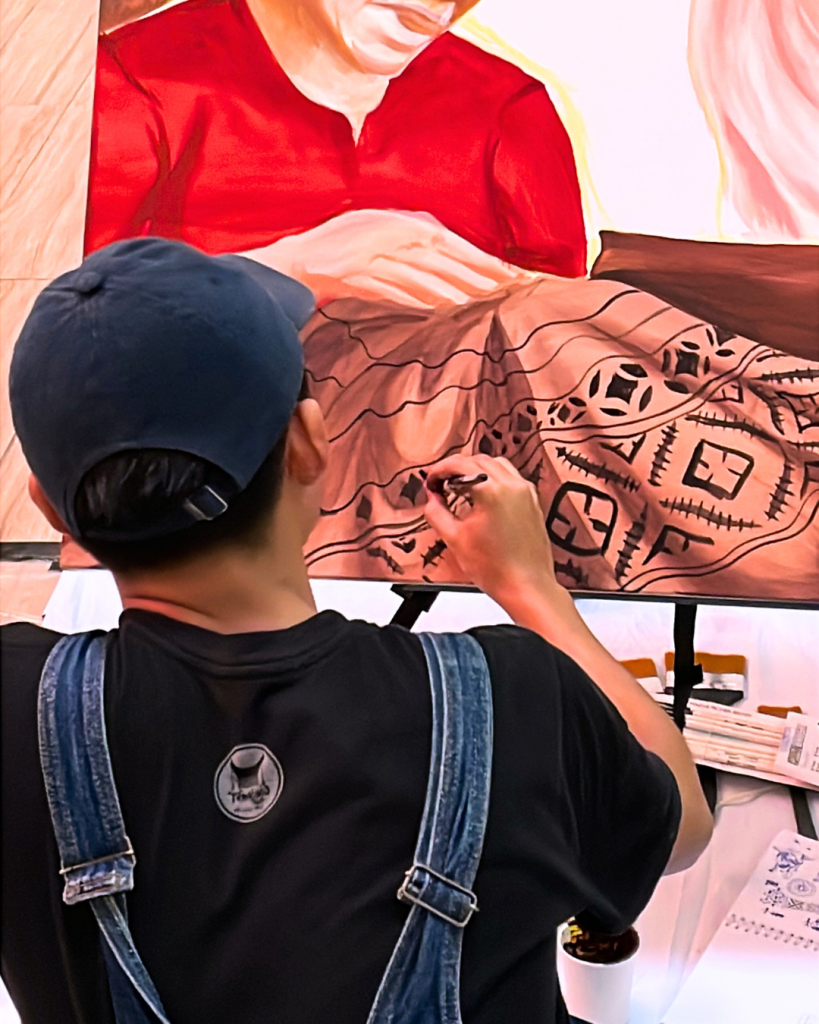
Cello’s painting process during the PEKSIMIDA 2026
The experience became a reminder that creating meaningful work is rarely about following a perfect plan. It often requires embracing uncertainty while remaining faithful to the ideas that matter most.
More Than a Competition
Throughout the process, the work also transformed Cello’s understanding of culture and identity.
What had once felt like a personal background gradually became something more active. Identity was no longer simply inherited. It became something that could be explored, interpreted, and communicated through creative practice.
“I realized that identity is not just where we come from. It is something we can reinterpret and communicate through our work.”
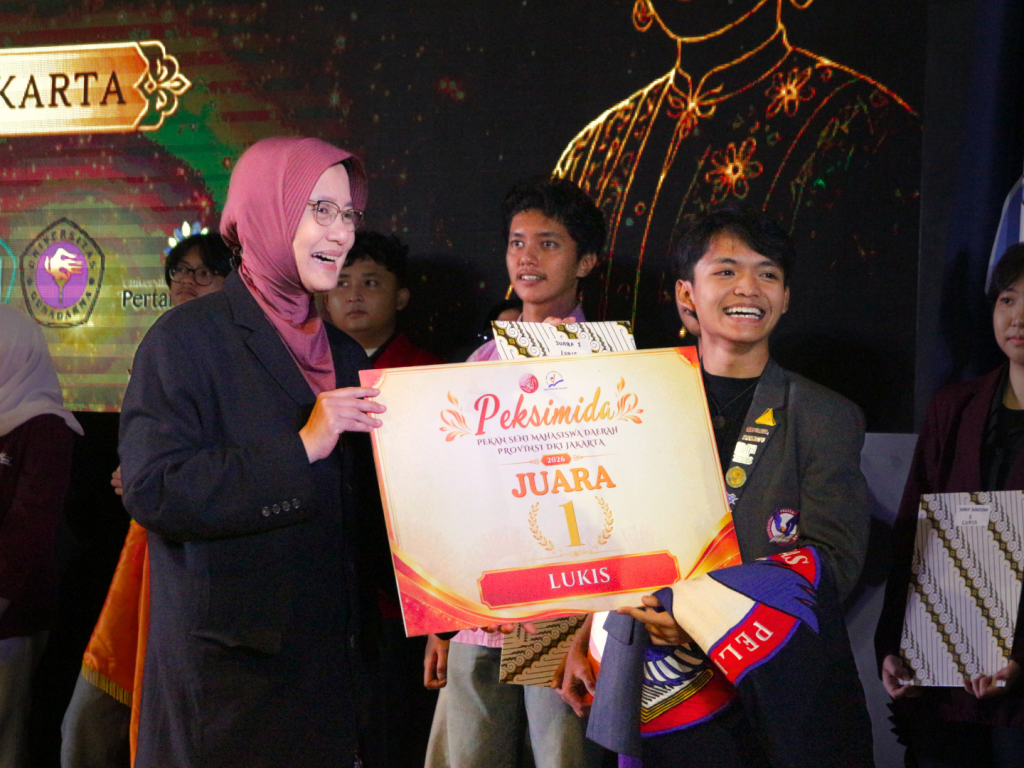
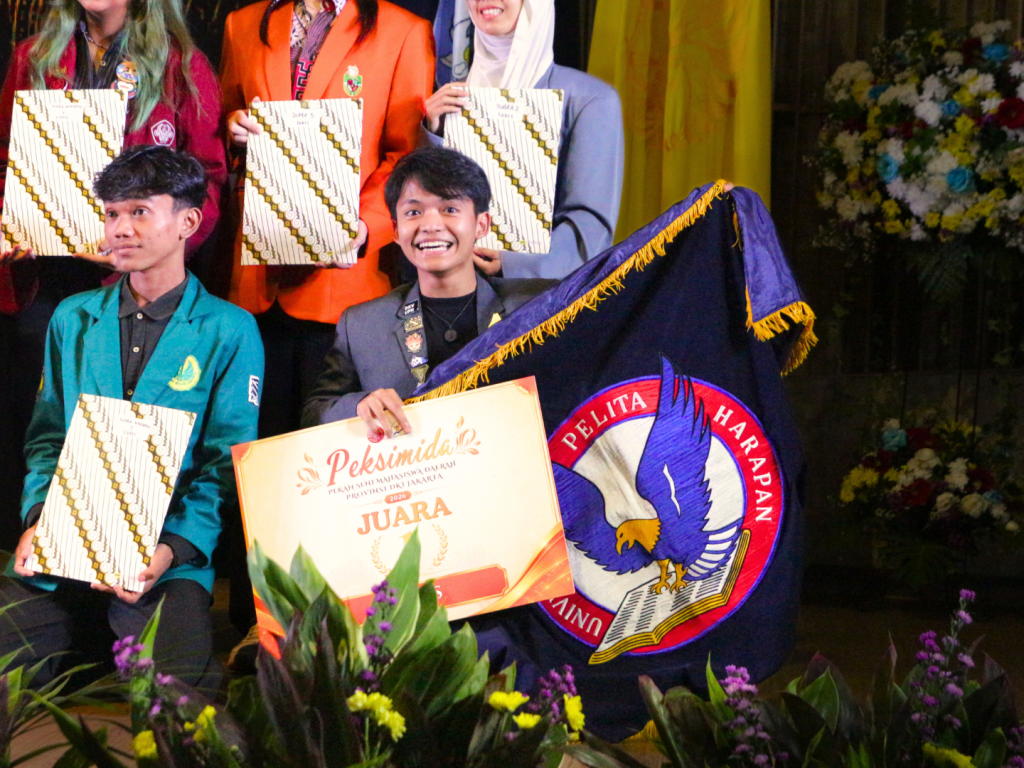
Cello, receiving the 1st winner award in PEKSIMIDA 2026
Looking back, the experience of participating in PEKSIMIDA offered lessons that extended far beyond the competition itself.
Cello came to see that being an artist involves more than creating compelling images. It also means communicating stories, carrying meaning, and creating work that resonates with others. Along the way, he also discovered the importance of trusting personal growth, remaining humble, and staying open to learning from lecturers, peers, and every new experience.
“Being an artist is not simply about making images. It is about creating work that carries meaning and has the potential to make an impact. I’ve also learned to focus on my own growth, stay humble, and remain open to learning from others.”
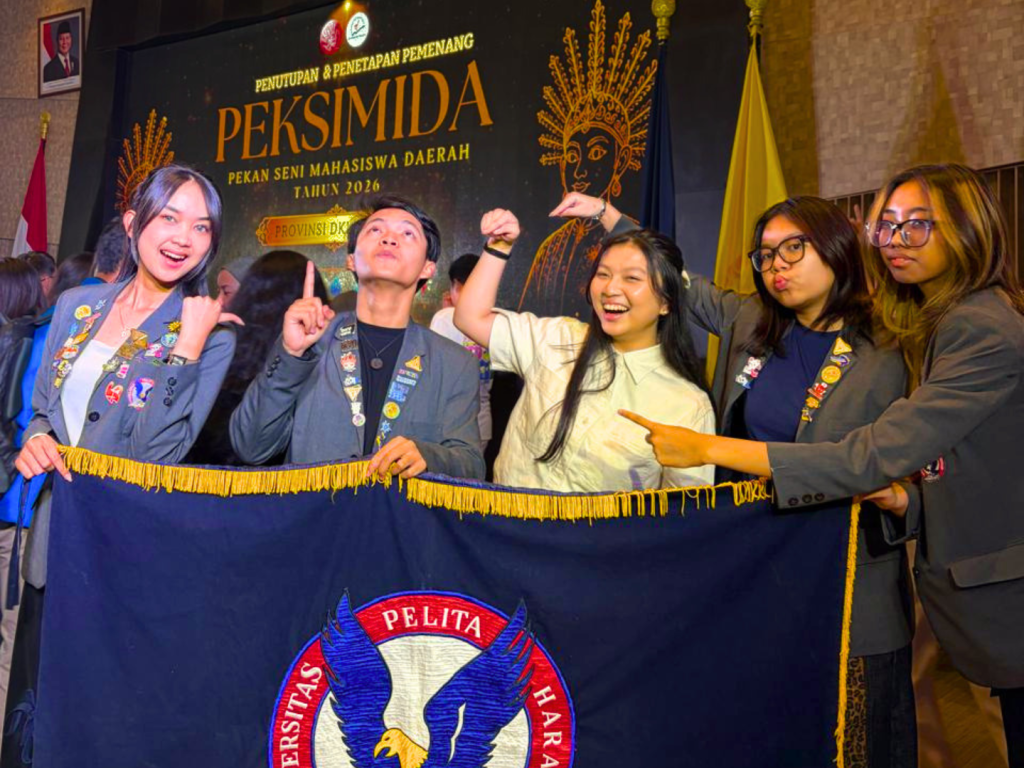
Cello and other participants from VCD UPH on PEKSIMIDA 2026
Receiving First Place at PEKSIMIDA marks an important milestone, but it also reflects something larger. It reminds us that meaningful work often begins by looking inward, drawing from personal histories, and allowing those stories to connect with others.
Through this journey, Cello transformed his personal heritage into more than inspiration. It became a living narrative, one that continues to grow through art, design, and the conversations they inspire.
As Cello prepares to represent Jakarta at the national stage of PEKSIMNAS, we wish him every success in the journey ahead. May he continue creating with courage, curiosity, and a deep appreciation for the stories that shape his work. The entire VCD UPH community is cheering him on.